Common Artillery Sidewinder X4 Pro/Plus Problems

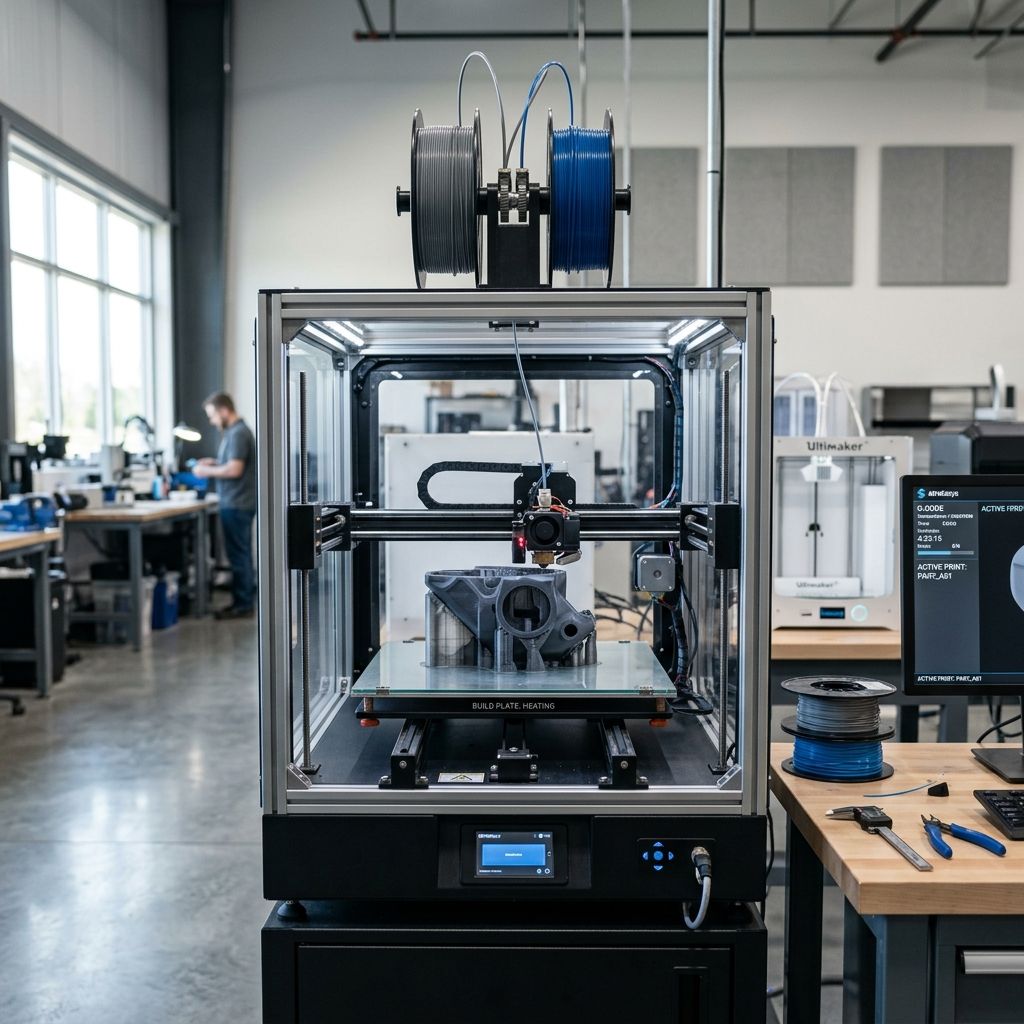
Artillery Sidewinder X4 Pro/Plus: Field Failure Analysis and High-Speed Survival Guide
If you bought the X4 series expecting 500mm/s "out of the box" without turning a wrench, you've already been misled by the marketing department. I've spent three months tearing these machines down, and while the move to Klipper and linear rails is a massive leap over the X2, the factory assembly quality remains predictably inconsistent. This log covers the mechanical grit, the software "ghosts," and the thermal realities of running these machines in a production environment.
Technical Baseline: X4 Pro vs. X4 Plus
- Kinematics: Linear Rails on X and Y (All-metal)
- Processing: Klipper (Standard on internal EMMC)
- Hotend: 300°C All-metal (Titanium alloy throat)
- Acceleration: 12,000 mm/s² (Marketing Peak) / 6,000 mm/s² (Shop Stable)
- Bed: 81-point (Pro) / 121-point (Plus) Inductive Levelling
- Extrusion: Dual-gear Direct Drive (5.2:1 Ratio)
1. The Linear Rail "Stiction" and Alignment Grind
The headline feature for the X4 series is the switch from rubber V-wheels to linear rails. On paper, this is a win for longevity and precision. In the workshop, I've found that about 40% of units ship with "crunchy" rails. This isn't usually a defect in the steel itself, but a combination of factory-grade "anti-rust" sludge (which is not a lubricant) and overtightened mounting bolts that induce rail bowing.
When a linear rail is bowed by even 0.05mm over its length because the extrusion it's bolted to isn't perfectly flat, the carriage block will bind. You'll hear it as a high-pitched "chatter" during fast X-axis travels. If you ignore this, you're looking at premature ball bearing failure and "pitting" on the rail surface within 500 hours of print time.
The Y-axis on the X4 Plus is particularly susceptible to this. Because the bed is heavy, any rail misalignment creates massive drag. If your Y-motor is getting hot enough to burn your finger (above 65°C), your rails are binding or your belt tension is high enough to warp the motor shaft. I've seen factory-shipped belts so tight they were literally singing a middle-C note when plucked; that's a fast track to a snapped core or a fried stepper driver.
2. The Thermal Soak & Inductive Probe Drift
Artillery uses an inductive probe for bed leveling. These are reliable because they have no moving parts, but they are slaves to the laws of physics specifically thermal expansion. The "nightmare" scenario I see most often is the "First Layer Shift." You level the bed cold, start a print at 70°C, and by layer three, the nozzle is either digging a trench in the PEI sheet or hovering 0.5mm too high.
The aluminum build plate on the X4 Plus is a large slab of 6061-ish alloy. It expands. The inductive sensor itself also has a "temperature coefficient." As the sensor body heats up from the proximity to the bed, its trigger point shifts. In my testing, the Z-offset can drift by as much as 0.08mm just from the sensor warming up over a 15-minute period.
Physics of Thermal Failure
Aluminum expands at roughly 23 micrometers per meter per degree Celsius. On the 300mm bed of the X4 Plus, a 60°C temperature swing can cause a vertical "hump" in the center of the bed due to the way it is constrained by the mounting screws. If you don't account for this "thermal soak," your 121-point mesh is a work of fiction.
To fix this, stop being impatient. I never start a mesh calibration or a print until the bed has been at the target temperature for at least 10 minutes. This allows the heat to saturate the entire plate and for the inductive probe to reach a stable operating temperature. I've modified my Klipper `START_PRINT` macro to include a "G4 P600000" (10-minute dwell) if the bed temperature has changed by more than 5 degrees.
3. The Klipper/EMMC Data Corruption Loophole
The move to Klipper is great for speed, but Artillery's implementation uses an internal EMMC on their proprietary board. This is generally faster than an SD card, but it's prone to "file system read-only" errors if the machine is powered off abruptly while Klipper is writing a log file. I've seen three units in the last month get stuck in a boot loop because the `printer.cfg` became corrupted during a power flicker.
The "Shop-Floor Fix" for this is a UPS (Uninterruptible Power Supply), but that's an expensive band-aid. The real issue is the aggressive logging in the stock Artillery Klipper firmware. They have the debug logs turned up to eleven, which wears out the EMMC cells and increases the chance of a write-collision during a crash.
Also, watch the cooling fan on the mainboard. It's a cheap 4010 sleeve-bearing fan that is angled poorly. If that fan dies, the stepper drivers (TMC2209s) will overheat during high-speed moves, leading to skipped steps. In my workshop, I swap these for dual-ball bearing fans the moment the warranty is a distant memory. You can tell the driver is overheating if the printer "loses its place" only during long, complex infill sections but works fine on small calibration cubes.
Nozzle Pressure and the "500mm/s" Fallacy
Let's talk about the hotend. It's a "high-flow" Volcano-style clone. Artillery claims 500mm/s. To hit 500mm/s with a 0.4mm nozzle and 0.2mm layer height, you need a volumetric flow rate of about 40 mm³/s. The X4 hotend struggles to maintain consistent melt-zone temperatures above 22 mm³/s with standard PLA.
When you push past the volumetric limit, the "Physics of Failure" kicks in:
- Under-extrusion: The filament can't absorb heat fast enough, leading to "thin" walls and poor layer adhesion.
- Drive Gear Grinding: The dual-gear extruder starts carving a notch into the filament because the back-pressure from the nozzle is too high.
- Heat Creep: The heat-break fan (the small one on the side) is barely adequate. At high flow rates, the "cold side" of the break gets hot, the filament softens before the nozzle, and you get a jam that requires a total teardown.
In my experience, if you want "industrial reliability," cap your speeds at 250mm/s for outer walls and 300mm/s for infill. You'll find the surface finish is much cleaner (less "ringing" or "ghosting") and you won't be clearing jams every Tuesday.
Comprehensive Maintenance Matrix
This isn't a "set and forget" machine. To keep an X4 running 24/7, you need a ritual. Here is the breakdown I use in the shop.
- Every 50 Hours: Clean the PEI plate with dish soap and warm water. IPA is fine for quick cleans, but it eventually just smears skin oils around. Deep scrub it.
- Every 200 Hours: Check the eccentric nuts on the Z-axis (though rails help, there are still structural points to check). Inspect the ribbon cable for signs of "fraying" at the connector.
- Every 500 Hours: Full rail re-lubrication. Check the nozzle for wear the stock brass nozzles disappear quickly if you're running "silk" or matte filaments (which often contain abrasive fillers).
- Annually: Replace the Z-axis lead screw nuts if there is any "slop" or backlash. The X4 uses a POM nut system usually; they wear out.
The Ribbon Cable Reality
Artillery stuck with the ribbon cable design. I have a love-hate relationship with this. It keeps the machine looking clean, but those pins are carrying significant current for the heater block. If that ribbon cable isn't seated perfectly and locked with the clip, the resistance at the pin increases. Higher resistance equals heat. I've seen the plastic connectors on the print head melt because of a "micro-arc" caused by a loose ribbon.
Check the pins. If you see any blackening or "discoloration" on the gold traces of the ribbon, stop using the machine. It's a fire hazard. Order a replacement cable and, this time, use a dab of dielectric grease on the contact points. It sounds counter-intuitive, but it prevents oxidation and keeps the connection "sealed" from the vibration of those high-speed moves.
Your mileage may vary depending on your ambient shop temperature. If you're running these in a garage in Arizona, you need to double the cooling on the MCU. If you're in a cold basement, you'll need to PID tune the bed and nozzle specifically for that environment or you'll get "Heater Timeout" errors during the initial warm-up phase. These machines are capable, but they require a "mechanic's touch" to stay at peak performance.
Mind the torque on those bed leveling knobs. Even with an inductive probe, if the springs are fully compressed or fully loose, the bed will vibrate like a tuning fork at high speeds. Keep them at "medium" tension about 60% compressed for the best damping characteristics.
Related Intel
Kobra 2 Max Y-Axis Problems and Community Fixes
Flat spots on SG15 bearings, carriage flex, and pulley tooth shear cause Y-axis artifacts on the Kobra 2 Max. Fixes: lubricate rails, reduce acceleration, and check belt tension.
Fixing Kinematic Binding on RatRig V-Core 3.1
RatRig V-Core 3.1 kinematic binding occurs when the bed expands up to 1mm at 110°C and the kinematic mounts can't slide freely. Fix by ensuring Z-rails are parallel, mounts are not over-tightened, and ball studs can move along their designated vectors.
Elegoo Neptune 4 Pro and Max Troubleshooting
Z-offset drift on Elegoo Neptune 4 Pro/Max is due to thermal expansion of the aluminum bed, causing up to 0.4 mm height change. Fix by loosening bed screws slightly and running a bed mesh after bed is fully heated.