Bambu Lab P1S/P1P Common Issues and How to Fix Them

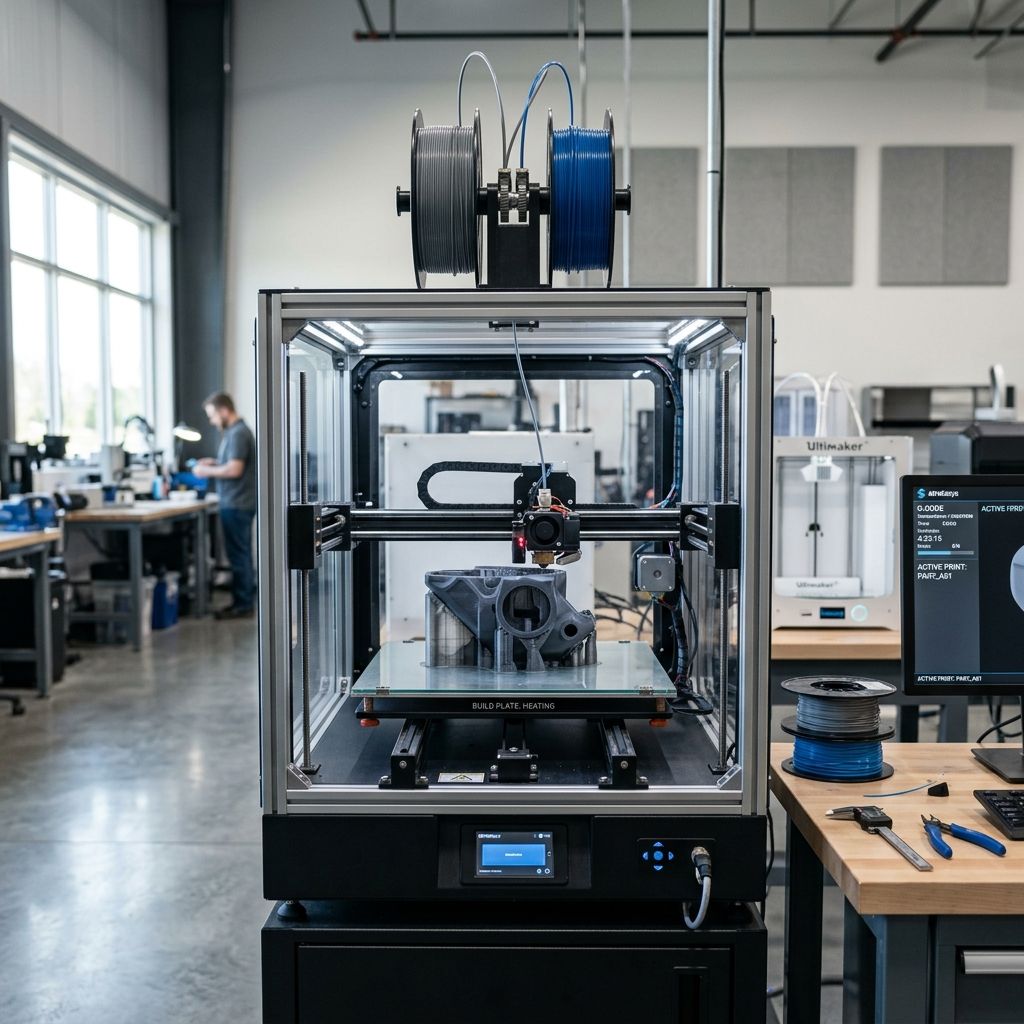
Bambu Lab P1 Series: Field Survival Guide & Mechanical Reality Check
After 5,000+ hours on a fleet of P1P and P1S units, the marketing fluff about "out-of-the-box perfection" hits the reality of industrial fatigue. Here is how these machines actually fail, why they do it, and how we keep them running in a high-uptime shop environment.
Core Technical Specifications (Shop Floor Reality):
- Motion System: CoreXY with 10mm linear rods (Y) and Carbon Fiber (X).
- Hotend: Proprietary All-in-One assembly (0.1mm - 0.8mm).
- Control: ESP32-based MCU (Significant lag compared to the X1C's Quad-core).
- Build Plate: 256mm³ dual-sided textured PEI or Cool Plate.
- Critical Failure Points: PTFE path friction, Toolhead cable fatigue, and Thermal Creep.
Nightmare #1: The AMS "Retraction Failed" Death Loop
If you're running the P1S or P1P with an AMS, the most common 2:00 AM failure isn't the print detaching it's the "Failed to retract filament" error. On paper, it's a smart system. In the field, it's a delicate balance of friction and torque that fails the moment your PTFE tubes start to age or your filament choice is slightly out of spec.
The physics here are simple: static friction. Every millimeter of PTFE tube adds drag. Between the AMS internal hub, the four-way buffer, and the toolhead, you have nearly two meters of travel. If the filament has any "memory" (coil set) or if the PTFE tube has developed a wear groove at the entry points, the small extruder motor inside the AMS can't generate enough pull to overcome the resistance. I've seen brand-new rolls of PETG fail because the diameter was 1.78mm instead of 1.75mm, increasing the surface contact area inside the tube just enough to stall the feeder.
Professional Advice: Throw away the stock PTFE tube holders immediately. They create sharp radii that increase friction. Print a "straight-entry" guide for the back of the printer. If the filament has to bend more than 30 degrees to enter the buffer, you're going to get a retraction error within 200 hours of runtime.
The 1000-Hour AMS Overhaul
When the AMS starts clicking, it's usually the "First Stage Feeder." These are consumable items, despite what the manual implies. The yellow plastic gears inside eventually shave off microscopic bits of filament, which then mix with the factory grease to create a grinding paste. Here is how we troubleshoot it:
- The Push-Pull Test: Disconnect the PTFE tube from the toolhead. Try to pull the filament manually through the AMS. If you feel "notching," the internal PTFE liner in the AMS hub is toast.
- Filament Swelling: Some silk PLAs and cheap PETGs swell at the tip during cooling. If the AMS can't pull that "bulb" back through the internal funnel, it jams. We fix this by increasing the "Retraction Length" in the slicer's filament settings by 0.5mm to ensure the molten tip stays within the melt zone during the cut.
- PTFE Wear: Look for "white dust" at the tube junctions. That's not filament; it's the tube itself being eaten. We replace all external tubes with high-quality Capricorn XS or similar 1.9mm ID (Inner Diameter) tubing to reduce slop, though be warned: tighter ID tubing requires perfectly round filament.
Nightmare #2: Thermal Creep & The "Heat-Soaked" Extruder
The P1S is an enclosed machine, which is great for ABS/ASA but a nightmare for PLA. We see a massive spike in extruder clogs during the summer months or when users run high-temp beds (60°C+) for long PLA prints with the door closed. This is the classic "Heat Creep" failure.
The P1 series uses a relatively small heat break fan. When the chamber temperature exceeds 35-40°C, the cooling efficiency drops off a cliff. The heat travels up the stainless steel throat of the hotend, softening the PLA before it ever reaches the nozzle. The extruder gears then flatten the softened filament, creating a "pancake" that is physically impossible to push or pull. This is why you see people propping their lids open with plastic shims.
The "Cold Pull" is Not Enough
When a P1S clogs due to heat creep, a simple cold pull rarely works because the clog is 20mm above the melt zone. You have to take the toolhead apart. It's a messy job involving tiny JST connectors that are notorious for breaking. In my experience, the JST-GH connectors on the P1P/P1S board are fragile; if you've swapped your hotend more than five times, check the pins for fatigue.
Technical Workflow: Hard Clog Extraction
- Heat the nozzle to 250°C (even for PLA) to lower the viscosity of the core.
- Remove the two 2mm hex bolts holding the hotend.
- Use a 1.5mm Allen key (the "sacrificial wrench") heated with a butane torch. Push it into the top of the heat break, let it cool for 30 seconds, then yank. This grabs the "plug" that the needle-cleaning tool can't reach.
- Check the extruder gears for "ghosting" residue in the teeth that reduces grip. Clean them with a brass brush and IPA.
I've found that switching to a hardened steel nozzle doesn't just help with abrasive filaments; it actually changes the thermal profile. Hardened steel has lower thermal conductivity than stainless steel. While this means you might need to bump your print temps by 5-10°C, it actually provides a slight buffer against heat creep because it doesn't transfer heat up the stack as quickly as the cheaper stainless assemblies do.
Nightmare #3: The "Ghosting" and VFA (Vertical Fine Artifacts) Mystery
The P1 series is fast, but physics is a cruel mistress. The carbon fiber X-axis is light, which is good for acceleration, but the P1P/P1S lacks the sophisticated active vibration compensation found in higher-end industrial machines (or even the X1C's higher-frequency sampling). Over time, your prints will start showing vertical lines shadows of the belt teeth or motor resonance.
This is often a result of belt tension degradation or "slop" in the toolhead. The P1 series uses a self-tensioning mechanism (the two screws on the back), but in my shop, we've found these to be inconsistent. If one side is tighter than the other, the CoreXY geometry becomes a parallelogram instead of a square. You'll notice your circular holes aren't perfectly round; they're slightly elliptical.
The "Hertz" Method: Don't trust the spring tensioners. Use a frequency tuner app on your phone. Pluck the belt like a guitar string at a specific distance from the motor. We aim for 110Hz to 120Hz on both belts. If they aren't matched within 5Hz, you'll see ghosting that no software calibration can fix.
The Carbon Rod Myth
Bambu says the carbon rods are maintenance-free. That's marketing talk. In a real workshop, they attract dust, which mixes with the microscopic carbon particles worn off the rods to create a dry, abrasive powder. If you feel "chatter" when moving the toolhead by hand, your bearings are clogged. NEVER grease the carbon rods. Grease will turn that powder into a grinding paste that will permanently ruin the tolerance of the bushings. We use 99% Isopropyl Alcohol on a lint-free cloth and wipe until the cloth comes away clean. It usually takes four or five passes.
The Hidden Failure: Toolhead Cable Fatigue
The P1 series uses a thick ribbon cable that flexes every time the head moves. In an industrial setting, we call this "high-flex cycle fatigue." After about 2,000 hours, we start seeing "Nozzle Temperature Malfunction" errors. Usually, it's not the thermistor it's a micro-fracture in the ribbon cable near the toolhead entry point where the strain relief is too stiff.
Your mileage may vary based on how fast you print. High acceleration (10,000mm/s²+) puts more "whip" into that cable. We've started preemptively reinforcing the cable entry with a bit of Kapton tape and a 3D-printed "gentle-curve" guide. It's a hack, but it beats a 4-hour teardown when the printer stops mid-job because it thinks the nozzle is -15°C.
- Maintenance Item: Z-Axis Lead Screws
- Frequency: Every 3 months / 500 hours
- Procedure: Wipe clean with a rag, apply Super Lube 21030 (PTFE Grease). Avoid "dry" lubricants here; the lead screw nuts are POM and need a film to prevent squealing.
- Red Flag: Black residue on the screws means the brass/POM interface is wearing due to misalignment.
Bed Leveling & The PEI Contamination Problem
The "Auto Leveling" on the P1P/P1S uses force sensors under the bed. It's elegant but finicky. If a single piece of purged filament falls under the magnetic plate even a 0.2mm thick strand it tilts the plate. The software will try to compensate, but your first layer will have "rough patches" where the nozzle is too close or too far because the mesh can only account for so much tilt before the geometry of the nozzle tip starts to drag.
The bigger issue is "Thermal Soak." The aluminum bed on these machines is relatively thin. If you start a print immediately after it hits 60°C, the center is at temp but the corners haven't expanded yet. In my experience, for large prints that fill the bed, you must let the machine sit at temp for 10-15 minutes before hitting "Start." This allows the plate to reach thermal equilibrium and prevents the "taco effect" where the bed bows in the middle during the print.
Pro-Tip on Adhesion: If you're losing adhesion on the Textured PEI plate, stop using IPA. Isopropyl alcohol often just spreads the skin oils around. Use hot water and Dawn dish soap. The surfactants in the soap actually lift the oils out of the PEI texture. If the plate is truly "dead," a light scuffing with a green Scotch-Brite pad (lightly!) will expose fresh PEI and give you another 500 hours of life.
The Electronics: SD Cards & Power Drops
The P1 series lacks internal storage, relying entirely on the microSD card for the "buffer." The cheap cards shipped with the units are junk. We've seen prints stop mid-way because the card hit a bad sector during the write-process of the log file. Swap it for a high-endurance "Industrial" or "Max Endurance" card immediately. The constant read/write cycles of 3D printing will kill a standard "Gold" card in months.
Also, watch the power connector. The P1S has a standard C13 plug, but because of the vibration of the CoreXY motion, we've found them to wiggle loose if the printer is on a shaky bench. A loose power connection causes "ghost reboots" that look like firmware crashes but are actually just 10ms power interruptions.
Mind the torque on those 2mm hotend screws. They are threaded into aluminum, and it's incredibly easy to strip them if you're swapping nozzles while the block is cold. Always snug them down while the head is at at least 150°C to account for thermal expansion, but don't ham-fist it.
Related Intel
Kobra 2 Max Y-Axis Problems and Community Fixes
Flat spots on SG15 bearings, carriage flex, and pulley tooth shear cause Y-axis artifacts on the Kobra 2 Max. Fixes: lubricate rails, reduce acceleration, and check belt tension.
Fixing Kinematic Binding on RatRig V-Core 3.1
RatRig V-Core 3.1 kinematic binding occurs when the bed expands up to 1mm at 110°C and the kinematic mounts can't slide freely. Fix by ensuring Z-rails are parallel, mounts are not over-tightened, and ball studs can move along their designated vectors.
Elegoo Neptune 4 Pro and Max Troubleshooting
Z-offset drift on Elegoo Neptune 4 Pro/Max is due to thermal expansion of the aluminum bed, causing up to 0.4 mm height change. Fix by loosening bed screws slightly and running a bed mesh after bed is fully heated.