Anycubic Kobra 3 Combo Issues and Fixes

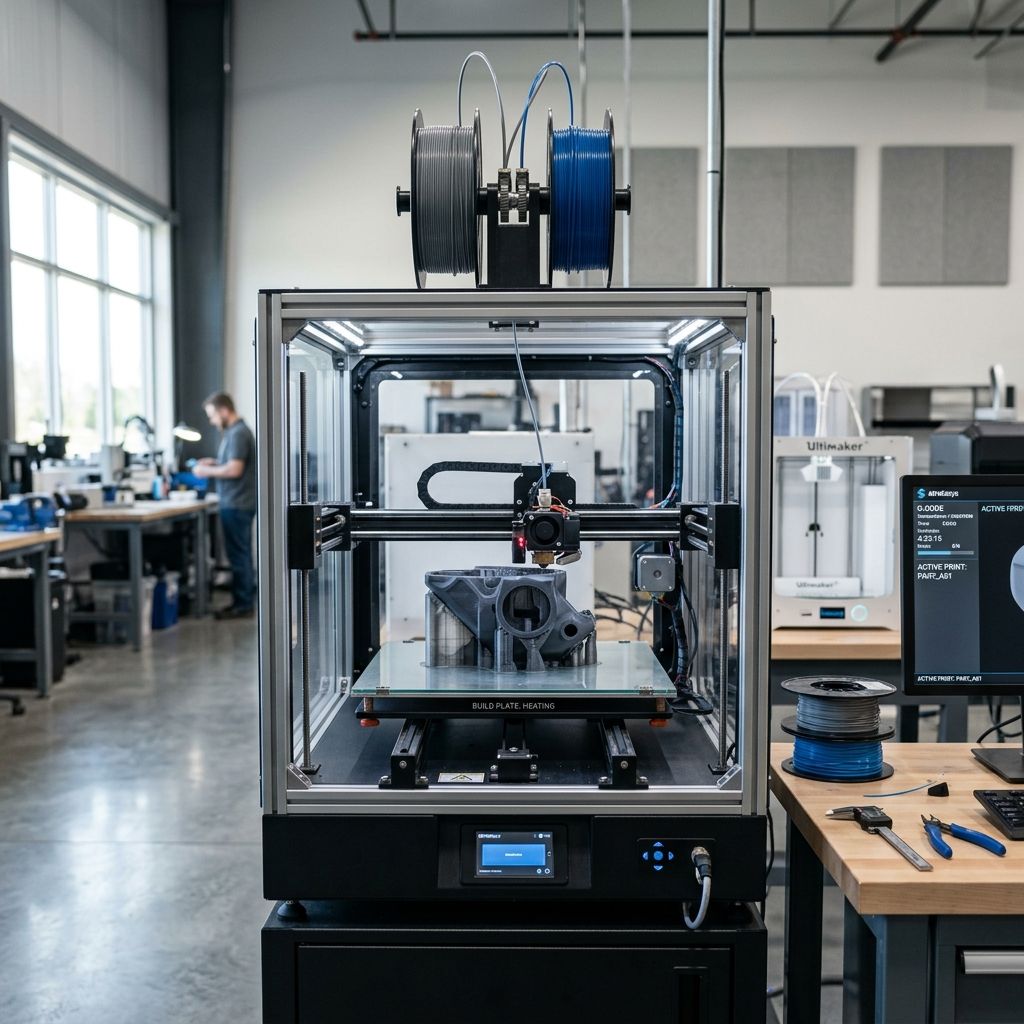
Field Report: Anycubic Kobra 3 Combo The Friction War and High-Speed Reality
A technical teardown of the Kobra 3 and ACE Pro system, focusing on the mechanical failures of multi-material setups, the physics of volumetric flow limits, and the reality of long-term shop-floor maintenance.
Initial Bench Assessment: On paper, the Kobra 3 is Anycubic's answer to the Bambu Lab ecosystem. It's an "all-in-one" high-speed bedslinger featuring a 4-color Automatic Color Engine (ACE Pro) that includes a filament drying function. While the frame is surprisingly rigid for the price point, the integration of a multi-material system into a high-acceleration environment introduces complex failure modes that the marketing glosses over. If you expect this to run 24/7 without a wrench in your hand, you're in for a wake-up call.
Failure Node 1: The ACE Pro Friction Trap and Retraction Dynamics
The biggest nightmare in any multi-material system isn't the software; it's the physical friction coefficient inside the PTFE (Polytetrafluoroethylene) tubes. In the ACE Pro system, the filament travels from the dry box, through a buffer, into a Y-splitter, and finally to the print head. That's a lot of distance for a 1.75mm strand to travel, and every millimeter adds drag.
In my experience, 90% of "ACE Feed Errors" are actually mechanical resistance issues. When the printer tries to retract filament to switch colors, it forms a "bulb" or a "stringy tail" at the end of the melted strand. If your cooling settings aren't dialed in perfectly, that bulb is slightly larger than the 2.0mm inner diameter of the PTFE tube. It gets stuck at the Y-splitter. The motor grinds the filament, creating a flat spot, and now the drive gears have zero traction. You're done. You have to take the assembly apart just to clear a 5-cent piece of plastic.
PRO-TIP: Don't trust the factory-cut PTFE tubes. They often have burrs on the internal diameter from the factory shears. Use a dedicated tubing cutter to ensure a perfect 90-degree square cut, then use a deburring tool or a small drill bit to slightly flare the entry and exit points. This reduces the "snag" probability by nearly 40% during high-speed swaps.
The ACE Pro's integrated heater is a nice touch, but it's an active drying system that relies on a small PTC element. If you live in a high-humidity environment (above 60% RH), the heater is barely keeping up. I've noticed that if the filament is even slightly "wet," it becomes more brittle. Brittle filament + high-speed retraction = snapped strands inside the guide tubes. When that happens, you aren't just restarting a print; you're doing a full system purge of the ACE unit, which is a tedious 30-minute process of manual extraction.
Failure Node 2: The "LeviQ 3.0" Load Cell and Z-Offset Drift
Anycubic markets "LeviQ 3.0" as a set-it-and-forget-it solution. It uses a load cell under the bed to "feel" the nozzle touching the surface. This is theoretically superior to an inductive probe because it accounts for the actual nozzle tip, but it's prone to "signal noise."
The physics of a load cell require a "clean" environment. If there is even a tiny speck of plastic stuck to the tip of your nozzle even a fraction of a millimeter of cooled ooze the load cell triggers early. Your Z-offset is now 0.2mm too high. You get zero bed adhesion, and your first layer looks like a pile of spaghetti. I've spent hours chasing a "drifting offset" only to realize the nozzle wiping brush was worn down and leaving residue on the tip before the homing sequence.
- Load Cell Sensitivity: Prone to vibration interference from the 12010 cooling fan if it's spinning during calibration.
- Thermal Expansion: The bed is aluminum. At 60°C, it expands. If you calibrate "cold," your offset will be wrong by the time you hit printing temperature.
- Spring Tension: The bed is mounted on silicone spacers or springs. If these aren't compressed evenly, the load cell readings across the 250mm span become non-linear.
- Nozzle Torque: A loose nozzle vibrates within the heater block, creating "ghost" triggers on the sensor.
We've also seen issues with the eccentric nuts on the Y-axis. The Kobra 3 is a bedslinger; it moves the heavy heated bed back and forth. At 600mm/s, the momentum is massive. If those rollers aren't perfectly tensioned, you get "slop." This slop translates to the load cell as an inconsistent "bounce," making the mesh leveling map look like a mountain range instead of a flat plane. You need to check the Y-axis tension every 50 hours of printing. If you can spin the wheels with one finger without moving the bed, they are too loose. If they are so tight they have flat spots, you'll see "VFA" (Vertical Fine Artifacts) in your prints.
Failure Node 3: The High-Speed Volumetric Wall
Let's talk about the "600mm/s" claim. This is a marketing number, not a shop reality. To print at 600mm/s with a 0.2mm layer height and a 0.4mm line width, your hotend needs to melt and push roughly 48mm³ of plastic per second. Most stock hotends, including the one on the Kobra 3, start to struggle and "underextrude" once you cross 20-25mm³/s.
The problem is "thermal soak." As the filament flies through the heater block, it doesn't have enough time to absorb heat. The core of the filament stays solid while the outside melts. This increases the internal pressure in the nozzle to the point where the extruder's planetary gears start skipping. You'll hear a rhythmic "clicking" sound. That is the sound of your motor losing the fight against physics.
FIELD FIX: To actually get decent strength at high speeds, you have to bump your temperatures 15-20°C higher than the filament spool recommends. If you're running PLA at 200°C and trying to hit 300mm/s, you're going to have brittle parts. Crank it to 220°C or 225°C. You need that extra "thermal overhead" to compensate for the speed.
Another issue at these speeds is cooling. The Kobra 3 has a powerful parts cooling fan, but it's a single-sided or limited duct design. On the "back" side of the print, away from the fan nozzle, you'll see sagging and poor overhangs. In my shop, we've had to slow down outer walls to 100mm/s just to keep the surface finish professional. Using the 600mm/s setting is strictly for "draft" quality or bragging rights; it's not for production-grade components.
Maintenance Workflow: The "200-Hour Overhaul"
I don't care what the manual says; industrial equipment needs a schedule. After about 200 hours of run time on the Kobra 3, the following happens: the V-slot rollers accumulate "dust" (which is actually pulverized POM plastic), the belts stretch, and the PTFE tube inside the hotend begins to degrade.
Step 1: Belt Tensioning by Frequency. Don't just "feel" the belts. Download a frequency tuner app on your phone. For the X and Y belts on this frame, you're looking for roughly 80-90Hz when plucked like a guitar string. If they are uneven, you'll get skewed circles (ovals). Over-tightening will wreck the bearings in your stepper motors, and that's a repair you don't want to do on a Saturday night.
Step 2: The Hotend "Cold Pull." Because the ACE Pro swaps colors so often, you get a buildup of carbonized pigment inside the nozzle. I perform a "cold pull" (heating to 200°C, then cooling to 90°C and yanking the filament out) every time I switch from a high-temp material like PETG back to PLA. If you don't, the leftover PETG will never melt at PLA temps and will act like a "seed" for a permanent clog.
Step 3: Lubrication of the Z-axis Lead Screws. Anycubic uses standard T8 lead screws. They ship with a bit of "shipping grease" that is garbage. It attracts dust like a magnet. Wipe them down with isopropyl alcohol until they are bone dry, then apply a high-quality PTFE-based dry lubricant. This prevents the "Z-banding" that occurs when the gantry stutters during a layer change.
The Troubleshooting Matrix: Common Symptoms & Field Cures
- Symptom: ACE Pro won't pull filament back (Error 0x12). Fix: Check for a "mushroomed" filament tip. Shorten the PTFE tube between the ACE and the Y-splitter to reduce friction.
- Symptom: First layer is "wavy" or inconsistent. Fix: Clean the PEI plate with hot water and dish soap (not just IPA). Check for loose bed mounting screws.
- Symptom: Stringing between color changes. Fix: Increase the "Retraction Distance" in the slicer and ensure the ACE "Dryer" mode is active for at least 2 hours before printing.
- Symptom: Sudden "Layer Shifting" on the Y-axis. Fix: Check the motor driver temperature. The Y-motor gets very hot moving that bed. Add a small heatsink or reduce the acceleration in the firmware.
Physics of Failure: Why the Hotend Clogs
Let's look at the "Heat Break." In the Kobra 3, they use a bi-metal heat break designed to keep the "cold side" cold. However, when you do 500 color changes in a single print, the filament is constantly being moved up and down through the transition zone. This is called "Heat Creep."
Every time the filament retracts, it pulls a bit of molten plastic into the "cold" section of the tube. If your workshop is hot (above 30°C), the heatsink fan can't dissipate enough heat. The cold side becomes the "lukewarm" side. The plastic softens, expands, and jams against the walls of the heat break. Once this happens, the extruder cannot push it through. You'll see the filament "bird-nesting" at the extruder gears. The only real solution here is to ensure your "Retraction Speed" isn't so high that it creates a vacuum, and your "Retraction Distance" is kept to the bare minimum required for a clean swap (usually 0.5mm to 1.0mm for direct drive).
Skeptic's Corner: Anycubic's slicer software often defaults to aggressive settings to hit those "600mm/s" marks. If you're seeing failed prints, the first thing I'd do is go into the advanced settings and cap your "Jerk" (Junction Deviation) and "Acceleration." The frame is stiff, but it's not "vibration-proof." Lowering your acceleration from 20,000mm/s² to 10,000mm/s² will double your print's success rate and only add about 15% to the total print time. It's a classic trade-off: do you want it fast, or do you want it finished?
The ACE Pro's internal gears are made of a reinforced nylon or plastic. Over time, particularly with abrasive filaments like Glow-in-the-Dark or Carbon Fiber PLA, these gears will wear down. I've seen the teeth flatten out after only five or six spools of "rough" material. If you plan on running anything other than standard PLA/PETG, you need to treat the ACE unit as a consumable. It's not built with the hardened steel drive path found in $2,000 industrial units. Monitor the "dust" inside the ACE clear lid; if you see yellow or black plastic shavings, your drive gears are eating themselves.
Always keep a spare 0.4mm hardened steel nozzle and a length of 1.9mm ID Capricorn PTFE tubing in your toolbox. The stock components are "fine," but in a high-speed, multi-material environment, the tolerances for "fine" disappear very quickly. If the system starts acting up, don't keep hitting "Resume." Stop, check the friction in the Bowden line, and verify the nozzle tip is clean. That 5-minute check saves a 20-hour print.
Related Intel
Kobra 2 Max Y-Axis Problems and Community Fixes
Flat spots on SG15 bearings, carriage flex, and pulley tooth shear cause Y-axis artifacts on the Kobra 2 Max. Fixes: lubricate rails, reduce acceleration, and check belt tension.
Fixing Kinematic Binding on RatRig V-Core 3.1
RatRig V-Core 3.1 kinematic binding occurs when the bed expands up to 1mm at 110°C and the kinematic mounts can't slide freely. Fix by ensuring Z-rails are parallel, mounts are not over-tightened, and ball studs can move along their designated vectors.
Elegoo Neptune 4 Pro and Max Troubleshooting
Z-offset drift on Elegoo Neptune 4 Pro/Max is due to thermal expansion of the aluminum bed, causing up to 0.4 mm height change. Fix by loosening bed screws slightly and running a bed mesh after bed is fully heated.