Prusa MK4 & MK4S Calibration: What You Need to Know

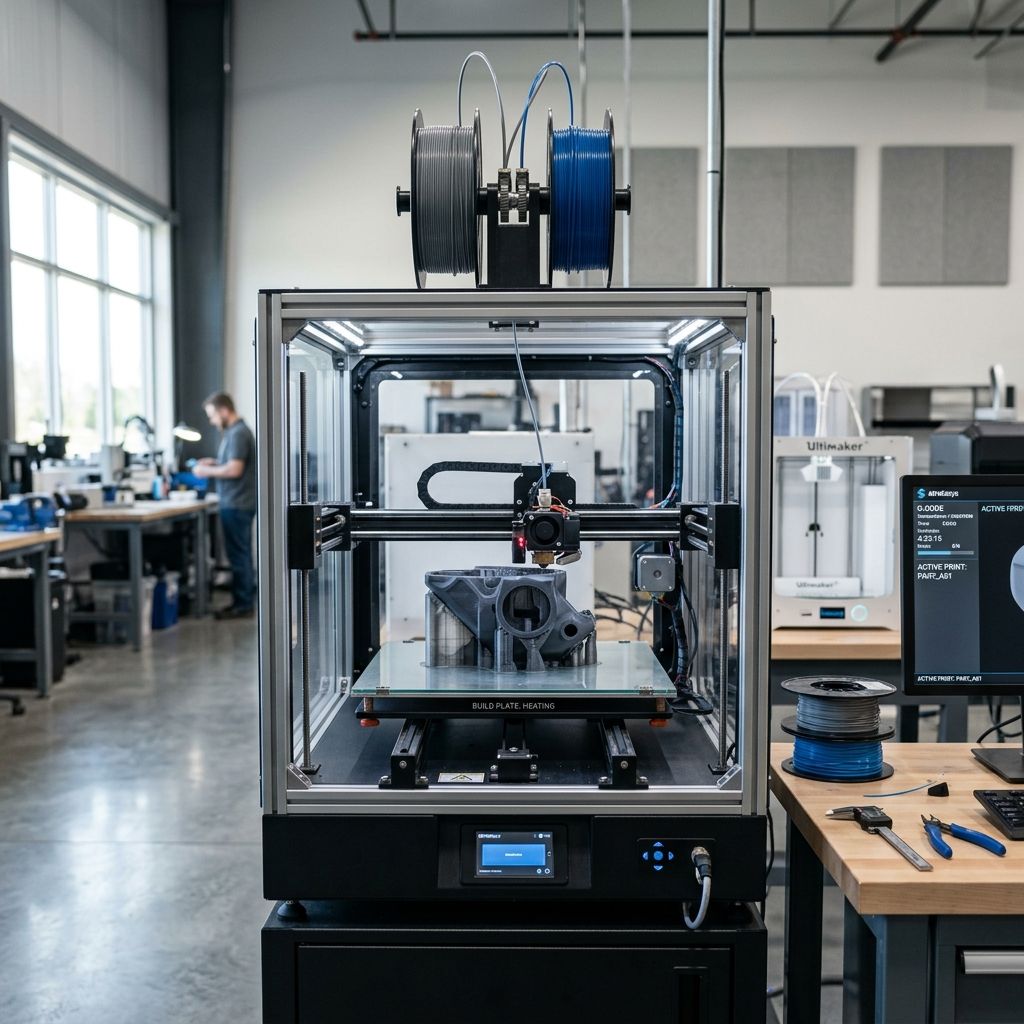
Prusa MK4 & MK4S Calibration: The Maker's Field Guide to First-Layer Sorcery and Load Cell Quirks
You bought a MK4 or MK4S expecting "plug and play" and it mostly is. But if you're chasing that perfect first layer, fighting adhesion ghosts, or wondering why your load cell sensor suddenly screams, you need to understand what's happening under the hood. This isn't a reprint of the Prusa manual; this is what you'll learn after 10,000 hours of running these machines hot, cold, and covered in dust.
Maker's Summary: What Makes the MK4 Calibration Different?
The MK4 replaces the traditional PINDA probe with a load cell sensor on the toolhead a direct bearing on the nozzle for Z-height measurement. This eliminates the inductive sensor's material sensitivity but introduces new failure modes: thermal drift, vibration noise, and over-dependence on nozzle cleanliness. The MK4S adds a revised extruder and cooling, but the calibration principle remains the same. If you think you can skip the preheat soak you're wrong.
- Key difference: No more PINDA offset calibration. The load cell measures actual nozzle contact.
- Critical weak point: Contaminated nozzle (old filament residue) will fool the sensor.
- First-layer behavior: The MK4 uses a "adaptive meshing" but it's only as good as the static reference point set during initial calibration.
Pre-Calibration: The Things That Bite You Before You Even Start
I've seen more ruined calibration sessions from ignoring environmental factors than from bad firmware. Here's the checklist I keep posted on the wall next to my MK4S farm.
- Thermal Soak: Let the printer idle with hotend at 215°C and bed at 60°C for at least 15 minutes. Longer for enclosures. The frame and lead screws expand; calibrating cold gives you a false zero that shifts after 20 minutes of printing.
- Nozzle Wipe: Before any Z calibration, manually clean the nozzle tip with a brass brush while at temperature. Any plastic on the tip will cause the load cell to trigger prematurely I've seen 0.3mm errors from a single stuck blob.
- Mechanical Alignment: Check that the X-axis gantry is level relative to the frame. Use two identical objects on each side of the gantry if they don't rock evenly, tighten the X-axis eccentric nuts. Do this with the printer hot so the V-slot rollers are at thermal equilibrium.
- Bed Cleanliness: Wipe the PEI sheet with 99% IPA and let it evaporate. Avoid acetone it degrades the build plate adhesive over time. Fingerprints are the enemy of adhesion and mess with the bed mesh.
The Load Cell: It's Not a Tactile Switch
Prusa's load cell is a piezoelectric sensor bonded to the toolhead. When the nozzle touches the bed, the system detects a sudden force change. It's elegant, but it has quirks. Engineering reality: The sensor is sensitive to vibration from the fans and to thermal expansion of the heatsink. If you've ever had a "crash" where the nozzle plows into the bed on the first calibration point, here's the likely cause.
Physics of Failure: False Trigger or No Trigger
The load cell outputs a raw voltage proportional to strain. The firmware applies a threshold to decide "contact". This threshold is temperature-dependent because the steel nozzle expands and creates preload against the sensor. Additionally, the part cooling fan (if running) introduces high-frequency vibration that can spike the reading. I've seen the threshold drift by 10% when the ambient temp changes from 20°C to 30°C. Prusa's firmware includes a "cooling fan off during calibration" rule, but if you've wired your fan to a different port or run standalone firmware, you're asking for trouble.
Field fix: If your MK4S consistently fails Z calibration on the first try, try reducing the "Z_LOADCELL_THRESHOLD" in the firmware (if you're comfortable recompiling). Or, more practically, make sure your hotend fan (the one on the heat sink) is running at full speed it stabilizes the temperature of the heatsink, reducing thermal drift.
What about the MK4 versus MK4S? The MK4S uses a different heatsink with a higher efficiency fan. In my experience, the MK4S shows less temperature fluctuation during calibration, but the load cell sensitivity remains identical. The real upgrade is the improved extruder gear alignment less vibration from the filament path means a cleaner load cell signal. If you're still on the MK4 and fighting false triggers, consider upgrading the heatsink fan to a 24V Noctua (NF-A4x20) and adding a silicone sock to the hotend to reduce draft effects.
First Layer Calibration: Where 90% of Problems Live
The MK4's "Z Calibration Wizard" sets the nozzle height by touching the bed at a single point. Then it runs a quick mesh (9 points on the MK4, 16 on the MK4S) and applies compensation. But here's the catch: the **single touch point** is considered the "reference" for the entire mesh. If that reference is off by 0.05mm, the whole first layer is skewed.
I always run the wizard twice. The first pass often has a slight error because the nozzle might not have been fully clean. After the first touch, a tiny film of plastic gets deposited on the nozzle tip. The second touch (if you run the wizard again immediately) will be more accurate because that film is now consistent. Pro tip: Between calibration runs, do a quick "prime" extrude 10mm of filament and then retract 5mm. This wipes any dangle off the nozzle.
- Z offset live adjustment: During the first layer test print (the spiral square), watch the extrusion. Should be like a flat ribbon, not a round bead. If you get a "tire track" that is slightly translucent, you're too close raise Z by 0.025mm. If the lines have gaps or are wavy, you're too far lower Z.
- Mesh accuracy gotcha: The MK4S mesh uses the load cell for each point. If your bed has a high spot (warped PEI sheet), the mesh will try to compensate, but the load cell might not detect the high spot if it's smaller than the nozzle radius. I've seen 0.2mm high spots around the edges of cheap PEI sheets. Check your bed with a precision straightedge (or a steel ruler) if it's gapped, consider flipping the sheet or replacing it.
- Adhesion failures due to Z calibration drift: A common issue: your print starts perfect, but after 2 hours you get a corner lifting. That's often caused by the bed temperature changing (if you're using a custom start G-code that doesn't wait for full bed soak) or the Z reference shifting due to thermal expansion of the frame. I've seen a 0.1mm lift in the center of the bed between cold and 60°C. Solution: run the bed mesh using M420 S1 after the bed reaches temperature, not before.
Belt Tension: The Silent Calibration Killer
I know this is a "calibration" article, not a mechanical one, but belt tension directly impacts the quality of the load cell readings. If your X-axis belt is too loose, the toolhead can bounce when the nozzle contacts the bed, causing a false "double hit" that confuses the sensor. If the Y-axis belt is too tight, you get vibrations that add noise to the load cell signal.
The MK4 has a built-in belt tension measurement (Settings > Hardware > Belt Status). Aim for 240-280 Hz on the X-axis and 260-300 Hz on the Y-axis. But the sensor-based measurement can be fooled if the belts are worn or have a sticky spot. I still use the old guitar tuner method: pluck the belt and listen. The X-axis should be around the note D#4 (~311 Hz), Y-axis around F4 (349 Hz). Mind the torque on the idler pulley screws they should be snug but not over-cranked. I've seen stripped threads on the extruder body from over-zealous users.
PID Tuning: Why Your Calibration May Be Temperature-Sensitive
The load cell's behavior changes with temperature. If your hotend's temperature fluctuates more than ±2°C during the first 5 minutes of printing, the load cell will drift. Run PID tuning for both the hotend and the bed (yes, the bed PID matters because the frame expands differently).
Procedure:
- Heat the bed to 60°C and run M303 E-1 S60 C8 (PID autotune for bed, 8 cycles). Save the values.
- Heat the hotend to 245°C (or your typical printing temp) and run M303 E0 S245 C8. Save.
- Then, manually verify the load cell offset by doing a cold touch test: after PID tune, let everything cool down to room temperature, then run the Z calibration wizard. The original calibration should hold. If it's off by more than 0.05mm, your PID values might be causing the hotend to overshoot, expanding the nozzle differently.
⚠️ DANGER: Hotend Overtightening
When replacing the nozzle, tighten it while the hotend is at 285°C (or at least 10°C above your max printing temp). Never overtighten the load cell is sensitive to excessive preload. If you feel resistance, stop. I've seen nozzles crack the heat break block because someone used a torque wrench (yes, people do that). Just hand-tighten with a socket, then an extra ¼ turn. If the load cell reading jumps after a nozzle change, you've put too much preload on it; back off the nozzle and try again.
XYZ Calibration: The Hidden Parameter
The MK4 doesn't require XYZ calibration like the MK3 (it uses the load cell to auto-adjust). But the "full calibration" in the wizard also checks the X-axis squareness and the max travel positions. I've seen cases where the X-axis hits the endstop and the load cell triggers prematurely, causing a "home fail" error. If you get that, check the X-axis endstop switch it might be dirty. Blow it out with compressed air. Also, ensure the cable management doesn't snag on the frame during homing.
For the MK4S, the additional filament sensor (load cell in the extruder) can also interfere. Make sure the filament is fully inserted before running any calibration if the sensor detects an empty state, it may change behavior. I've had false positives during calibration because the filament wasn't fully seated.
Troubleshooting Matrix: Common Calibration Ghosts
- Symptom: Calibration succeeds, but first layer has ridges on one side. Cause: Bed sheet warped or mesh not being applied (verify with M420 S1 in start G-code). Fix: Add G29 to your start G-code to force a new mesh before each print.
- Symptom: Load cell randomly triggers mid-print, causing "crashes". Cause: Vibration from infill pattern (especially gyroid) or loose screws on the toolhead. Fix: Tighten all M3 screws on the toolhead. Add a silicone damping pad under the printer.
- Symptom: Z calibration fails with "sensor not triggered" after nozzle change. Cause: Nozzle not fully seated or too much thermal paste between heat break and block (shorting the load cell). Fix: Remove nozzle, clean threads, re-install with moderate torque.
- Symptom: First layer is too squished on one edge of the build plate. Cause: X-axis gantry not level or bed screws loose. Fix: Heat the bed, then manually re-tighten the four bed leveling screws (behind the PEI sheet if you haven't done this yet, you should). After tightening, run the bed mesh.
Maintenance Workflow: Keep Your Calibration Stable
I schedule a full calibration check every 200 hours of print time. Here's my step-by-step:
- Inspect belts for wear if they have frayed edges, replace.
- Check V-slot rollers for flat spots rotate the eccentric nuts to move the rollers to a fresh surface.
- Clean the load cell contact area use a cotton swab with IPA and gently wipe the metal surface where the nozzle collar meets the sensor. Do not disassemble the toolhead unless necessary.
- Run the full calibration wizard again. Compare the Z offset to the previous value if it changed by more than 0.1mm, investigate: either the nozzle is worn or the bed has bowed.
- Update firmware monthly Prusa frequently tweaks the load cell thresholds.
One thing I've learned the hard way: the load cell itself can degrade over time. If your MK4 has been running for 10,000+ hours and you start seeing calibration drift that you can't tune out, consider replacing the load cell assembly. It's a part that wears like a switch the piezo crystal can fatigue.
Final Workshop Warning: The Thermal Chase
If there's one takeaway from this field guide, it's this: temperature consistency is king. Every calibration step that fails, 9 times out of 10, is because the printer wasn't at thermal equilibrium. Do not start a calibration routine from a cold printer. Do not believe the firmware when it says "bed temp reached" the top surface may be 10°C cooler than the thermistor reading. Use a thermocouple or at least a touch test on the bed surface to verify soak.
⚠️ CAUTION: Never Force the Toolhead
During calibration, if you hear grinding or the load cell doesn't trigger within 5 seconds of expected contact, stop. Manually raise Z via the menu. Inspect the nozzle is it touching the bed? If not, your sensor may be dead or your nozzle is too short (common with third-party nozzles). I've seen one user who replaced the nozzle with a longer one and drove the toolhead into the bed, destroying the PEI sheet. Always use genuine Prusa nozzles or ones with verified length (4.15mm from shoulder to tip).
That's it. No conclusion just keep your sensors clean, your temperatures stable, and your belts tight. The MK4 and MK4S are workhorses, but they need a mechanic who understands that a 0.01mm error today is a spaghetti monster tomorrow.
Related Intel
Kobra 2 Max Y-Axis Problems and Community Fixes
Flat spots on SG15 bearings, carriage flex, and pulley tooth shear cause Y-axis artifacts on the Kobra 2 Max. Fixes: lubricate rails, reduce acceleration, and check belt tension.
Fixing Kinematic Binding on RatRig V-Core 3.1
RatRig V-Core 3.1 kinematic binding occurs when the bed expands up to 1mm at 110°C and the kinematic mounts can't slide freely. Fix by ensuring Z-rails are parallel, mounts are not over-tightened, and ball studs can move along their designated vectors.
Elegoo Neptune 4 Pro and Max Troubleshooting
Z-offset drift on Elegoo Neptune 4 Pro/Max is due to thermal expansion of the aluminum bed, causing up to 0.4 mm height change. Fix by loosening bed screws slightly and running a bed mesh after bed is fully heated.