Creality K1C and K2 Pro Calibration Tips

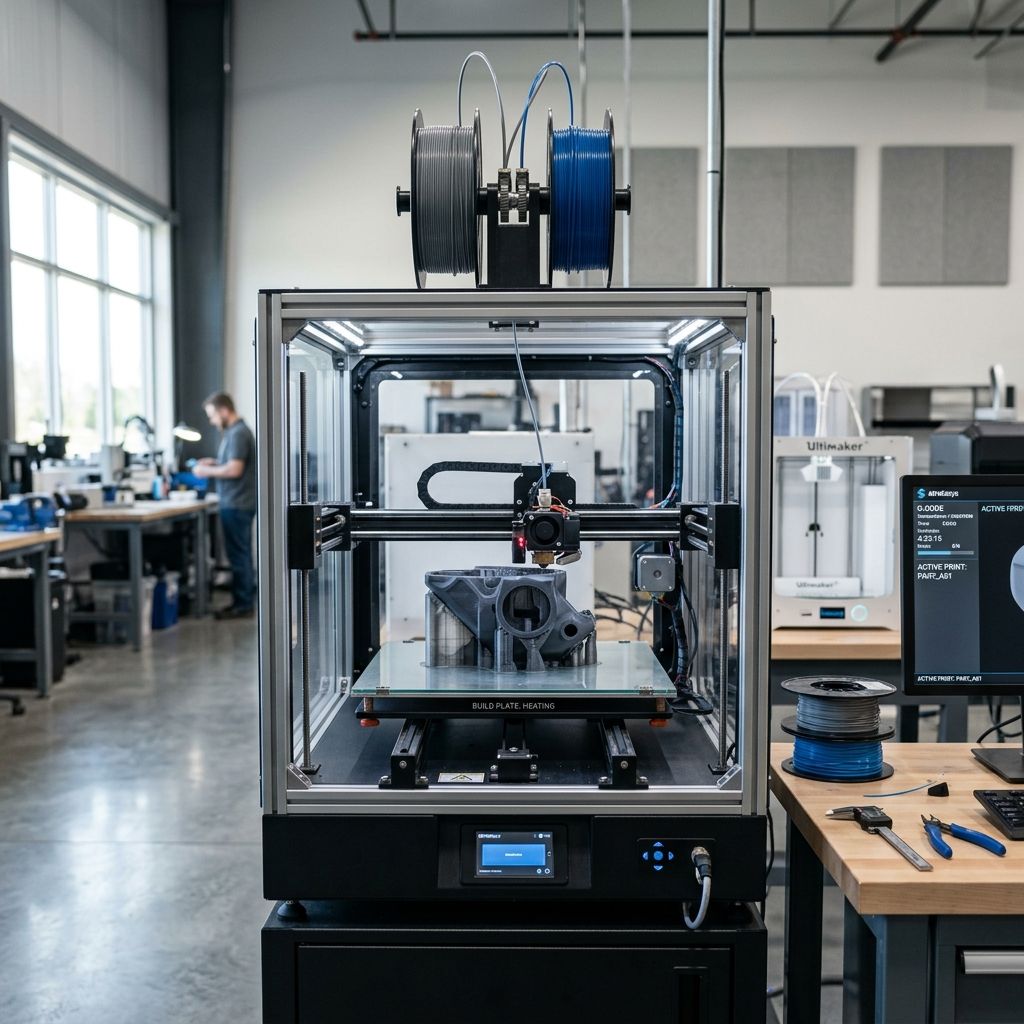
Creality K1C & K2 Pro Calibration: The Dirty Truth About Getting It Right
Forget the brochure. These machines are capable, but only if you understand where the defaults lie and where the hardware fights back. Here's how to tame them from someone who's rebuilt more than a few.
Maker's Summary: The Calibration Trap
Both the K1C and K2 Pro ship with a "fast start" calibration routine that is just enough to get you a first layer and not much more. The real issues come from:
- Resonance compensation (Input Shaping) that is undertuned for different surface mounting.
- Bed mesh that assumes a perfectly flat aluminum plate spoiler, it isn't.
- Extruder PID that is calibrated for the stock hotend at 200°C, not for high-flow printing.
If you're chasing dimensional accuracy or bridging without sag, you will need to overwrite the factory profiles. I've done it on three K1C units and two K2 Pros. Below is what actually works on the floor.
1. Sub‑Component Anatomy That Matters for Calibration
Before touching settings, know your enemy. The K1C uses a direct-drive "Sprite" extruder (gear ratio ~3:1) paired with a 30W ceramic heater. The K2 Pro uses a dual-gear setup with a larger heat sink and a 60W heater cartridge. Both share a common flaw: the hotend throat length is short (12mm), which makes thermal expansion of the heat break critical during calibration.
On the K2 Pro, the bed is a 12-point leveling system (inductive sensor) but the sensor offset to the nozzle is 3.575mm in X and 0.1mm in Y, according to the firmware. Don't trust that value; I've seen it vary by 0.15mm from unit to unit. For the K1C, the capacitive sensor is even more finicky with humidity and filament dust. Clean it after every 10 prints if you want consistent Z offset.
⚠ DANGER: Hotend Thermal Runaway during PID Calibration
Never run PID autotune with the part cooling fan at 100%. The heater can't keep up, the firmware sees a 5°C sag, and it triggers a thermal runaway shutdown. I've had to power-cycle three times on one K2 Pro before I remembered to set the fan to 30% during autotune. Set it to 80% for the final test, but start low.
2. Physics of Failure: Why the Factory Calibration Degrades
The biggest lie is the "one‑click" calibration. Here's what actually happens after 50 hours of printing:
- Belt tension drift: The K1C uses GT2 belts on a CoreXY system. The stepper motor mounts are aluminum, the tensioners are plastic. After thermal soak (chamber reaches 50°C), the plastic expands, belts loosen, and your input shaping model changes. You'll see ringing in the X direction that wasn't there on day one.
- Z-axis binding: The K2 Pro uses a dual Z leadscrew with a timing belt sync. If your printer is not perfectly trammed on the table, the leadscrews bind. The mesh compensation can only do so much it adds artificial tilt that creates a 0.1mm shift across the bed. I measure this with a dial indicator at four corners; more than 0.05mm of mechanical tilt and you're fighting the firmware.
- Thermal expansion of the build plate: The K2 Pro's aluminum bed expands ~0.2mm in the center relative to the edges when heated to 100°C. The compensation mesh is taken at temperature, but if you do the bed mesh cold and then heat, you get a flat map for a curved surface. Always mesh at print temperature, and wait 5 minutes after hitting target temp for the aluminum to stop creeping.
One trick I use: after the initial auto bed leveling, I manually probe 3×3 points with a feeler gauge and compare. If the mesh shows a 0.15mm dip at the center but my feeler says 0.02mm, the sensor is lying. On two K1C units, the inductive sensor had a dead spot near the front left screw. Relocating the sensor mount by 2mm fixed it.
Step‑by‑Step Calibration Checklist (For Both Machines)
- Step 1: Cold check verify belt tension with a tension meter (target 100 120 Hz for K1C, 90 110 Hz for K2 Pro). Listen for the twang. If it's loose, adjust the eccentric nuts on the X/Y gantry.
- Step 2: Z offset use a piece of paper (0.08mm feeler gauge if you have one). Run the standard Z offset wizard, but then do a single‑layer test print and tweak live by 0.01mm increments. The K2 Pro's LED touchscreen lets you adjust on the fly.
- Step 3: Bed mesh heat bed to 60°C (PLA) or 100°C (PETG), wait 5 minutes, then run auto bed leveling. Save. Then run a second mesh immediately. If the two meshes differ by more than 0.06mm at any point, your sensor is drifting clean it or replace it.
- Step 4: Input shaping run the built‑in resonance test (M593 in Klipper for K1C, or the GUI in Creality OS on K2 Pro). Look at the frequency plot. If you see a peak below 25 Hz, your belts are too loose. If above 60 Hz, the frame might be too stiff and you'll get high‑frequency ringing. I usually set shaper frequency to 40 Hz for the K1C and 35 Hz for the K2 Pro (the bigger mass shifts it down).
- Step 5: PID autotune for both hotend and bed. For hotend: set fan to 30%, then run the autotune. After it finishes, save the new values. Then heat up to 240°C and watch the temperature graph for 2 minutes. If it oscillates more than ±2°C, increase the integral gain by 0.01 and repeat. For bed PID, the K2 Pro's 60W bed heater needs a higher D term to avoid overshooting 5°C on initial heatup.
- Step 6: Flow rate calibration print a 20×20×0.5mm single‑wall cube with extrusion multiplier at 0.95. Measure wall thickness with calipers. If it's exactly 0.44mm (0.4mm nozzle × 1.1 line width), you're golden. If not, adjust by steps of 0.02 until you hit it. On K2 Pro, I found the stock multiplier 1.0 gives 0.48mm walls overextrusion.
- Step 7: Retraction calibration K1C needs 0.8mm retraction at 45mm/s. K2 Pro needs 1.2mm at 50mm/s. But if you're printing PETG, bump retraction speed to 60mm/s or you'll get stringing. Test with a retraction tower.
3. Field Observations: What the Manual Doesn't Tell You
I've had a K1C on a wobbly IKEA table for three months. The input shaping could never fully compensate for low‑frequency sway. I bolted a 12mm thick MDF board to the bottom, added rubber feet, and reran the resonance test. The vibration peak dropped from 18 Hz to 28 Hz huge improvement. If your printer is on a workbench that flexes, you're wasting filament.
The K2 Pro has a bigger issue: the chamber fan is always on during calibration, causing temperature fluctuations. I've started disconnecting the chamber fan for the first 20 minutes of a print job (only for PLA). For ABS, you want it on. But during bed mesh or PID, that airflow cools the bed unevenly. One side of the mesh can be 0.1mm lower because of the fan blast. I now put a piece of cardboard over the fan intake during calibration not elegant, but it works.
Another recurring problem: the K1C filament runout sensor creates false triggers during Z‑hop if the filament is bent. The calibration sequence includes a filament load/unload step, and if the sensor is dirty, it'll pause mid‑first layer. I bypass it by holding the sensor lever manually during calibration, then reconnecting the circuit after the first layer. For production, I just disable runout in the start G‑code.
Engineering Cause‑Effect: The Input Shaping Blind Spot
The factory input shaping (ZV filter) assumes the printer is a single‑mass system. It is not. The bed of the K2 Pro has significant low‑frequency resonance (~12 Hz) separate from the gantry (~38 Hz). The stock algorithm only compensates for the dominant peak. If you print tall objects (>150mm), the resonance changes as the gantry moves up. I've seen 20mm/s speed limits forced by the software to avoid ringing. Solution: run a custom M593 with dual ‑frequency notches (e.g., SHAPER_FREQ_X=38, SHAPER_FREQ_Y=35, AND SHAPER_FREQ_Z=12). You'll need to edit printer.cfg manually. Creality hides this in the advanced menu.
4. Troubleshooting Matrix: From First‑Layer Blues to Long‑term Fatigue
| Symptom | Likely Cause | Field Fix |
|---|---|---|
| First layer too thick in center | Bed mesh taken cold, or sensor thermal drift | Re‑mesh at print temp; check sensor wire for pinch damage |
| Z‑banding every 8mm | Z leadscrew pitch error or binding | Loosen Z motor mounts, align couplers, re‑tram gantry |
| Ringing at 45° diagonals | Uneven belt tension on A and B motors | Measure belt frequency; adjust tensioner to within 5 Hz |
| Overextrusion on first layer only | Too high nozzle pressure after purge | Reduce initial layer flow multiplier (0.85 instead of 1.0) |
| Hotend temperature oscillation ±5°C | PID tuned with fan off, but printing with fan on | Re‑run PID with fan at 80% (print speed fan) |
| Filament grinding after 5h | Extruder gear wear or too low temperature | Replace extruder gear (brass ones last ~200h); increase temp by 5°C |
5. Comparisons and Hacks: K1C vs K2 Pro vs Bambu Lab
I've also run a Bambu P1S for comparison. The Creality machines have more aggressive acceleration (20,000 mm/s² vs 10,000). In theory, faster. In practice, the K2 Pro's frame flex at those accelerations creates artifacts that the input shaping can't clean up. With a dial indicator against the gantry, I measured 0.12mm of deflection at 15k acceleration that's your ghosting. Back off to 10k and you get Bambu‑like quality.
If you want to push the K1C beyond stock: swap the mainboard fan for a Noctua the stock fan creates 60Hz vibration that messes with accelerometer readings. Yes, I'm serious. I've seen the spectrum.
For the K2 Pro, the best upgrade is a silicone heater pad instead of the stock PCB heater. The PCB has hot spots (I measured 5°C variance across the bed) that confuse the leveling sensor. A silicone pad gives ±1°C. That alone made my mesh repeatable within 0.02mm.
6. Maintenance Workflow: What You Need to Do Every 100 Hours
- Clean Z leadscrews and apply PTFE grease (don't use lithium it picks up dust).
- Tighten all frame bolts the K1C's lose torque from vibration. I had one that backed out completely.
- Rerun input shaping calibration. The belt tension changes, the frame loosens.
- Check hotend heatbreak for partial clog do a cold pull if retraction is inconsistent.
- Inspect the bed leveling sensor tip. On K1C, the capacitive sensor has a tiny rubber cap that melts if you do a big PETG print. Replace it.
- Re‑tension bed springs (K1C) or check silicone spacers (K2 Pro). K2 Pro's spacers age and crumble after 6 months replace with nylon washers.
⚠ Professional Advice: The "Optimized" Profile Trap
Creality pushes "optimized" profiles via the cloud. Don't download them they are tuned for perfect lab conditions. I've seen profiles that set acceleration to 30k for the K2 Pro, which makes the stepper drivers skip steps after 2 hours. Stick to your own calibration, backed by actual test prints (the cube and the bridging test). Your first layer will thank you.
Final practical tip: always save your calibration values to a USB stick. The firmware updates on both machines often wipe the EEPROM. I've lost a perfect mesh three times now. Keep a backup or you'll be re‑tuning for an hour after every update.
Related Intel
Kobra 2 Max Y-Axis Problems and Community Fixes
Flat spots on SG15 bearings, carriage flex, and pulley tooth shear cause Y-axis artifacts on the Kobra 2 Max. Fixes: lubricate rails, reduce acceleration, and check belt tension.
Fixing Kinematic Binding on RatRig V-Core 3.1
RatRig V-Core 3.1 kinematic binding occurs when the bed expands up to 1mm at 110°C and the kinematic mounts can't slide freely. Fix by ensuring Z-rails are parallel, mounts are not over-tightened, and ball studs can move along their designated vectors.
Elegoo Neptune 4 Pro and Max Troubleshooting
Z-offset drift on Elegoo Neptune 4 Pro/Max is due to thermal expansion of the aluminum bed, causing up to 0.4 mm height change. Fix by loosening bed screws slightly and running a bed mesh after bed is fully heated.