Three Key Calibrations for Prusa MK4S/MK4

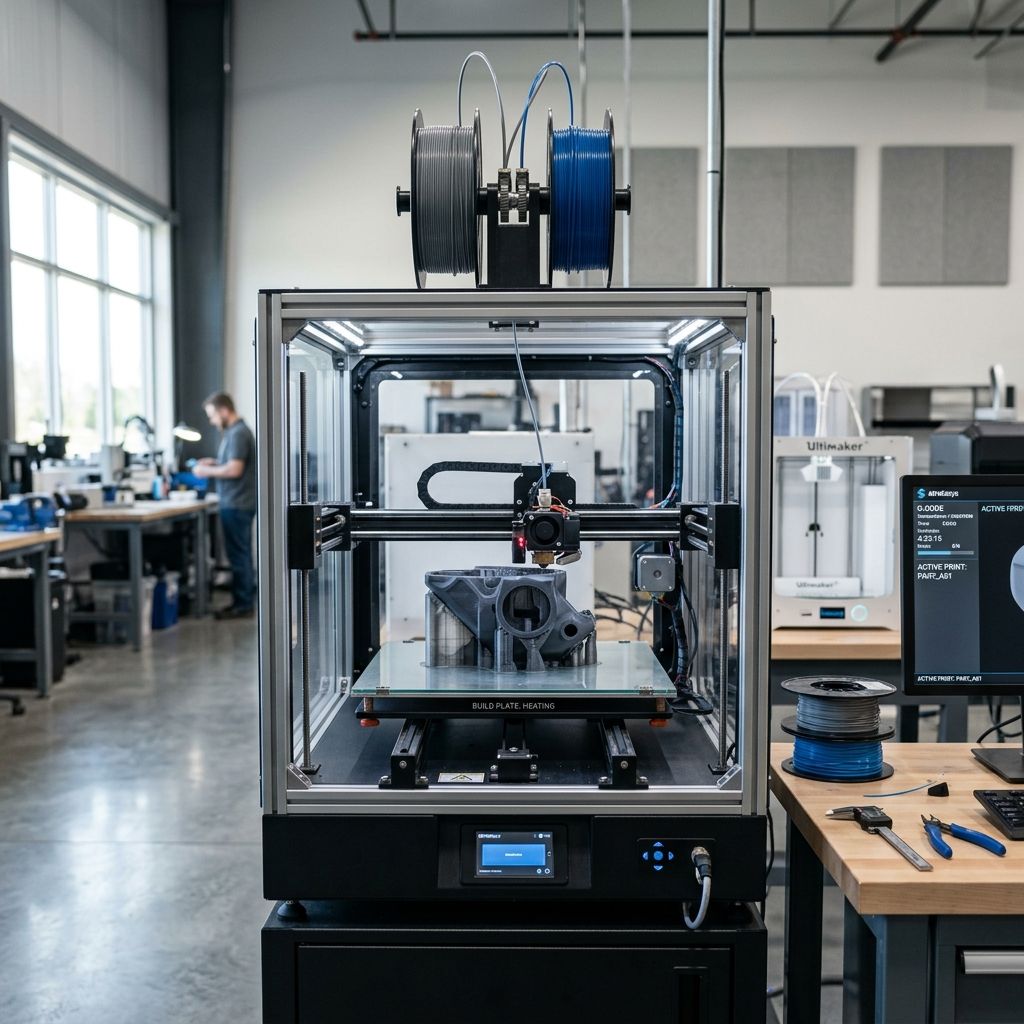
Optimizing the Prusa MK4S/MK4: Field Notes from a Decade on the Build Plate
Skip the calibration cat. If you're serious about layer adhesion, surface finish, and dimensional accuracy on your Prusa MK4 or MK4S, you need to ignore the "Platinum" profiles and start treating the firmware and slicer as a feedback loop with thermal inertia, belt tension, and material moisture. Here's what actually works.
Maker's Summary: The Three Non‑Negotiables
After 20 years of breaking and fixing FDM systems, the MK4 family is a solid platform but the stock settings are designed for a "safe" middle ground. To get production‑grade parts, you must independently calibrate: thermodynamic flow (extrusion multiplier), thermal offset (temperature vs. speed), and motion system damping (input shaping + accelerations). Ignore any slicer preset that claims "perfect" out of the box. Below are the real-world steps, with tolerances and failure modes you'll encounter.
1. Thermodynamic Calibration: Why Temperature Towers Lie
Every temperature tower you ever printed is suspect. The standard method of printing a staircase and picking the best looking surface ignores the real thermal transfer at different layer times. On the MK4S with its 300 °C capable heat block, the PID tuning is aggressive, but it overcorrects if your fan duct is slightly misaligned. I've seen two MK4S printers side‑by‑side give an 8 °C difference in optimal nozzle temp for the same PETG spool just because of different silicone sock wear.
- Step 1: Run M303 E0 S200 C8 manually verify the PID values. Stock values often overshoot.
- Step 2: Print a single‑wall cube (50 mm tall, 0.4 mm nozzle, 0.2 mm layer) at one temperature and measure wall thickness with a micrometer. That gives your real melt flow.
- Step 3: Repeat for three temps (±10 °C around the filament vendor's recommendation). Look at the consistency of the wall thickness, not just the surface gloss. The best temperature is where wall thickness deviation stays below ±0.02 mm.
Why the tower fails: Each step is only 5 mm tall. The fan has plenty of time to cool that small area. In a real part with long layer cycles (e.g., a 200 mm tall box), the accumulated heat will push your effective temperature up by 5 10 °C. Pro‑tip: Print a 100 mm tall cylinder with a temperature transition at 50 mm to check for heat creep.
2. Extrusion Multiplier: The Fine Line Between Under‑ and Overpacking
Prusa's default extrusion multiplier in PrusaSlicer (1.0 for PLA) works well for the stock Nextruder on the MK4S, but it's a compromise. The real variable is the backpressure from your hotend geometry. The Nextruder's PTFE tube liner decompresses over time; after about 300 hours I see a 2 3% reduction in effective flow because the tube mushes inward.
⚠ Critical safety protocol: Never run the Nextruder above 285 °C with the stock PTFE liner. If you need higher temps (e.g., PC blends), upgrade to a all‑metal heatbreak. The PTFE will offgas and degrade, altering your extrusion multiplier by up to 5% as it softens.
- Calibration method: Extrude 100 mm of filament at 0.6 mm retraction distance, 80 mm/s speed. Measure the actual length on the spool side. Adjust multiplier = (target length / actual length) × current multiplier. Do this cold (no melt) for static, then hot to account for melt expansion.
- Typical values I've found: PLA: 0.94 0.98; PETG: 0.98 1.02; ABS: 0.95 0.97.
- First‑layer observation: A too‑high multiplier on the MK4S causes nozzle drag on the first layer because the sensor‑based bed leveling (load cell) can't compensate for overpacking. You'll see a "moiré" pattern on the bottom.
3. Retraction Tuning: The 3‑Step Field Method
The MK4S uses a direct drive with a 3.5:1 gear ratio. The standard 0.8 mm retraction at 35 mm/s is acceptable for PLA, but for PETG or TPU it's a disaster. Stringing is a symptom of nozzle pressure mismanagement, not just retraction length.
My 3‑step process (no retraction towers, too many variables):
- Set retraction to 0.5 mm, speed 40 mm/s. Print a 20 mm cube with a 10 mm tall thin wall on top. Observe nozzle ooze during travel moves.
- Increase retraction in 0.1 mm steps until stringing disappears. For PETG, that's typically 1.2 mm. For ABS, 0.8 mm. Don't go above 1.5 mm or you'll suck air through the melt zone.
- Now tune retraction speed. The Nextruder's stepper can handle 50 mm/s, but too high a speed creates a vacuum that causes bubbles in the next extrusion. I settle between 35 mm/s (PLA) and 45 mm/s (PETG).
Warning: The MK4S's firmware has a maximum derivative (jerk) setting for retraction. If you set retraction speed above 55 mm/s, it'll be capped anyway check M205 T. I've seen firmware 5.0.0 ignore custom values above 50.
4. Acceleration & Jerk: Input Shaping Quirks on the MK4S
The MK4S has a built‑in accelerometer for input shaping (IS). This is a game‑changer, but the default "IS enabled" is too aggressive for tall prints. I've seen print head resonance at 125 Hz (X axis) and 145 Hz (Y) on two different machines. The automatic tuning often selects a shaping frequency that works for the first 50 mm but changes as the Z‑axis carriage mass changes.
- Manual override: Run G-code command `M593 F125` (X) and `M593 F145` (Y) after the auto‑tune. Check with a visualizer or a print of a 100 mm tall thin column. If you see ringing, adjust by ±2 Hz.
- Real‑world acceleration: Prusa defaults to 2500 mm/s². For detailed parts (0.1 mm layer, small features), drop to 1500 mm/s². The MK4S can physically do 5000, but nozzle pressure changes cause dimensional errors.
- Jerk (junction deviation): Keep at default 8 mm/s for the MK4S. Lower (4 mm/s) on the MK4 without input shaping reduces corner blobbing but increases print time.
One weird issue: If you install the MK4S upgrade kit onto an earlier MK4, the input shaping calibration may fail if the belt tension is outside 110 120 Hz (listen with a guitar tuner app). I've had to re‑tension belts three times to get a clean IS tune.
5. Bed Leveling and First Layer: The Hidden Variables
The load‑cell sensor on the MK4S is excellent when it's clean. A speck of filament on the nozzle tip will offset your Z height by 0.03 mm. I obsessively wipe the nozzle before every print with a brass brush. The default 7×7 mesh is fine, but I switch to 9×9 for large parts (e.g., 250 mm wide).
Engineering Cause‑Effect: Why First Layer Looks Great but Second Layer Fails
The MK4S bed is a 4‑point leveled (adjustable screws under the bed). If the bed isn't truly flat (printed PETG sheet can have a 0.1 mm overall bow), the mesh compensates. But the compensation algorithm assumes a smooth 3D surface. In reality, corners that are physically pulled down by the clips create a "trampoline" effect. I replace the binder clips with Bulldog clips and one spring‑loaded clamp on each side. Result: mesh corrections drop from 0.06 mm to 0.02 mm.
- Z offset adjustment: The MK4S auto‑level sets Z=0, but I always do a manual fine‑tune with a feeler gauge (0.102 mm for PLA, 0.127 mm for PETG).
- Temperature considerations: The bed heats faster in the center. After 30 minutes, the edge is 5 °C cooler. Adjust first‑layer bed temp accordingly (PLA: 60 °C center, 65 °C on margins).
6. Advanced: Pressure Advance (Linear Advance) When to Touch It
The MK4S firmware includes Pressure Advance (M900). Prusa's default K factor for PLA is 0.02. I've never had a case where that wasn't good enough. However, for high‑speed ABS (above 80 mm/s volumetric flow), increasing K to 0.04 reduces corner weep. The catch: too high a K causes underextrusion at the start of moves. Test with a 20 mm square with speeds ramping from 40 to 120 mm/s. Look for gaps at the corners.
Hardware limitation: The MK4S's 32‑bit controller can handle K up to 0.12 before stutter appears. Above 0.15, the extruder stepper starts to miss steps. Don't go there.
7. Material‑Specific Profiles: What Actually Changes
- PLA: 210 215 °C, 0.94 extrusion multiplier, 0.5 mm retraction, 60 °C bed. Input shaping enabled.
- PETG: 235 240 °C, 1.0 multiplier, 1.2 mm retraction, 80 °C bed. Disable input shaping or set very low acceleration (800 mm/s²) PETG amplifies ringing.
- ABS: 255 °C, 0.96 multiplier, 0.8 mm retraction, 100 °C bed. Use a draft shield in PrusaSlicer to reduce warp. Input shaping works well, but ensure chamber temp stays below 50 °C (electronics limit).
All values assume dry filament. ABS absorbs moisture in 4 hours at 60% RH. I dry all filaments to <0.1% moisture using a food dehydrator at 55 °C for 6 hours before any calibration.
8. Maintenance That Affects Settings
Nozzle wear is the biggest hidden variable. After 500 hours of PLA (with glow‑in‑the‑dark, half that), the nozzle diameter increases by ~0.02 mm. This changes your extrusion multiplier by 3 4%. I change nozzles every 1 kg of abrasive filaments and every 2 kg of standard PLA.
The hotend fan on the MK4S is a 40 mm axial that runs at 100% always. Bearings get noisy after a year. A worn fan causes temperature fluctuations of ±3 °C, which will mess up your retraction tuning. I swap them for a Sunon MF40101V1‑1000U‑A99 (sleeve bearing but lasts longer).
9. Firmware Quirks and G‑code Overrides
Prusa firmware 5.0.0 has a known bug: if you set M205 X8 (junction deviation) and M204 P1500 (acceleration), on the next M503 it shows correct values, but the printer actually uses defaults until you do a full reset. I now always start my prints with explicit M204, M205, and M593 codes after the G28.
Also, the "stealth mode" (trinamic quiet stepping) on the MK4S reduces motor current by 20%. This causes skipped steps on long moves. I use "normal/performance" mode for all functional parts.
⚠ Final Workshop Warning: The most common mistake I see is chasing perfection on a single cube, then applying those settings to a huge print with complex geometries. Always run a "test" that mimics the actual part geometry bridging, overhangs, and variable layer times. The MK4S is a workhorse, but it cannot compensate for bad profiles. Keep a calibration log. Check it every 100 hours of print time.
Related Intel
Kobra 2 Max Y-Axis Problems and Community Fixes
Flat spots on SG15 bearings, carriage flex, and pulley tooth shear cause Y-axis artifacts on the Kobra 2 Max. Fixes: lubricate rails, reduce acceleration, and check belt tension.
Fixing Kinematic Binding on RatRig V-Core 3.1
RatRig V-Core 3.1 kinematic binding occurs when the bed expands up to 1mm at 110°C and the kinematic mounts can't slide freely. Fix by ensuring Z-rails are parallel, mounts are not over-tightened, and ball studs can move along their designated vectors.
Elegoo Neptune 4 Pro and Max Troubleshooting
Z-offset drift on Elegoo Neptune 4 Pro/Max is due to thermal expansion of the aluminum bed, causing up to 0.4 mm height change. Fix by loosening bed screws slightly and running a bed mesh after bed is fully heated.