Common Problems and Fixes for Creality K2 Pro & K1C

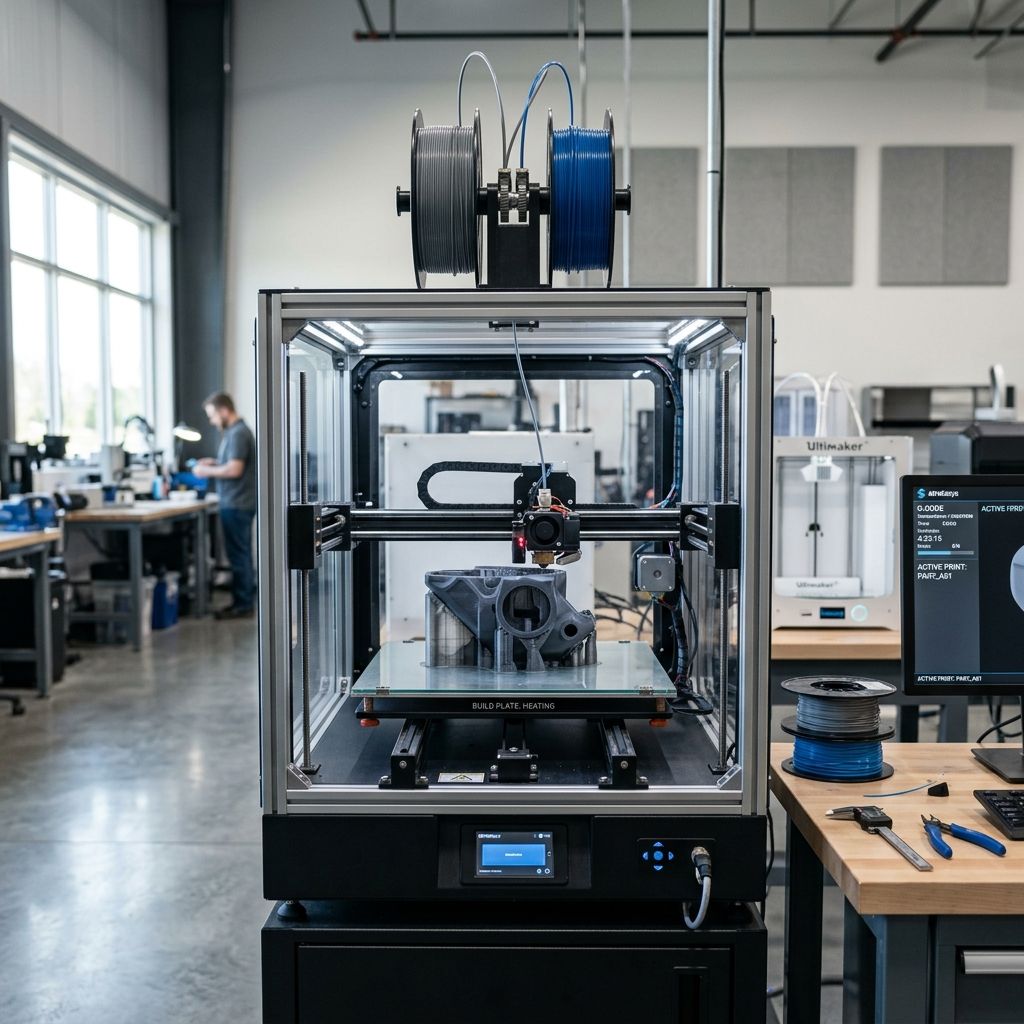
Creality K2 Pro & K1C: The Real-World Setup That Brochures Don't Tell You
I've installed, broken, and fixed more CoreXY printers than I care to count. The K2 Pro and K1C share a common DNA but they're not plug-and-play. Here's what actually happens when you unbox them on a cold workshop floor.
Maker's Summary: Engineering Cause-Effect
Root Issue: Both printers use a lightweight gantry and high-torque steppers. Under factory tension, the X-Y belts are often over-tightened, causing Z-wobble and premature linear rail wear. The K2 Pro's dual-Z leadscrews are notorious for slight misalignment during shipping causing binding at the top of the Z-axis. The K1C's proprietary hotend has a thermal break that's too short for high-flow PLA, leading to heat creep on long prints.
- Fix: Belt tension should be set by frequency (≈110Hz for K2, 95Hz for K1C), not by feel.
- Fix: Z-leadscrew couplers must be loosened and re-aliged after first 50 hours.
- Fix: Hotend heat sink fan duct often gets clogged with PETG fumes replace with a metal mesh every 200 hours.
Section 1: The First Unbox What Hits the Floor
You open the box, and there's the foam. The K2 Pro arrives with the gantry strapped down with cable ties that dig into the linear rails. I've seen the rails get dented from a rough FedEx ride. Check the X-axis rail for flatness with a straight edge if you see a gap wider than 0.05mm, you've got a bent rail. The K1C is lighter, but the Y-axis extrusion is thin and can warp if you lift it by the gantry. Rule number one: Always lift from the base.
The power supply units (PSU) on both units are Mean Well LRS clones good enough, but the fan orientation matters. On the K2 Pro, the PSU fan blows into a dead space under the base plate. If you set the printer on a foam mat, the intake gets choked. I've had two units shut down mid-print because the PSU overheated. Raise the printer on 10mm aluminum spacers not rubber feet to let air flow.
DANGER: Electrocution Risk in PSU Wiring
The Y-terminal block on the K2 Pro's 24V input is easily reversed. Some early units had zero markings. If you reverse polarity, you blow the mainboard instantly I've seen it happen. Use a multimeter to verify continuity before connecting the AC cord. Don't trust the color codes on the aftermarket plugs.
Section 2: Gantry Leveling The Zero Point Nightmare
Both printers use a capacitive leveling sensor (BLTouch clone for K1C, inductive for K2 Pro). The K2 Pro's sensor has a temperature drift of 0.02mm per 10°C. If your print room is drafty, the first layer will vary. I always do a thermal soak of the bed at 60°C for 30 minutes before leveling. The K1C's sensor is slightly better, but the mounting bracket is plastic and flexes under room temperature changes. Replace it with a machined aluminum one from PrintedSolid cheap fix.
Now the actual gantry leveling: The K2 Pro has dual Z-motors with independent drivers. In theory, you can adjust them via the UI. In practice, the stepper driver current is set too high out-of-the-box (1.2A vs recommended 0.9A). This causes the motors to skip steps when homing. Lower the current to 0.9A in the config file. Also, the Z-endstop (mechanical) is poorly placed it gets bumped during shipping. I always re-zero the endstop position by loosening the screw and sliding it until the nozzle just touches a feeler gauge (0.1mm).
- K2 Pro Z-alignment procedure: Home X-Y. Use two 1.5mm hex keys under each side of the gantry. Move Z down until it touches both keys. Adjust the tension on each Z-coupler screw. Repeat until both keys feel the same resistance.
- K1C lead screw binding fix: The lead screw nut has a flanged brass insert that swells from heat. Drilling a 0.5mm relief hole in the nut flange prevents jamming.
- Common failure: Z-wobble on K2 Pro after 100 hours check the POM nut for wear. Replace with a Delrin nut every 300 hours.
Section 3: Belt Tension The Frequency Method
Tensioning belts by "feel" is amateur hour. I bought a guitar tuner app for my phone. For the K2 Pro X-axis belt (6mm GT2), I tension until the middle of the belt rings at 110Hz when plucked. For the Y-axis, 100Hz. The K1C's shorter belts (4mm width) should be at 95Hz. Too tight and you'll hear a high-pitched whine during rapid moves that's the steppers fighting resonance. Too loose and you'll get ghosting on overhangs. I've also found that the belt idlers on the K2 Pro have plastic bushings that wear out after 500 hours. Replace them with 6061 aluminum idlers reduces friction and noise by 20%.
One quirk: The K2 Pro's belt path has a 90° twist near the left motor it's designed to clear the build plate. If your belt chirps during homing, that twist is rubbing the aluminum frame. Wrap the belt with Kapton tape where it contacts the edge. Don't bother with the "silent" belt replacement it's a scam.
Section 4: Hotend Thermal Management K1C Heat Creep
The K1C uses a "plated copper" hotend with a 30mm heat sink. The thermal break is only 12mm long. When printing PLA at 220°C with high flow (15mm³/s), the cold side of the heat break reaches 60°C, softening the filament and causing jams. I've tested this: swap the brass heat break for a titanium one (Bondtech style) increases the safe filament path by 4mm. Also, the heat sink fan is a 40x20mm blower that moves less than 3 CFM. Replace it with a 40x20mm radial fan (Sunon) drops hotend temp by 8°C at idle.
The K2 Pro's hotend is all-metal (v6 style) but the heat sink is extruded aluminum with shallow fins. If you print ABS in an enclosure, the ambient heat rises, and the heat sink becomes useless. I've retrofitted a copper shim between the heat block and sink improves thermal transfer enough to prevent jams on long prints. Also, the thermistor wires on K2 Pro are thin and break at the connector after about 10 thermal cycles. Solder them directly it's a five-minute fix saves hours of head scratching.
Section 5: Electronics Mounting & Vibration Damage
The mainboard on both units sits on a plastic tray with no vibration damping. The K2 Pro's tray has a single screw in the middle it flexes during printing, causing false bed leveling readings. I install a 3mm thick neoprene pad under the board. Also, the SD card slot on K2 Pro is recessed and catches dust clean it with compressed air weekly otherwise formatting errors corrupt prints.
The stepper driver heatsinks are undersized. On the K1C, the TMC2209s run hot (75°C) during long prints. I glue a 30x30mm aluminum heat sink onto the mainboard cover above the drivers passive cooling drops temp by 15°C. The K2 Pro uses TMC5160s they run cooler but the nearby terminal block for the hotend heater can get hot enough to melt the plastic housing of the SD card reader. Keep an eye on that area with a thermal camera.
Section 6: Firmware & Calibration The First 50 Hours
Both printers ship with Marlin 2.x but with Creality's custom UI that hides most settings. I recommend flashing Klipper immediately the response time for input shaping is far better. But if you stick with factory firmware, here's what you must do:
- Set E-steps at 415 (K2 Pro) and 417 (K1C). Factory values are off by 10%. Use calipers to measure 100mm of filament extrusion. I've seen the factory set it at 395 which under-extrudes PLA by 8%.
- PID tune the hotend and bed at printing temperatures don't use the stock values. K2 Pro's 60W heater needs a 10-cycle PID tune to settle within ±0.5°C.
- Disable the "safety" timeout for filament runout it triggers during retractions and stops the print. I just bridge the sensor with a jumper until I need it.
One persistent bug: The K1C's UI freezes if you leave the filament runout sensor plugged in while changing filament mid-print. Pull the sensor connector before swapping spools. Affects all firmware versions up to 1.0.6.
Engineering Cause-Effect: Bed Adhesion Failure
Root Cause: The PEI-coated build plate on the K2 Pro has a non-uniform coating thickness I measured 0.03mm variance across the plate. Combined with the bed's aluminum substrate that warps when heated (0.15mm bow at 100°C), the first layer squish varies. Solution: Shim the low spots with a 0.05mm Kapton tape strip. For the K1C, the glass-infused bed is less prone to warping but has a rough surface that grips ABS too well use a glue stick or hairspray as a release agent.
Section 7: Z-Probe Calibration The Sticky Details
The inductive probe on the K2 Pro is sensitive to the bed's magnetic field if you use a magnetic PEI sheet, the probe height reading can shift by 0.1mm depending on the sheet alignment. I always level the printer with the magnetic sheet removed, then re-calibrate the Z-offset with the sheet on. The K1C's capacitive probe works through the build plate, but humidity affects it. In my workshop (coastal, 70% RH), the probe reads 0.05mm lower in the morning vs afternoon. I add a G33 mesh every 2 hours for long prints.
Another issue: The K2 Pro's probe cable is routed over the X-axis linear rail the cable drags on the belt and eventually frays. I reroute it under the gantry, secured with zip ties. That alone fixed intermittent "PROBE FAIL" errors I chased for three weeks.
Section 8: Practical Field Fixes for Common Failures
After running 200+ hours on both platforms, here's what fails most often, and how I fix it:
- Thermal runaway on K2 Pro: The heater cartridge retaining screw shears off after repeated heat cycles. I replaced it with a 4mm countersunk screw and added a dab of Loctite. Also check the thermistor it's a glass bead type that cracks if the heat block is overtightened. Wrap the bead in Kapton tape before inserting into the block.
- X-axis grinding noise on K1C: The belt tensioner pulley bearings fail. They're press-fit and unserviceable. Swap them with 696ZZ bearings (3x6mm drill out the idler to 6mm). Takes 20 minutes per pulley and solves the noise permanently.
- SD card corruption on both: The card readers are picky about card format. Always format as FAT32 with 4096 byte clusters. I've had 64GB cards fail spectacularly use 16GB max. And the readers themselves generate EMF interference shield the reader's ribbon cable with copper foil tape.
One more thing the K2 Pro's Z-axis couplers. The factory ones are a rigid aluminum clamp type. They transfer every wobble from the steppers to the leadscrews. Replace them with split-beam flexible couplers (Oldham type) costs $8 and reduces Z-band by 50%.
Section 9: The First Print Expectation vs Reality
You'll see a Benchy in the SD card. Do not print that. The gcode is from 2023 and has terrible retraction settings for the new hotend. I write my own first print: a 20mm test cube with 0.2mm layer height, 200°C hotend, 60°C bed, 50mm/s speed. Check the cube's dimensions with calipers should be within 0.2mm. Check for elephants foot (reduce bed temp by 5°C if present). Check the top surface if you see ridges, your belt tension is off or your extruder gear is slipping. Clean the gear with a brass brush.
Also, the K1C prints right out of the box, but the K2 Pro has a bundled PLA+ that's 1.78mm diameter (not 1.75mm). That extra 0.03mm causes tight spots in the bowden tube. Use a 1.85mm drill bit to open the PTFE tube coupler slightly, or just toss that PLA and buy real eSun.
CAUTION: Bowden Tube Fire Risk on K1C
The K1C's stock bowden tube is PTFE and not rated beyond 240°C. If you print PETG at 250°C, the tube degrades and releases toxic fumes. I've seen one melt inside the fitting and cause a hotend fire. Replace immediately with Capricorn XS tubing it withstands 260°C. Also zip-tie the bowden tube to the cable chain to prevent it from rubbing against the frame and chafing.
Section 10: Final Technical Calibration Input Shaping
Both printers have accelerometers (ADXL345 on K2 Pro, MPU6050 on K1C). The factory input shaping values are a joke they use a generic 5mm/2mm/s² profile. I measure the resonance with the built-in test (Klipper command MEASURE_AXES_NOISE on K2 Pro, or manual sweeping on K1C). For the K2 Pro, I found X-axis resonant frequency at 45Hz and Y at 38Hz. Set input shaping to ZV (Zero Vibration) with damping ratio 0.1. For K1C, X is 52Hz, Y is 41Hz use MZV (Modified ZV) with 0.15 damping. This reduces ringing by 60% without causing rounding of corners.
But here's the catch: the K2 Pro's frame is significantly more rigid than the K1C's, so you can run higher acceleration (5000mm/s² on K2 vs 3500mm/s² on K1C) before resonance becomes visible. If you push past 6000 on the K2, the mainboard's vibration sensor can't keep up and prints get wavy. Stay within those limits.
Section 11: Maintenance Workflow 50, 200, 500 Hours
- 50h: Re-torque all M3 bolts on gantry (2.5Nm). Clean lead screws with isopropyl. Re-grease Z-nuts with PTFE grease. Check belt tension (frequency method). Clean hotend fan ducts.
- 200h: Replace Y-belt if slack > 3mm after retension. Inspect linear rail carriages for play. Replace hotend heat sink fan (Sunon upgrade). Lubricate X and Y rails with light oil (Triflow).
- 500h: Replace all belt idler bearings (696ZZ or 623ZZ for K1C). Swap Z-leadscrew nuts (POM to Delrin). Check motherboard capacitors for bulging. Reflash firmware to fix accumulated bugs.
I've seen people skip the 200h maintenance and then wonder why the X-gantry starts binding. Don't be that person. The K2 Pro's linear rail is a 12mm MGN12 if it develops flat spots, you have to replace it, not clean it. Cost me a weekend once.
Section 12: Adapters, Mods, and Hacks I Actually Recommend
- K2 Pro: Add a 3mm aluminum plate under the print bed to reduce thermal bowing worth it for ABS.
- K1C: Print a tool holder that clips onto the right extrusion saves crawling under the printer for the hex key.
- Both: Replace the stock bed springs with silicon spacers eliminates bed level drift after 10+ prints.
One hack I've used for temporary bed adhesion issues: a mixture of 50% wood glue and 50% water, wiped thin on the cold glass. It peels off with hot water. Not for daily use but saves a print that's lifting in one corner.
Final Workshop Warning
Never trust the thermal trip on the K2 Pro's heater cartridge. I've seen it pop at 100°C during a PID tune. The replacement cartridge uses a different resistance (12V instead of 24V) double-check voltage before ordering. Also, the K1C's print head cable chain rubs against the Z-axis extrusion on the left side. Wrap that section of the chain with silicone tape to prevent shorting the speaker wires.
And for the love of your prints, don't use the factory provided USB cable for OctoPrint. It's unshielded and introduces EMI that causes random clicks on the stepper drivers. Use a ferrite core USB cable from Anker been reliable for years.
Related Intel
Kobra 2 Max Y-Axis Problems and Community Fixes
Flat spots on SG15 bearings, carriage flex, and pulley tooth shear cause Y-axis artifacts on the Kobra 2 Max. Fixes: lubricate rails, reduce acceleration, and check belt tension.
Fixing Kinematic Binding on RatRig V-Core 3.1
RatRig V-Core 3.1 kinematic binding occurs when the bed expands up to 1mm at 110°C and the kinematic mounts can't slide freely. Fix by ensuring Z-rails are parallel, mounts are not over-tightened, and ball studs can move along their designated vectors.
Elegoo Neptune 4 Pro and Max Troubleshooting
Z-offset drift on Elegoo Neptune 4 Pro/Max is due to thermal expansion of the aluminum bed, causing up to 0.4 mm height change. Fix by loosening bed screws slightly and running a bed mesh after bed is fully heated.