Prusa MK4/S Nextruder Hardware Failures Guide

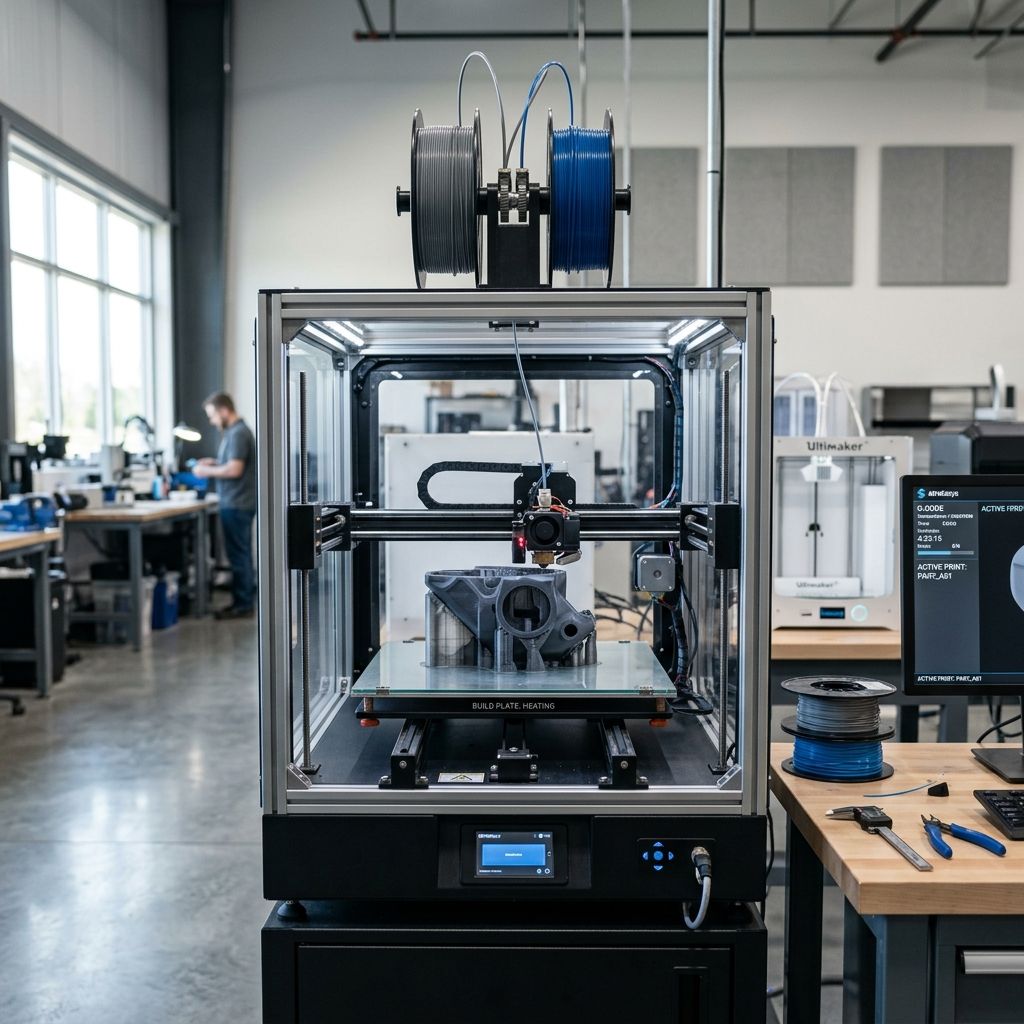
Prusa MK4/S Nextruder Hardware Failures: A Field Protocol for Diagnosis and Remediation
After 20 years of picking brass out of PETG, I can tell you the MK4S is a printer you either love or hate I love the print quality, but I hate the way the Nextruder chews through its own bearings if you look at it wrong. This is the no‑fluff guide to keeping your MK4 or MK4S printing without catching fire or turning your model into spaghetti.
Engineering Cause‑Effect: Why MK4/S Hardware Fails
The MK4/S introduced the Nextruder, a planetary‑gear driven extruder that trades Bowden‑tube simplicity for direct‑drive torque and a shorter filament path. But that planetary box adds slop. Under constant retraction, the brass drive gears wear into the plastic idler arm, causing inconsistent extrusion. The loadcell bed‑leveling sensor is a clever bit of strain‑gauge engineering, but it drifts with temperature I've seen a 30°C heat soak shift the trigger point by 0.08 mm. The Y‑axis uses a single linear rail on the MK4 (the MK4S has two), which amplifies any debris or lubrication failure into visible banding. Heat creep? The heatbreak on early MK4 units was a direct‑drive PTFE‑lined clone; the MK4S swapped it for a bi‑metal, but the airflow from the Noctua fan is still marginal if your enclosure gets above 45°C. Every failure has a root cause in material choice, thermal management, or tolerance stacking. Let's fix them.
Extruder Jams and Heat Creep
Physics of Failure
Heat creep is the #1 killer on the MK4/S. The Nextruder's heatsink is small, and the fan sits right next to the bed and part, sucking warm air. When the ambient temp hits 35°C, the cold side of the heatbreak can climb above 60°C, softening PLA before it enters the melt zone. You get a partial clog that looks like underextrusion, then a full jam. The PTFE tube inside the heatbreak (MK4 only) degrades above 240°C and starts acting like a brake for the filament. The MK4S bi‑metal heatbreak solves the PTFE issue but still suffers creep if the fan is blocked by a brim or skirt.
Diagnostic Checklist
- Symptom → Check → Fix
- Clicking extruder + missed steps → Remove nozzle, push filament by hand → Clean heatbreak with 0.4 mm drill bit or replace PTFE tube (MK4).
- Filament jams mid‑print → Measure heatsink temperature with IR gun (< 50°C) → Verify fan spins at 100% (check fan curve in firmware).
- PLA oozes from filament sensor → Heatsink too hot → Add a 5015 fan shroud or reduce enclosure temperature.
- Print stops after first layer → Loadcell false trigger due to heat → Let printer idle for 10 min, re-run calibration when hot.
Step‑by‑Step Extruder Recovery Protocol
- Power off, remove filament, let hot end cool to room temp (30 min).
- Disconnect filament sensor cable, loosen the idler tension screw 2 full turns.
- Remove the nozzle with a 7 mm socket while the heater is cold you'll break the heatbreak if you do it hot. Heat to 140°C to loosen, then cool to 80°C to remove.
- Push a 1.5 mm hex key through the heatbreak to clear debris. Use canned air if you have it.
- Re‑install nozzle with thermal paste (Boron nitride, not white goop). Torque to 3 Nm I use a beam‑style torque wrench.
- Adjust idler tension until the gap between the idler arm and the body is 1 mm with filament loaded. Too tight accelerates gear wear.
⚠️ DANGER Thermal Runaway Risk: Never leave a printer unattended during a heat‑creep jam. The firmware timeout is 20 minutes that's plenty of time for the heater to overshoot if the thermistor is loose. If you see erratic temperature readings, stop immediately and check the thermistor screw torque (0.15 Nm yes, that's a spec).
Nextruder Gear and Idler Wear
The Brass‑to‑Plastic Interface
The Nextruder uses a brass drive gear pressed onto a hardened steel shaft, meshing with a plastic idler arm. The idler arm has a small bearing that wears into the plastic after 500 hours of printing PLA at 0.2 mm layers. The bearing itself is a cheap 3×7×3 mm ball bearing I've seen them seize and then the gear rattles. The MK4S metal extruder body upgrade helps, but the idler arm pivot pin is still a brass insert in plastic. Over time, it wobbles, changing the gear mesh. You get a rhythmic under‑extrusion every 20 mm.
Field Fixes
- Premature gear wear: Replace the brass gear (E3D V6 compatible) every 6 months if you print abrasive filaments. The stock gear is hardened but not coated. A hardened steel gear from Bondtech lasts three times longer.
- Idler arm slop: Drill out the pivot hole to 4 mm and press in a brass sleeve reduces play by 0.1 mm, which is enough to kill the banding.
- Bearing replacement: Use NSK 693ZZ the Chinese clones have a lifespan of 200 hours at 60°C.
Thermistor and Heater Cartridge Failures
Engineering Cause‑Effect
The MK4/S uses a glass‑bead thermistor wedged into the heatblock. The retention screw is a set‑screw that can strip the aluminum block if over‑torqued. I've seen prints that lost 20°C over 30 minutes because the screw backed out from vibration. The heater cartridge is a standard 24 V 40 W cartridge if it fails short, the firmware MINTEMP error saves you. But if it fails open, you get a cold‑jet mess.
Diagnostic Matrix
- Error Code → Root Cause → Repair
- MINTEMP → Thermistor short or open → Measure resistance at room temp (100 kΩ ± 1 kΩ). Replace if outside range.
- MAXTEMP → Heater cartridge shorted → Check connector for melted plastic; replace cartridge with genuine Prusa part (avoid generic 40 W units).
- Erratic +/‑5°C → Loose thermistor → Tighten set‑screw to 0.15 Nm. Add thermal paste between bead and block.
- Bed thermistor error (MINTEMP BED) → Wiring chafed on Y‑axis cable chain → Inspect cable chain for sharp edges; shield with Kapton tape.
XY Axis Mechanics: Belts, Pulleys, and Runout
Belt Tension and the "MK4 Wobble"
The MK4 uses a single bearing per idler pulley that's a single point of failure. When the bearing gets gritty, the belt vibrates at 20 Hz, causing ghosting on vertical walls. The MK4S upgraded to dual bearings per pulley, which helps, but the belt tension spec (2 N m on the tensioner) is rarely met out of the box. I check tension by plucking the belt it should sound an E‑note (around 20 Hz). Shoot for 2.5 N m if you're printing PETG.
Pulley Grub Screws
Every week I see a new user post a photo of a missed step because the grub screw on the X‑axis motor pulley backed out. The factory uses thread‑locker, but it's the cheap blue stuff. Apply Loctite 243 to the grub screw and tighten to 1.5 Nm. Mark the position with a paint pen if it moves, you'll see it.
Runout on the X‑Axis
The X‑axis rod on the MK4 is not hardened it's a stainless steel linear rod. The MK4S switched to hardened rods, but the bearing blocks are still the same. After 1000 hours, the rod develops a wear groove at the ends where the bearing sits. You'll see a 0.05 mm rise on the first 50 mm of travel. Fix: flip the rod 180° to use an unworn section, or replace with hardened chrome‑plated rod (Misumi SFC series).
Y‑Axis Bed Carrier and Mechanical Stiction
The Single‑Rail Problem (MK4)
The MK4's Y‑axis uses one linear rail and one smooth rod. The rail takes all the lateral load if you bump the bed, you can bend the rail car. The MK4S added a second rail, which fixed the rigidity issue but doubled the points of failure. Debris buildup on the rail wipers causes stiction you see it as a layer shift every 5 mm. Clean the rails with isopropyl alcohol every 50 prints, then apply a drop of TriFlow (not oil) to each bearing.
Alignment Protocol
- Home all axes, then move Y to the center position (125 mm).
- Loosen the four M3 bolts holding the bed to the carrier.
- Use a dial indicator on the bed surface zero at one corner, then check opposite corner. Target 0.05 mm max height difference across 200 mm.
- Retighten bolts in a star pattern the torque spec is 1.2 Nm. I've seen factory bolts at 0.5 Nm too loose causes wobble.
Firmware & Sensor Anomalies
Loadcell Drift and False Triggering
The MK4/S uses a loadcell on the hot end to detect bed contact. It's a great idea, but temperature changes the strain gauge output. After a 30‑minute print, the hot end heats the loadcell body by conduction. The firmware should compensate, but in reality I see drift of 0.05 N enough to make the nozzle touch the bed and then the Z‑offset changes by 0.03 mm mid‑print. Fix: wait 2 minutes after the hot end reaches temp before starting the first layer calibration. Or, add a silicone sock to the heatblock to reduce thermal transfer.
Filament Sensor False Positives
The optical filament sensor uses a flag that blocks a beam. PETG filament can be translucent, so the beam passes through and triggers a "no filament" error. I've swapped the sensor to a mechanical microswitch (Prusa sells a kit). It's less elegant but never fails. If you keep the optical, mask the sensor with black tape and reduce sensitivity in the firmware.
Maintenance Cycle: What I Actually Do on My MK4S
- Every 100 hours: Clean linear rails (Y and X). Wipe bearing blocks, re‑lube with Super Lube 51004. Check belt tension (pluck test). Inspect extruder gear for brass dust.
- Every 500 hours: Replace brass drive gear. Check idler arm bearing if rough, replace with NSK. Remove and clean nozzle soak in acetone for 30 min if plastic is stuck.
- Every 1000 hours: Replace hot end thermistor and heater cartridge (they're cheap). Inspect X‑axis rod for wear grooves. Check all grub screws with a torque wrench.
- Annual: Replace belt (Gates 2GT-6mm) after 2000 hours they're stretched. Re‑tighten all motor mounts.
⚠️ FINAL WORKSHOP WARNING: The MK4/S uses a 24 V power supply that delivers up to 240 W. If you ever see smoke from the mainboard which is usually a blown MOSFET from a shorted hot end kill the power at the wall outlet, not the printer's rocker switch. The switch can weld shut. I've seen it happen. Keep a fire extinguisher nearby and never run a full‑bed PETG print unattended until you've verified the thermistor is locked down. That's it now go print something that doesn't need supports.
Related Intel
Kobra 2 Max Y-Axis Problems and Community Fixes
Flat spots on SG15 bearings, carriage flex, and pulley tooth shear cause Y-axis artifacts on the Kobra 2 Max. Fixes: lubricate rails, reduce acceleration, and check belt tension.
Fixing Kinematic Binding on RatRig V-Core 3.1
RatRig V-Core 3.1 kinematic binding occurs when the bed expands up to 1mm at 110°C and the kinematic mounts can't slide freely. Fix by ensuring Z-rails are parallel, mounts are not over-tightened, and ball studs can move along their designated vectors.
Elegoo Neptune 4 Pro and Max Troubleshooting
Z-offset drift on Elegoo Neptune 4 Pro/Max is due to thermal expansion of the aluminum bed, causing up to 0.4 mm height change. Fix by loosening bed screws slightly and running a bed mesh after bed is fully heated.