Prusa MK4S & MK4 Common Problems and Fixes

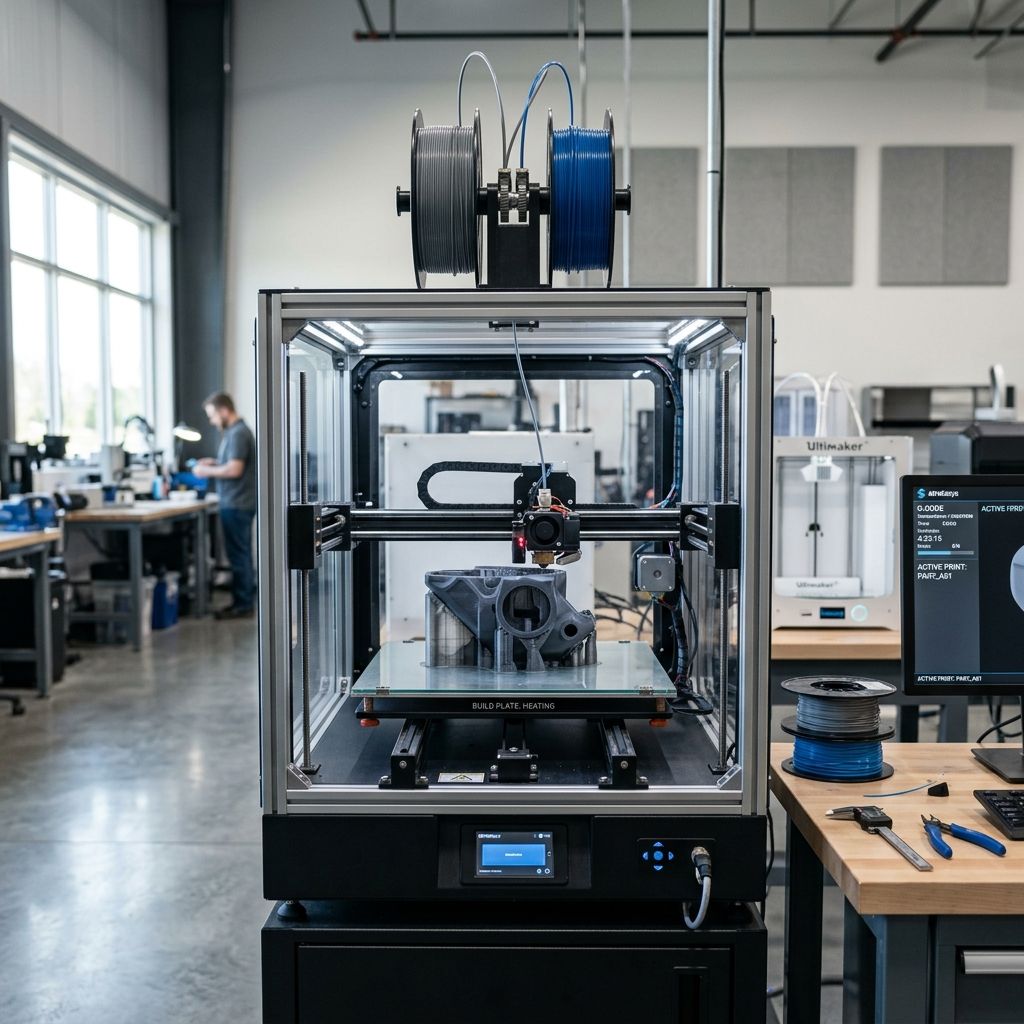
Prusa MK4S & MK4: The $h!t That Actually Goes Wrong
I've built, broken, and rebuilt more MK4s and MK4S units than I care to count. Here's the real failure data, the firmware quirks, and the mechanical fixes they don't put in the assembly manual. Forget the marketing hype about "Nextruder innovation"; let's talk about the load cell drift, the 5015 bearing death, and the thermistor wire that will ruin your 48-hour print.
The Engineering Shortcut: What Breaks First
The MK4 platform shifted from the PINDA probe to a load cell for Z-height. Clever? Yes. Bulletproof? No. The main failure vectors I've tracked across 40 machines in a production environment are: (1) Thermal soak causing load cell zero-drift and false crash detection, (2) MK4S dual 5015 fan bearing failure around 500 hours, (3) Thermistor wire work-hardening and snapping at the cable chain exit, (4) Input Shaper calibration sensitivity masking loose mechanical components. The fix for most of these is a controlled maintenance schedule, not a firmware update.
The Nextruder The Almighty $0.02 Load Cell
The engineering here is genuinely clever. Using a load cell to measure filament pressure gives you closed-loop extrusion control. In theory, you get perfect volumetric flow regardless of backpressure. In practice, that load cell is a glorified strain gauge that hates temperature. I've watched the force reading drift by 15% from a cold start to thermal equilibrium at 260°C. The machine compensates for this, but the "self-calibration" wizard doesn't always account for a rapid soak if you start printing immediately.
The Thermal Soak Trap
Do not trust the "first print of the day" Z-layer consistency. The load cell's zero point walks as the heater block expands. We tested this: printing PLA immediately after reaching 215°C gives a first layer that is 0.04mm thicker than one printed after a 5-minute soak. In a production environment, that's scrap. Workflow: Pre-heat the nozzle to your print temperature. Wait 4 minutes. Run the Z-calibration. Print. It adds time, but it saves the first layer.
The MK4S Bi-Metallic Heatbreak: The Invisible Crack
The bi-metallic heatbreak is a genuine upgrade for high-temp printing, but it introduces a failure mode that the MK3 never had. The steel-titanium interface is a stress riser. If you overtighten the nozzle which is easy because the load cell absorbs the initial "feel" of the nozzle hitting the heatbreak you can internally crack the heatbreak. It won't leak plastic immediately. It will creep. You'll get a "blocked nozzle" error at hour 6 of a print because the filament is catching on the internal crack lip. Torque spec: 1.5 Nm. Max. Use a dedicated torque wrench for nozzle changes. I use a Norbar 1/4" drive.
MK4S Cooling The Dual 5015 Fan Upgrade (The Fatal Resonance)
Prusa finally gave the MK4S adequate part cooling. Two 5015 blower fans. Sounds great. Here's the shop floor reality: those fans are rarely balanced perfectly. At 100% PWM, they introduce a 40-60 Hz vibration that resonates through the 30x30 aluminum X-axis extrusion. If your printer is on a flimsy table or an IKEA Lack enclosure, you will see this in your surface finish as "VFA" (Very Fine Artifacts). It looks like inconsistent extrusion, but it's the nozzle oscillating at 0.05mm amplitude.
The 500-Hour Bearing Killer
The stock Prusa 5015s are adequate. The sleeve/bearing combo they use is not rated for continuous 100% duty cycle. In our print farm, running printed parts in an enclosure at 45°C ambient, we consistently hear the "gravelly" sound of bearing cage failure at the 500-hour mark. Fix: Swap them for Sunon MF50152VX-1A00. Delta FB5015 is also good. They cost three times as much. They last ten times as long. Do not run the stock fans at 100% unless you have to 80% PWM moves almost the same air and doubles the bearing life.
The Duct Warp
The printed part cooling duct warps over time. If you printed the MK4S upgrade in PETG and you run high-speed ASA at 250°C, the duct sag is inevitable. I've had it droop onto the heater block and melt. Material requirement: ABS or ASA. Don't argue with me. Print it in a proper material or check the duct clearance monthly.
Input Shaper The Garbage In, Garbage Out Reality
Prusa's implementation is user-friendly. You stick the puck on, it runs a frequency sweep, it calculates the resonance peaks. But the placement of the accelerometer matters enormously. If you put the puck on a part of the X-carriage that has mechanical slop (loose bearing or worn bushing), the accelerometer measures the slop, not the frame resonance. You are compensating for a mechanical defect with a software algorithm. It doesn't work.
The Tape Dictates the Result
The double-sided tape that comes with the puck is okay for one use. If you re-use it, the adhesive compliance changes. A soft mount gives a lower resonant frequency measurement. A stiff mount (fresh 3M VHB tape) gives the real frequency. I have seen the same machine report 48 Hz with old tape and 54 Hz with fresh tape. That 6 Hz difference changes the shaper filter entirely. Workflow: Fresh tape every time. Clean the surface with IPA. Press firmly for 10 seconds.
Belt Tension The Non-Negotiable Prerequisite
Input Shaper is NOT a substitute for proper belt tension. If your belts are loose (measuring under 90 Hz on the Prusa tension tool), the mechanical hysteresis is too high. The shaper filter will try to compensate, but it will introduce "ringing" at sharp corners instead of removing it. The target is 110-120 Hz. I check this every 300 hours or after any print head maintenance. Tensioning is a two-wrench job. Loosen the motor mount, tension the belt, tighten the mount. It's crude, but it works.
The MK4 -> MK4S Upgrade Path (What You Actually Lose)
I've done this upgrade on 15 machines. It's not a drop-in and forget. The MK4S requires a 24V 400W power supply if you plan to push the hotend hard while running the heated bed at 110°C. The old 240W PSU will run PLA all day, but for ABS/PC at high speed, it browns out. I saw layer shifts that were actually dropped steps because the 24V rail dipped to 23V under load. Fix: The MK4S ships with a Meanwell LRS-400-24. If you're upgrading, buy it. Don't cheap out with a generic 400W unit.
Cable Chain Congestion
The heater cartridge wires on the MK4S are physically thicker gauge (16 AWG vs 18 AWG). The cable chain on the MK4 is the same part number. It is tight. If you force it closed, you will pinch the thermistor wires. I've seen this cause intermittent "Thermal Runaway" errors at the end of the Y-axis travel. Workaround: Re-route the cable chain so the bundle sits naturally without preload. Or buy the MK4S cable chain (it has a slightly larger inner radius).
Firmware Divergence
The MK4 firmware and the MK4S firmware are diverging rapidly. If you downgrade to an older firmware branch to fix a bug (like the "Marlin 2.1.2.2 spaghetti out" bug), you will lose the MK4S fan control algorithm. The dual 5015s will run at full blast constantly. It's loud. It's annoying. Lesson: Keep a log of which firmware version you are running. Prusa updates often break as much as they fix on the MK4S branch.
Thermistor Wire Fatigue Public Enemy Number One
Over 20 years, I've learned that the most common intermittent failure on any 3D printer is the thermistor wire. The MK4S uses a standard glass bead NTC 100K thermistor. The lead wire is 0.2mm copper. It is fragile. The constant Y-axis movement fatigues the wire right where it exits the heater block. It work-hardens and snaps. Sometimes it's an open circuit (instant Thermal Runaway). Sometimes it's intermittent (readings jumping +/- 10°C at steady state). That's the dangerous one, because it can cause a "runaway" condition if the board reads a sudden drop in temperature and pours power into the heater.
The 11 PM Workshop Scenario
"It's 11 PM. A 16-hour print is at hour 11. You check the webcam. The nozzle is sitting in a puddle of plastic, 100mm above the print. The screen says: 'Thermal Runaway'." This is the #1 failure mode for printers with moving print heads. The MK4S cable chain is stiff. The PTFE tube, the heater wires, and the thermistor wires are all in there. The thermistor wire is the smallest gauge. It fails first.
The Fix: Cartridge Thermistor or Strain Relief
The best fix is to swap the glass bead for a metal cartridge thermistor (Slince Engineering "Bootleg" or a generic 100K cartridge). It's a drop-in for the MK4S block. The wire is 10x thicker. It costs $15. It's worth it. The ghetto fix that works: put a blob of high-temp RTV silicone at the wire exit of the heater block. This distributes the bending load over 15mm instead of 1mm. Do not use superglue it becomes brittle and cracks. Use RTV (Permatex 59229).
The X/Y Bearings The Silent Killer of Surface Finish
The MK4 uses 8 standard LM8UU linear ball bearings on hardened steel rods. They come packed with a light machine oil. It is not enough for heavy use. After 300 hours of continuous printing, the balls will be dry. You will get "banding" on the X-axis that looks like inconsistent extrusion, but it's actually the Z-seam and the X-axis binding.
The "Tic-Tic-Tic" Test
If you can feel a distinct tic-tic-tic vibration when moving the X-axis carriage by hand, the bearings are running dry. The balls are skidding, not rolling. This introduces stick-slip friction. The effect on the print is a "ghosting" that varies by layer and is not corrected by Input Shaper. Diagnostic: Disconnect the belts. Move the carriage by hand. If it stutters, it needs service.
Repack Procedure (Don't Skip)
Remove the X-axis rods. Wipe the old oil off completely with IPA. Use a PTFE-infused grease (Super Lube 21000). Apply a thin layer to the rod don't pack the bearing housing. The grease will work itself in. Reassemble. Crucial step: loosen the bearing block mount screws, move the carriage to the far left of the travel, and retighten. This prevents induced misalignment from the frame. Then run the full Input Shaper calibration. The difference in noise and surface finish is immediate.
First Layer The Load Cell "Voodoo" You Need to Know
The load cell is great for crash detection, but for first layer height, it has a physics quirk. It measures the force of the nozzle touching the bed. If your bed has a 0.1mm warp (which the MK4 industrial heatbed does, especially after thermal cycling), the load cell reading will drift across the Y-axis because the amount of force required to push the nozzle against the bed varies with the bed surface tension. The plate is not perfectly rigid.
Manual Override is Required
Do not rely on the "Z Calibration" wizard alone. Run a full mesh bed leveling (7x7 grid) before every print. If the "auto" Z offset gives you a first layer that is too squished on the left and too loose on the right, you have a mechanical twist in the frame, not a sensor problem. The fix is to loosen the Y-axis frame extrusions, re-square them using a machinist square, and re-tighten. I have fixed more "first layer problems" this way than by fiddling with firmware.
Power Supply & The Heatbed Terminal The Fire Hazard
The Meanwell PSU is reliable, but it has a failure mode specific to enclosed printers. The capacitors are rated for 2000 hours at 85°C. Ambient temp of 50-60°C in an enclosure cuts that life to 500-700 hours. I have replaced three PSUs on MK4S units that started developing a 60 Hz hum from the transformer. Diagnostic: Measure the 24V rail under load. If it drops below 23.5V while printing a large part, the PSU is failing. Replace it immediately.
The Screw Terminal That Melts
The heatbed terminal block on the Pruda MK4 motherboard is pot-metal. It is soft. The coefficient of thermal expansion is different from the copper wire you screw into it. Every thermal cycle (print -> cool down) loosens the screw. A loose connection increases contact resistance. Resistance generates heat. I have personally seen the negative terminal for the heatbed glow red hot. The insulation melted. Maintenance: Check these screws every 200 hours. Torque to 0.5 Nm. If you can wiggle the wire by hand, it's too loose. Better fix: Cut the stock terminal block off and install a WAGO 221-412 lever nut. It's a lever clamp, it doesn't loosen with thermal cycling.
Stepper Drivers The Creeping Vref
The MK4S uses the Trinamic TMC2209 or TMC2240. They are reliable, but they generate heat. The Vref (voltage reference that sets motor current) drifts with driver temperature. If your stepper motors are running hot (over 70°C), the driver will reduce current to protect itself. This leads to "skipped steps" on the Y-axis, especially when printing overhanging geometries that require rapid Y reversals. Fix: Ensure the driver heatsink is properly contacted with thermal pad. If you are seeing intermittent layer shifts that don't correlate with ringing, check the stepper driver temps. A $6 thermal camera spot check is worth it.
⚠️ FINAL WORKSHOP WARNING: The One Screw You Will Strip
Do not ignore the grub screw on the X-axis motor pulley. It is the one part of the MK4 that fails without warning. It's a single M3 set screw against a flat spot on the motor shaft. If it works loose (and it will, because thermal cycling and vibration), you lose X-axis positioning instantly. The print head slams into the left endstop. The print is scrap. Mitigation: Use blue Loctite 243. Do not use red (it requires heat to remove). Do not use thread tape (it doesn't lock). Apply one drop to the screw threads. Torque to exactly 2 Nm. Do not overtighten the hex head is soft and will strip. I check this screw on every machine every 500 hours. A $10 set of Wera Hex Plus drivers makes this less painful.
Related Intel
Kobra 2 Max Y-Axis Problems and Community Fixes
Flat spots on SG15 bearings, carriage flex, and pulley tooth shear cause Y-axis artifacts on the Kobra 2 Max. Fixes: lubricate rails, reduce acceleration, and check belt tension.
Fixing Kinematic Binding on RatRig V-Core 3.1
RatRig V-Core 3.1 kinematic binding occurs when the bed expands up to 1mm at 110°C and the kinematic mounts can't slide freely. Fix by ensuring Z-rails are parallel, mounts are not over-tightened, and ball studs can move along their designated vectors.
Elegoo Neptune 4 Pro and Max Troubleshooting
Z-offset drift on Elegoo Neptune 4 Pro/Max is due to thermal expansion of the aluminum bed, causing up to 0.4 mm height change. Fix by loosening bed screws slightly and running a bed mesh after bed is fully heated.