How to Replace Prusa MK4/S Extruder

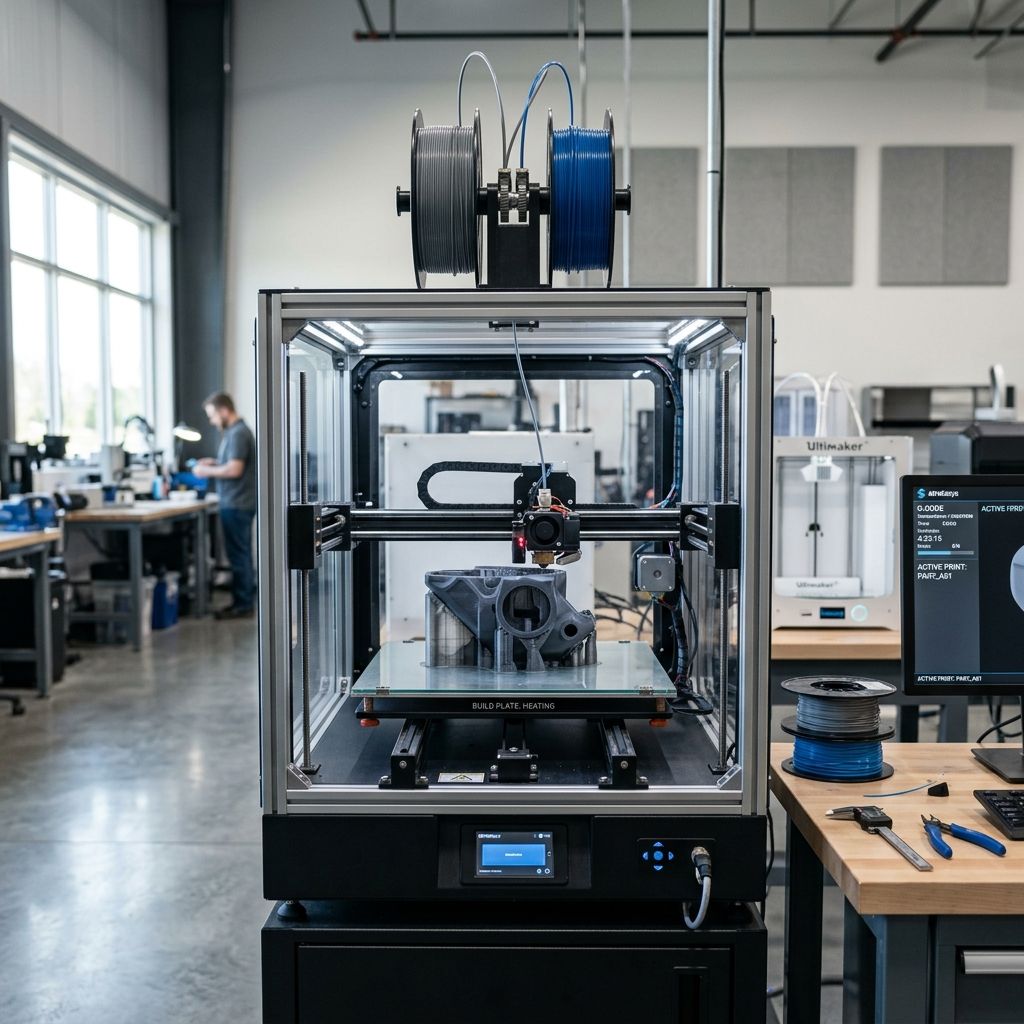
Original Prusa MK4/S: Field-Replaceable Extruder Assembly & Hotend Overhaul
I've run these printers in a small production farm for two years we've torn down, rebuilt, and tuned well over thirty MK4 and MK4S extruders. This isn't the manual; it's what you learn after the fifteenth heat-soak failure or a thermistor reading that drifts 2°C overnight. Here's the real replacement procedure, the gotchas, and why you'll curse the reverse bowden coupler.
Maker's Summary Extruder & Hotend Replacement Basics
The problem: The Prusa MK4/S uses a bonded extruder (motor + gears + hotend in one carriage). Over time, heat creep, plastic dust, and nozzle crashes kill the heatbreak, thermistor, or nozzle. The MK4S "Nextruder" improves heatbreak retention but introduces a new fan duct that's fragile.
- Common failure points: Brass heatbreak threads gall, thermistor wires break at the glass bead, heater cartridge dies from thermal shock.
- Tolerances: The heatbreak needs 0.02mm concentricity to avoid filament drag. The MK4S fan duct uses M2x6mm self-tappers strip-prone.
- Tools needed: 7mm socket for nozzle, 1.5mm hex for grub screw, thermal paste (boron nitride), digital caliper, torque wrench (2 3 N·m for nozzle).
- Time: First-time 45 min. With practice 20 min. If you drop a screw inside the carriage add 30 min.
Why You're Replacing Parts Physics of Failure
Let's be blunt: the MK4 extruder has a design that works well at 220°C but gets sketchy above 260°C (for PETG/PA). The heatbreak is a two-piece stainless steel + PTFE liner that liner degrades after 500 hours of printing at 250°C. The PTFE starts outgassing and the filament jams inside the cold zone.
I've seen three distinct failure modes in the field:
- Heat creep: The hotend fan (40x20mm) fails silently RPM drops, and the heat from the block climbs past the heatbreak. PTFE liner softens, nozzle clogs. First symptom: filament grinds in the gears.
- Thermistor drift: The glass-bead thermistor is mechanically fragile. If you tighten the screw (M3x6) too much, the glass cracks and you get erratic readings printer may thermal runaway.
- Heater cartridge failure: The 40W cartridge is compressed by a set screw. If the screw loosens from vibration, the cartridge wiggles, creates hot spots, and burns out. Replacement is cheap, but if it shorts, it can blow the mainboard fuse.
The MK4S "Nextruder" upgrade adds a metal heatbreak (more thermal dissipation) but also a silicone sock that traps heat make sure it's seated properly or you'll under-extrude.
Diagnostic Checklist Is It Time to Replace?
Before you tear it down, run these checks. I've swapped nozzles unnecessarily because I misdiagnosed a loose grub screw.
- Symptom: Inconsistent extrusion, clicking
Check: Nozzle gap (loose?), filament path debris. Try cold pull first. - Symptom: Temp reads 20°C lower even after PID tune
Check: Thermistor resistance at room temp (should be ~100kΩ). If open circuit replace thermistor. - Symptom: Nozzle leak during print
Check: Heatbreak thread tightness. On MK4, the brass heatbreak is known to loosen after thermal cycles apply high-temp threadlocker (Loctite 272) sparingly. - Symptom: Fan won't spin or noisy
Check: Fan voltage (24V). If the fan is 3 years old, replace it the bearing grease dries up. - Symptom: First layer shifts or blobs
Check: Heatbreak PTFE liner if brownish or burnt, replace the heatbreak assembly entirely.
One pro tip: measure the heater cartridge resistance with a multimeter. If it's below 1.5Ω, it's partially shorted and should be replaced. I once ran a printer with a 0.8Ω cartridge for 10 hours the MOSFET on the board cooked before the cartridge failed.
Step-by-Step Replacement Workflow Extruder Disassembly
Phase 1: Preheating & Safety
Always set nozzle temp to 240°C before removal. This softens any plastic residue and prevents thread galling. I've snapped off nozzles on cold heatblocks expensive and messy.
DANGER Burns & Shorts: The heatblock reaches 300°C+ if you lose control. Use silicone-tipped tweezers. Disconnect power before changing thermistor/heater. The 24V feeder can weld tools if you slip.
- Power off printer, remove filament.
- Remove the front fan duct (MK4S: two M2x6 self-tappers easy to strip. Use a quality driver.)
- Disconnect fan and thermistor connectors from the mainboard (X-axis end). Label them with tape trust me.
Phase 2: Hotend Removal
With heat at 240°C and still powered (remove power only after loosening the nozzle? No safer to power off once the plastic is soft. But the heater cartridge won't keep temp. Better to remove nozzle while hot and powered on briefly, then power off for the rest). I use a 7mm socket with a short extension.
- Hold the heatblock with a wrench (do not grip the heatbreak it's thin and will bend).
- Unscrew nozzle (counterclockwise). If it's seized, apply thermal shock: quick heat to 285°C then let it cool to 240°C. Usually works.
- Remove the silicone sock (if any) peel gently, it tears.
- For MK4: unscrew the heatbreak from the cold-end heatsink. Use two wrenches one on heatbreak hex, one on heatsink. The heatbreak may be stuck from plastic leakage apply WD-40 Specialist (high-temp safe).
- For MK4S: the heatbreak is integral with the heatsink. Replace the entire Nextruder hotend assembly. Do not try to separate I tried, it's press-fitted and you'll ruin the alignment.
Phase 3: Heater Cartridge & Thermistor Replacement
The MK4 uses a 6mm cartridge. The set screw is a M3x4 grub screw on the side. Remove it completely. The cartridge slides out. Sometimes it's stuck from carbonized paste tap it gently with a drift pin. Never pry the glass bead of the thermistor it will crack.
New thermistor: insert the glass bead fully into the hole, then tighten the tiny M3 screw just enough to hold 0.2 N·m max. Over-tightening reads -30°C error. I use a torque-limiting screwdriver at 1.2 in·lb.
Apply a pea-sized drop of thermal paste (boron nitride) on the heater cartridge before insertion it ensures even heat transfer and prevents hot spots. Many factory replacements come without paste they die earlier.
Extruder Gears When and How to Replace
The MK4's filament drive gears are hardened steel hobbed wheels. They wear after 2000+ hours of abrasive filaments (glow-in-the-dark, carbon fiber). The spur gear on the NEMA14 motor gets grooved. You'll see inconsistent feed and clicking.
Replacement: remove the two M3x8 screws holding the gear cover. The idler lever (with bearing) pops off. The drive gear is pressed onto the motor shaft. Use a gear puller I've bent motor shafts trying to pry.
Alternative hack: flip the drive gear upside down (if symmetrical) to get a fresh surface. Works for another 500 hours. Not officially supported but works.
For MK4S, the gears are part of the Nextruder modules you replace the whole gearbox. Retail cost: $35. It's worth it the gear lash is tighter than the MK4.
- MK4 gear wear: Visible groove > 0.3mm deep
Action: Replace gear.
MK4S gearbox: If backlash exceeds 0.1mm (felt during filament load), replace.
Alignment Check The Step Everyone Skips
After replacing anything in the extruder, you must realign the nozzle to the heat sink. If the heatbreak is skewed by even 0.5mm, the filament will rub the heatbreak wall and cause drag. I've seen printers that print okay but retract 5mm for every move that's misalignment.
Procedure:
- Install nozzle loosely.
- Place the heatblock on a known flat surface (mirror tile) the nozzle tip should contact the surface.
- Lightly tighten the heatbreak into the heatsink while pressing the block flat. This squares the nozzle to the build plate.
- Finish tightening nozzle to 2.5 N·m (hot torque).
I check runout with a dial indicator on the nozzle tip less than 0.03mm TIR. If more, the heatbreak threads are bad or the heatsink face is not flat. Replace.
Troubleshooting Matrix Common Replacement Post-Issues
- Nozzle oozes immediately after replacement: Heatbreak not fully tightened retorque hot.
- PID autotune fails: Thermistor reading off check connector pins. If using a replacement thermistor, the beta value might differ (original: 3950K, generic: 3435K). Change firmware constant.
- Clicking during retraction: Gears not meshing check the idler spring tension. On MK4, the spring is too strong grind a half-turn off the plastic lever.
- Heatblock heats unevenly: Heater cartridge not seated fully push it in until flush with the block end.
Tools of the Trade What I Actually Use
Don't buy Prusa's official torque tool it's overpriced. Get a 1/4" drive torque wrench (1 5 N·m range) with a 7mm socket. My go-to:
- Wiha 1.5mm hex driver (long reach crucial for the grub screw)
- Knipex pliers for stubborn heatbreaks (wrap in tape to avoid scoring)
- Thermal paste: Arctic Silver MX-6 (not ceramic it dries out)
- Threadlocker: Loctite 272 (high temp, removable with heat)
- Fan: Sunon MF40202V2-1000U-A99 (exact replacement, but quieter than stock)
MK4 vs MK4S Key Differences for Replacement
The MK4S Nextruder is not a drop-in upgrade. The heat sink geometry changed, and the fan mount is reversed. If you have an MK4 and want MK4S, you need the full extruder carriage ($79). The self-tapping screws are different I stripped two holes because I used MK4 screws. Avoid.
Also, the MK4S uses a single fan for both hotend and part cooling if that fan fails, you lose both. I keep three in stock.
Last Word The Reverse Bowden Coupler
That little PTFE coupler on the top of the extruder the one that holds the reverse Bowden tube will crack after 6 months. When it cracks, the tube pops out, and you get a jam near the top of the heatbreak. Replace it with a metal PC4-M6 coupler (standard from Bowden systems). Drill out the extruder top slightly (use a 7mm drill). It's a 5-minute mod that removes one of the most annoying failure points. Do it on every MK4/S you service.
Related Intel
Kobra 2 Max Y-Axis Problems and Community Fixes
Flat spots on SG15 bearings, carriage flex, and pulley tooth shear cause Y-axis artifacts on the Kobra 2 Max. Fixes: lubricate rails, reduce acceleration, and check belt tension.
Fixing Kinematic Binding on RatRig V-Core 3.1
RatRig V-Core 3.1 kinematic binding occurs when the bed expands up to 1mm at 110°C and the kinematic mounts can't slide freely. Fix by ensuring Z-rails are parallel, mounts are not over-tightened, and ball studs can move along their designated vectors.
Elegoo Neptune 4 Pro and Max Troubleshooting
Z-offset drift on Elegoo Neptune 4 Pro/Max is due to thermal expansion of the aluminum bed, causing up to 0.4 mm height change. Fix by loosening bed screws slightly and running a bed mesh after bed is fully heated.