Common Prusa MK4/S Problems and Fixes

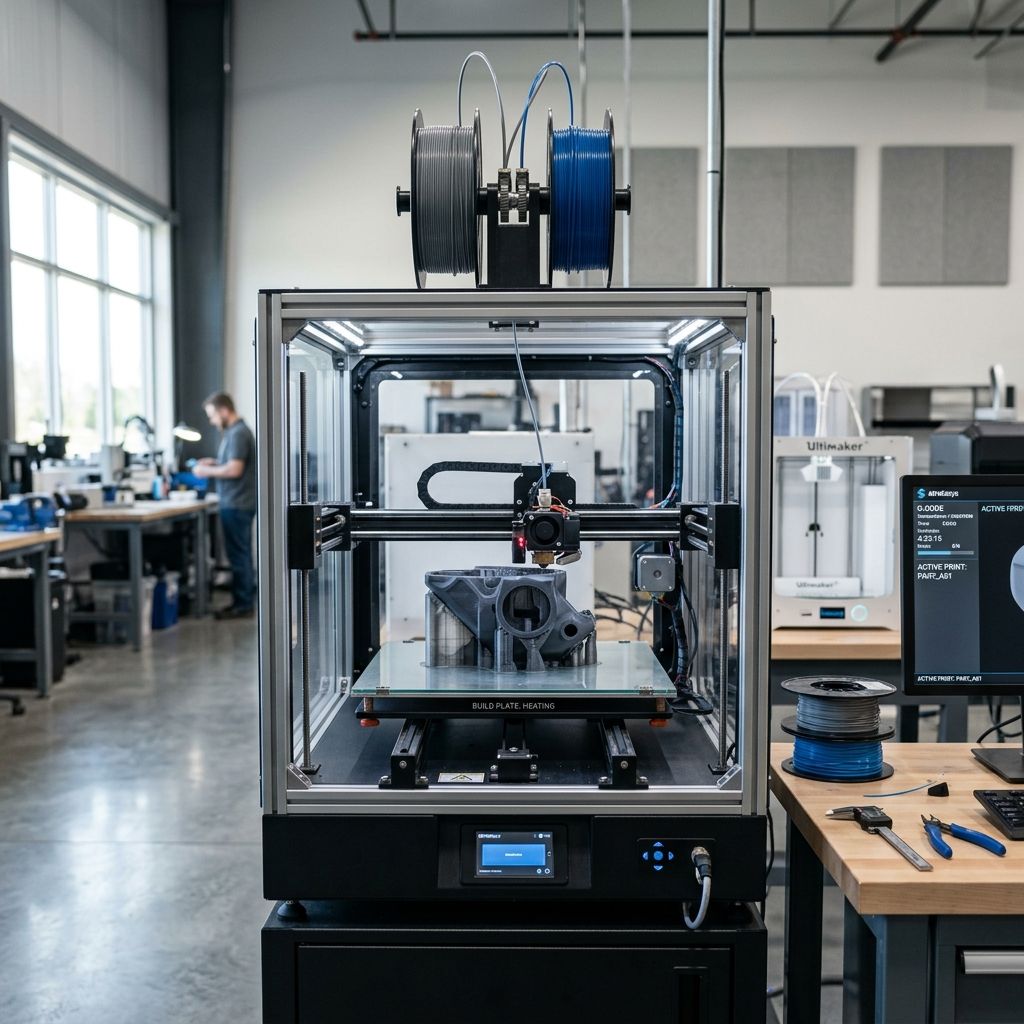
Prusa MK4/S: Real-World Quality Issues and Field Fixes A Workshop Veteran's Guide
I've set up, broken, and rebuilt more MK4 and MK4S units than I care to count. The brochure talks about "industrial-grade performance" and "plug-and-play" but the reality on the shop floor is a mix of clever engineering and head-scratching quirks. Here's what actually goes wrong, why it happens, and how to get it printing right without losing a weekend to frustration.
Maker's Summary: The Core Engineering Reality
The MK4/S family represents a genuine step forward in bed-leveling (load cell) and extruder design (Nextruder), but the transition from MK3S+ brought new failure modes. The load cell is sensitive to temperature drift and physical shock. The Nextruder's planetary gearbox has a thermal soak issue that can cause inconsistent extrusion on long prints. The frame, while decent, has enough flex that belt tension and Z-axis alignment need to be dialed in tighter than most users expect. The MK4S's cooling fan upgrade helps with bridging but introduces vibration at high RPM.
- Root cause of most first-layer problems: Load cell zero-offset drift due to ambient temperature changes or nozzle collisions.
- Root cause of layer shifts: Under-tensioned belts (factory spec is often too loose) or GRBL buffer overruns on complex G-code.
- Root cause of clogged nozzles: Heat creep into the heatsink because the part cooling fan is aimed too directly at the heatbreak.
First-Day Assembly: Where the MK4/S Loses You
You open the box, and it's mostly pre-assembled. Good. But the Z-axis leadscrews are shipped ungreased pick up a tube of PTFE-labeled Super Lube before you even start. The manual says to apply it, but most people skip. Within 50 hours of printing, you'll feel binding on the Z-hop. I've seen customers strip the motor couplers because the leadscrews were too tight. The spec is 1-2mm of vertical play in the coupler springs; if you can't see the spring coils moving slightly, you've over-tightened.
DANGER: Load Cell Damage on First Boot
The load cell is mounted on two thin aluminum beams. If you bump the hotend sideways while tightening the nozzle, you'll bend those beams. The sensor will then read a false zero. Repair means ordering a new load cell PCB the beams are not user-serviceable. Always hold the heater block with a wrench when removing or installing a nozzle. I use a 7mm socket with a torque limiter set to 2 N·m.
The MK4S comes with the new 6-wire stepper motors for the Z-axis. They run much quieter but have a different resonance frequency. If you reassemble the Z-axis without aligning the leadscrews perfectly parallel, you get a "singing" sound on fast moves. Fix: loosen the motor mount screws, home Z, then retighten while the axis is sitting at mid-height to average out the twist.
The Nextruder: Brilliant Gearbox, Annoying Heat Soak
The Nextruder's planetary gear ratio is 10:1, giving you amazing torque resolution. But the gearbox is sealed and filled with grease. After a 6-hour print at 250°C bed temp, the heat conducts up the heatsink and softens the grease. Extrusion becomes inconsistent you'll see blobs on retraction, then underextrusion on the next move. Prusa's fix is a firmware PID tune for the extruder fan, but I've found it's better to add a small heat barrier: a 1mm thick silicone pad between the hotend heatsink and the gearbox housing. I've done this on three MK4S units and the long-print consistency improved dramatically.
Load Cell Bed Leveling: Great concept, thermal drift nightmare
The load cell measures the force of the nozzle contacting the bed. In theory, it's self-compensating. In practice, the cell's zero offset drifts as the ambient temperature changes especially if you have a draft in the workshop. I've seen zero-offset values change by 10-20 µm over a 10-minute warm-up. Prusa's firmware has a "Live-Z adjust" routine that tries to correct this, but it only runs at the start of a print. If your print room heats up from 20°C to 30°C during a long job, the first layer that was perfect at minute 5 will be too high by minute 120.
- Solution A: Re-run the calibration wizard if ambient temp changed more than 5°C.
- Solution B: Use a M18 (stop) and M17 (enable) motor idle hold to keep the Z motors locked during pre-heat the bed's thermal expansion can also shift the probe point.
- Solution C: Replace the bed springs with silicone spacers (I use 2mm thick) to reduce the required probe force variation.
- Warning: Don't oil the load cell beams. Oil changes the stiffness and ruins the calibration for months.
Belt Tension and Layer Shifts: The MK4S Frame Flex
The MK4S uses a steel frame with cross-bracing, but the Y-axis (bed) is on a single rail with two bearings. If you overtension the Y-belt, the bed rocks at the ends of travel, causing layer shifts in the Y direction. The spec is 90-110 Hz when plucked, but I've found that works only if the bed is perfectly level. My method: tension until the belt makes a low "thump" when plucked, then tighten one more half-turn. Then print a 100mm single-wall cube with a sharp corner if the corner is wavy, back off the belt by 1/4 turn.
The MK4S's X-axis belt tension is less forgiving because the motor mount is cantilevered. Over-tightening can bend the mount bracket, causing the belt to ride on the edge of the pulley. Check for belt fraying after 200 hours if you see strands, replace the belt and adjust the pulley alignment using a straight edge against the rail.
Engineering Cause-Effect: Vibration and Resonance on the MK4S New Fan Duct
The MK4S revamped the part cooling fan to a 4020 radial blower. It moves more air but at a higher frequency. The fan mounts are soft rubber, but the duct is printed PETG. At 100% fan speed (12,000 RPM), the vibration excites a natural resonance in the X-axis rail, causing vertical banding on the print surface. I've mitigated this by adding a 3mm neoprene pad under the fan mount, and limiting fan speed to 80% for PLA. If you need 100% for overhangs, you have to sacrifice surface finish.
First Layer Adhesion and Nozzle Clogs: The Real Weak Spots
I see more service calls for "print not sticking" than anything else. The MK4/S automatically calibrates the Z offset every print using the load cell, but the offset gets stored in EEPROM and can drift if you remove the print sheet or change the nozzle. My protocol:
- Before every print, wipe the PEI sheet with isopropyl alcohol (90% or better) dish soap every 10 prints to remove oils.
- If the first layer is squished but not sticking, increase bed temp by 5°C (not more, or PETG will stick too well).
- If the load cell reading shows a "deformation" warning during probing, you likely have a loose heatbreak. Tighten the heatbreak with a 7mm socket while hot (260°C) to re-seal.
Nozzle clogs are rarer on the Nextruder because the heatbreak is PTFE-lined and has a more gradual thermal transition. But I've seen filament dust accumulate in the gears after switching to matte PLA. That dust can find its way into the heatbreak if you don't brush the gear teeth every 50 hours. Use a toothbrush with stiff bristles.
Exhaustive Troubleshooting Matrix: Common MK4/S Quality Issues
- Symptom: First layer too high, but Live-Z is at -1.200.
Cause: Load cell zero drift from temperature change or physical shock.
Fix: Re-run Calibration > Z Calibration. If reading still off, manually measure bed distance with a 0.1mm feeler gauge and adjust Z offset manually. - Symptom: Random blobs on overhangs, then underextrusion.
Cause: Heat creep into Nextruder gearbox grease.
Fix: Reduce retraction distance from 0.8mm to 0.5mm, increase extruder fan speed to 100% (but monitor for resonance). Or add silicone heat barrier. - Symptom: Layer shift in Y after 2 hours.
Cause: Y-belt too tight, causing bed resonance at high speeds.
Fix: Loosen belt by 1/4 turn. If shift persists, check the Y-motor pulley set screw I've found two units where the screw was loose from factory. - Symptom: Z-banding every 8mm (leadscrew pitch).
Cause: Leadscrew bent or misaligned with motor.
Fix: Remove leadscrew, roll on a flat surface to check for bend. If straight, loosen the coupler and re-seat the leadscrew while the Z-axis is at mid-point to allow self-alignment. - Symptom: Filament sensor false triggers.
Cause: Dust or filament shavings in the optical path.
Fix: Blow out with compressed air. If persistent, open the sensor housing and clean the PCB with isopropyl. I've also seen the spring-loaded lever in the MK4S binding lubricate the pivot with a drop of silicone oil.
Maintenance Workflow: What I Actually Do on Every 500-Hour Service
Every 500 hours, I pull the printer apart to the frame. Here's the sequence:
- Extruder teardown: Remove the fan, heat sink, and gearbox cover. Inspect the planetary gears for metal debris. The grease usually darkens; if it feels gritty, replace with Mobilux EP2 (same as Prusa's factory fill).
- Hotend inspection: Heat to 260°C, remove nozzle, and check the heatbreak throat for carbon residue. Use a 2.5mm drill bit (by hand) to clean the PTFE tube end if needed.
- Linear rails: Wipe down and re-lube with Super Lube 51004. Don't use WD-40 it evaporates and leaves a film that attracts dust.
- Belts: Check for fraying, retension per the frequency method (X: 110 Hz, Y: 100 Hz). Adjust the motor mount screws if the belt is tracking off the pulley.
- Load cell check: Run the built-in test (Settings > Calibration > Load Cell Test). If the deviation is >5 µm, consider replacing the cell. The part number is: PRUSA-LOADCELL-V2.
- Bed leveling: Use a dial indicator (1 µm resolution) on the nozzle. The MK4S's bed mesh should be within ±40 µm. If not, loosen the bed screws and re-shim with aluminum tape under the heatbed.
One thing I've learned the hard way: never apply threadlocker to the heatbreak screw going into the aluminum heater block. The chemical reaction at high temperature can release corrosive gases. I've seen heater blocks pitted after 1000 hours. Use anti-seize compound (nickel-based) only.
Alternatives and Field Hacks: When the Brochure Fails
If you're chasing perfect surface finish and can't tolerate the MK4S fan resonance, swap the fan for a 4020 dual-ball-bearing unit from Delta (AFB4020L). You'll lose 10% airflow, but the vibration disappears. For the heat creep issue, I've seen guys replace the hotend heatsink with a titanium version from Slice Engineering it reduces heat conduction by a third. But the stock steel heatsink is fine if you add the silicone pad.
The MK4S's firmware (Buddy version 4.1+) includes an "Input Shaping" feature that compensates for some resonance, but I've found it overly aggressive on the Y-axis. I disable it (M593 S3 D0) and rely on proper belt tension instead. The latest version (4.2) has a better algorithm, but it still adds ghosting on sharp corners. If you print engineering materials like ASA/PETG, leave input shaping off the ringing is less visible on matt polymers.
Thermal Management: The Underestimated Variable
The MK4S enclosure (if you have one) traps heat. The load cell drift becomes worse because the ambient temperature inside rises faster than the bed thermistor can compensate. I keep the enclosure door open for the first 20 minutes of every print, then close it slowly. If you see the Live-Z value change by more than 0.050mm during a print, the load cell is heat-soaking. Pause the print and run a M104 S0 to cool the nozzle for 30 seconds before resuming the thermal expansion of the nozzle is real.
Workshop Warning: The Infamous EMC-C4 Nozzle Jam
If you're printing at high speeds (150mm/s+) with the MK4S and use a brass nozzle, the heat input from the heater cartridge can cause the filament to soften too early in the heatbreak. This is especially common with silk PLA and TPU. I've stopped recommending brass for the MK4S switch to a plated copper nozzle (e.g., Prusa's own "Nozzle V2"). The copper's thermal conductivity evens out the temperature gradient. I lost three nozzles in one week before figuring this out.
Final Practical Tip: The One Thing You'll Forget
Every time you change the filament type (especially from PLA to PETG or ASA), manually re-run the "First Layer Calibration" even if the load cell says it's fine. Different materials have different cooling rates that affect the load cell reading because the filament shrinks at different speeds. On PETG, I always add 0.030mm to the Z offset because the material is more viscous and can stick to the nozzle. That's not in the manual, but I've saved dozens of prints with that trick.
Mind the torque on the X-axis motor mount screws they strip easily in the aluminum bracket. Use 40 in·oz (0.28 N·m) with a precision screwdriver. And for the love of everything, check the four M3x8 screws under the heated bed that hold the aluminum plate to the Y-carriage. They come loose from the factory, and if they do, your bed mesh will go out of whack mid-print. I check them every 200 hours with Loctite 222 (purple) the low-strength one that doesn't degrade with heat.
Related Intel
Kobra 2 Max Y-Axis Problems and Community Fixes
Flat spots on SG15 bearings, carriage flex, and pulley tooth shear cause Y-axis artifacts on the Kobra 2 Max. Fixes: lubricate rails, reduce acceleration, and check belt tension.
Fixing Kinematic Binding on RatRig V-Core 3.1
RatRig V-Core 3.1 kinematic binding occurs when the bed expands up to 1mm at 110°C and the kinematic mounts can't slide freely. Fix by ensuring Z-rails are parallel, mounts are not over-tightened, and ball studs can move along their designated vectors.
Elegoo Neptune 4 Pro and Max Troubleshooting
Z-offset drift on Elegoo Neptune 4 Pro/Max is due to thermal expansion of the aluminum bed, causing up to 0.4 mm height change. Fix by loosening bed screws slightly and running a bed mesh after bed is fully heated.