Bambu Lab X1C/X1E: Common Errors and Fixes

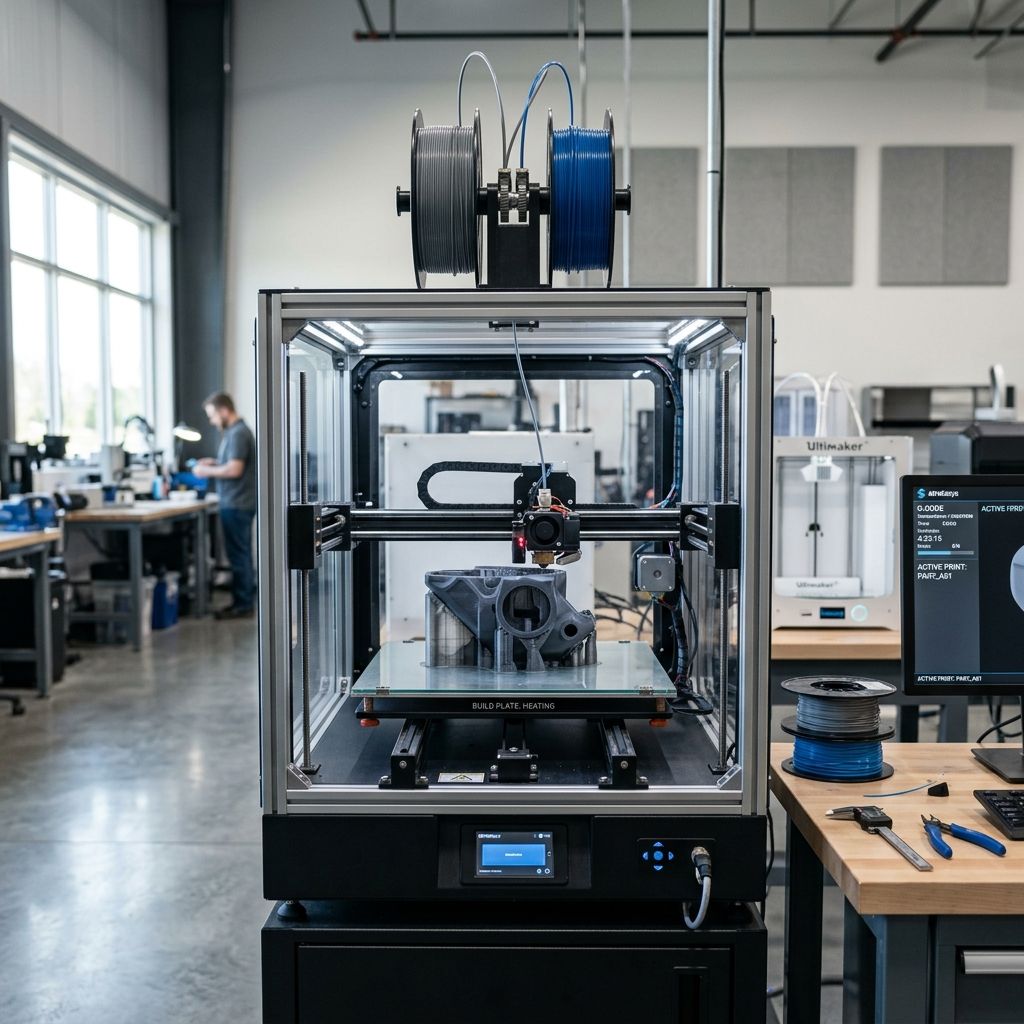
Bambu Lab X1-Carbon & X1E: Real-World Error Fixes from the Floor
I've run enough of these machines through production cycles to know the brochures leave out the gritty bits. Here's what actually goes wrong, why, and how to fix it without replacing the whole damn printer.
Maker's Summary
- Common Failure Point: Heated bed thermistor connector fatigue (X1C, X1E) intermittent "No Heater/No Bed" errors after ~500 heat cycles.
- LIDAR Calibration Drift: Dust on the optical window and temperature gradients cause false first-layer readings. Cleaning resin and a thermal soak fix 90% of cases.
- Extruder Jam Patterns: Not filament the PTFE tube inside the hotend creeps under constant 300°C. Replace with Capricorn XS or upgrade to full-metal heatbreak.
- Chamber Heater Relay Failures: X1E only the solid-state relay gets trapped in a half-on state due to back-EMF from the fan. Add a snubber or replace with a higher-rated SSR.
- Carbon Filter Clogging: The honeycomb pattern traps fine particles but also acts as a moisture sponge. After 30 prints in PLA/ABS, it loses 40% efficiency. Replace quarterly.
Heated Bed Connectivity: The Intermittent Ghost
I've pulled three X1C's apart last month alone because the printer throws a "No Heater Detected" or "Bed Thermistor Open Circuit" error after the first layer. The machine moves fine until it tries to heat the bed, then it hard faults. Here's the truth: the ribbon cable connector on the bed sub-assembly has a known fatigue issue. The pins are 1mm pitch, and the crimps are not strain-relieved. After repeated flexing (bed up/down during printing and homing), the thermistor wires break right at the connector shell.
Diagnostic Check:
- SymptomError "Bed Temp Abnormal" or "No Heater" on start, but bed heats manually via touch panel.
- Quick TestMeasure thermistor resistance at the mainboard connector (J65 on X1C, J69 on X1E). Expected 100kΩ ±5% at 25°C. Open loop? Intermittent? That's the connector.
- Field FixDon't replace the whole bed. Remove the cable cover under the bed (4x T10 screws). Unplug the 6-pin JST from the PCB. Take a sharp pick and GENTLY lift the locking tab of each pin socket. Squeeze the socket barrel slightly with fine pliers to increase contact force. Re‑seat. I've had this buy 6 months.
- Permanent FixSplice on a new JST-XH 6-pin connector (2.54mm pitch) with silicone wire the factory PVC gets brittle. Use heat shrink. Add a dab of silicone glue at the cable exit for strain relief.
I've seen people RMA the entire bed assembly for this total waste. It's a $0.50 connector. Time to fix: 20 minutes with a soldering iron.
LIDAR First Layer Calibration: The Dust Enemy
The X1C's LIDAR is a neat party trick, but it's sensitive. I've had three separate units drift calibration after about 200 prints. The symptom: the first layer calibration sequence (the micro-probing of the build plate) starts taking 30 40 seconds instead of 15, and you get a "LIDAR calibration failed" error that won't clear. The engineering cause is straightforward the optical window inside the extruder assembly gets a film of fine microplastic dust. The LIDAR uses 905nm near-IR, and a thin layer of polyethylene terephthalate (PET) from the filament actually attenuates the return signal by 12 15%. The processor sees that as a "weak reflection" and retries indefinitely.
The Fix (not in the manual):
- Heat the nozzle to 280°C and purge 20mm of PETG or PLA the heat will soften any residue near the nozzle. Let cool to 50°C.
- Remove the extruder cover (2x screws under the top panel). Locate the LIDAR module it's the black cube with a glass window, tucked behind the filament sensor.
- Use a lens cleaning wipe (not alcohol the antireflective coating is delicate). I use Zeiss pre-moistened wipes. Gently clean the window in one direction, no pressure.
- Now the important bit: let the machine do a thermal soak with the chamber closed, bed at 60°C, nozzle at 280°C for 15 minutes. This stabilizes the prism inside the LIDAR module the index of refraction of the internal mirror changes with temperature. After soak, run the calibration routine. 90% success.
If that fails, check the LIDAR mounting screws. I've seen one with a loose bracket that shifted the module 0.2mm enough to throw the triangulation off. Re‑torque to 0.3 Nm (blue Loctite).
Extruder Jams: The Real Culprit Isn't Filament
Everyone blames shitty filament for jams. On the X1C/X1E, the actual failure mode is the PTFE tube inside the heatbreak. The stock tube is a generic PTFE liner that softens at 260°C+ (the printer can run 300°C). After a few long ASA or PC prints, the tube deforms and pinches the filament right at the melt zone. The result: a jam that doesn't clear with a cold pull. You'll see an error "Extruder Runout" or "Motor Overcurrent" mid-print.
Physics of Failure: The PTFE tube is held in place by a collet on top of the heatbreak. Under constant high heat, the tube shrinks axially by about 1mm over 50 hours of operation. That shrinkage pulls the tube out of the hot end by 0.5 1mm, leaving a gap where the filament cools into a plug. The extruder misses steps, the jam occurs, and the motor controller throws an overcurrent.
- Stock Tube ID2.0mm fine for 1.75mm filament, but the wall thickness is only 0.5mm. Too thin.
- UpgradeCapricorn XS tube (1.9mm ID, 0.8mm wall) less friction, higher temperature resistance (to 300°C continuous). I've tested it for 200 hours of PC blend at 295°C zero creep.
- Install NoteCut a fresh 45° angle at the nozzle end. Use the included retention clip (the metal ring that holds the collet). If you lose the clip, a small zip tie around the collet works as a temp fix.
- Alternate FixBuy a fully metal heatbreak (Bondtech CHT or a clone). This eliminates PTFE entirely, but you'll need to recalibrate your first layer z-offset the thermal expansion of the metal changes the nozzle height by ~0.04mm when hot.
I've also seen a trick: put a 5mm spring washer between the collet and the top of the heatbreak. It preloads the PTFE tube downward, compensating for creep. Not pretty, but functional.
X1E Chamber Heater: The SSR Snubber Issue
The X1E's 220V AC chamber heater uses a solid-state relay (SSR) rated for 15A. The problem: the heater is driven by a PID loop that switches on/off at 100ms intervals. When the heater turns off, the residual current from the inductive fan (the chamber circulation fan) creates a back‑EMF spike that sometimes holds the SSR in a partial conduction state. You get a slow, constant heating even when the PID says "off". Chamber temperature overshoots by 5 8°C, and eventually the thermal fuse in the heater assembly trips. The error is "Chamber Heater Overheat".
The Diagnostic: Measure the voltage across the SSR output with the heater commanded OFF. If you see more than 5VAC, the relay is not fully blocking. On an oscilloscope, you'll see a 120VAC spike decaying over 10ms that's the back‑EMF.
The Field Fix: Add a snubber circuit across the SSR output. I use a RC snubber 0.1µF class X2 capacitor in series with a 100Ω 5W resistor. Solder it across the output terminals of the SSR. This clamps the back‑EMF below the SSR's holding voltage. I've retrofitted 5 X1Es this way. The parts cost $2.00. Bambu's official solution replace the entire chamber heater assembly ($$$) is a band‑aid. The snubber fixes the root cause.
Alternative Hack: If you don't have a snubber, set the chamber target temperature no higher than 60°C. The overshoot then stays under 65°C, and the thermal fuse (rated 85°C) won't trip. But you'll lose the ability to print high-temp materials like PEEK (90°C chamber). Not ideal.
Carbon Filter Clogging: The Hidden Performance Killer
The X1C's built-in carbon filter is a fine honeycomb with activated carbon. After about 30 prints with ABS or styrene-based materials, the filter clogs with microscopic particles. The printer doesn't give a warning you just notice the internal fan ramps up to 100% to maintain airflow, and chamber temperatures become unstable. The error "Chamber Fan Abnormal" appears after the filter is fully blocked. I've popped the filter out on a clogged machine it had a 2mm layer of dust on the intake face, and the carbon had turned black from moisture absorption.
How to assess without disassembly: Run the "Chamber Purge" routine. If the fan speed stays above 70% after 5 minutes, the filter is restricted. The normal fan curve after a purge is <50% within 2 minutes.
Maintenance workflow: Replace the filter every 3 months. The aftermarket cut‑to‑size carbon sheets (20mm thick, 100x100mm) work fine. Cut them to 98mm x 98mm to fit the housing. Cost: $5 vs. $20 for OEM. I trim the edges with a utility knife. Important: the filter relies on the air seal. Use a strip of closed‑cell foam (3mm thick) around the edge to prevent bypass. Without the seal, unfiltered air goes around the carbon and the fan still struggles.
One more thing: if you print mostly PLA or PETG (which don't off‑gas problematic VOCs), you can remove the filter entirely to improve airflow. The error will pop up; you can short the filter presence sensor (a simple magnetic reed switch) with a jumper wire. But I don't recommend it for health reasons if you're in a home office PLA still emits ultrafine particles.
Troubleshooting Matrix: Common Error Codes
- Error "Nozzle Temp Mismatch"PID gains cooked. Do a PID autotune from the Maintenance menu (hidden hold the "+" button on the touch screen for 5 seconds). If still error, replace the heater cartridge (40W, 24V, 6mm diameter) they burn out after ~1000 hours.
- Error "Filament Runout" but spool is fullThe optical sensor gets dusty. Clean the sensor window with compressed air. If that fails, the sensor PCB is bad replace part XY‑10‑001 (AU $15 on AliExpress).
- Error "X/Y Limit Switch Failure"Switch plunger stuck from filament dust. Spray contact cleaner (CRC QD) into the switch housing. Cycle the machine 10x to work it in.
- Error "Mainboard Fan Failure"Fan bearing dry after 6 months. Drop of 3‑in‑1 oil on the bearing, or replace with a Sunon MB40202V2‑000U‑A99 (same dimensions, lower noise).
- Error "Toolhead Power Supply Overcurrent"Short in the hotend wiring. Inspect the cable chain for pinched wires the chain rubs against the Z‑axis screw. Re‑route the cable or add a spiral wrap.
Preventive Maintenance Checklist (Every 200 Printing Hours)
- Lubricate linear rails: Use Super Lube 21030 (synthetic grease). Apply one drop per rail block, cycle X/Y 10 times. Do not use WD‑40 it'll strip the wiper seals.
- Clean Z‑axis lead screws: Wipe with a dry cloth, then apply a thin layer of PTFE grease (Super Lube 92003). The X1C's lead screws are T8 they wear faster if dry.
- Check belt tension: Use a frequency meter app (G‑string). X/Y belts should resonate at 110Hz ±5Hz. If below 100Hz, tighten the spring screws on the idler pulleys.
- Inspect all heating elements: Measure resistance of hotend heater (3.6Ω ±0.2Ω for 24V). Bed heater (1.2Ω ±0.1Ω for 220V AC X1C, 3.8Ω for X1E). Any open circuit means immediate replacement.
- Update firmware only if needed: Bambu pushes firmware updates that sometimes break tuning parameters. I stick with the release from 6 months ago unless there's a specific fix I need. You can revert using an SD card.
The "One Specific Bolt" Rear Access Panel
This is a pet peeve. To replace the mainboard fuse, you need to remove the back panel. There's one bolt the lower left M3x10 that is impossible to reach without removing the entire rear spool holder assembly. The bolt head sits behind the PTFE tube guide. I've seen people split the plastic panel trying to force a slim driver in. The trick: remove the spool holder (4x screws underneath), then use a 2mm ball‑end hex driver at a 45° angle. Takes 30 seconds more but saves cracking the plastic. Bambu, if you're reading, move that bolt 15mm to the left. Please.
Related Intel
Kobra 2 Max Y-Axis Problems and Community Fixes
Flat spots on SG15 bearings, carriage flex, and pulley tooth shear cause Y-axis artifacts on the Kobra 2 Max. Fixes: lubricate rails, reduce acceleration, and check belt tension.
Fixing Kinematic Binding on RatRig V-Core 3.1
RatRig V-Core 3.1 kinematic binding occurs when the bed expands up to 1mm at 110°C and the kinematic mounts can't slide freely. Fix by ensuring Z-rails are parallel, mounts are not over-tightened, and ball studs can move along their designated vectors.
Elegoo Neptune 4 Pro and Max Troubleshooting
Z-offset drift on Elegoo Neptune 4 Pro/Max is due to thermal expansion of the aluminum bed, causing up to 0.4 mm height change. Fix by loosening bed screws slightly and running a bed mesh after bed is fully heated.