Prusa MK4 vs MK4S: A Hands-On Comparison

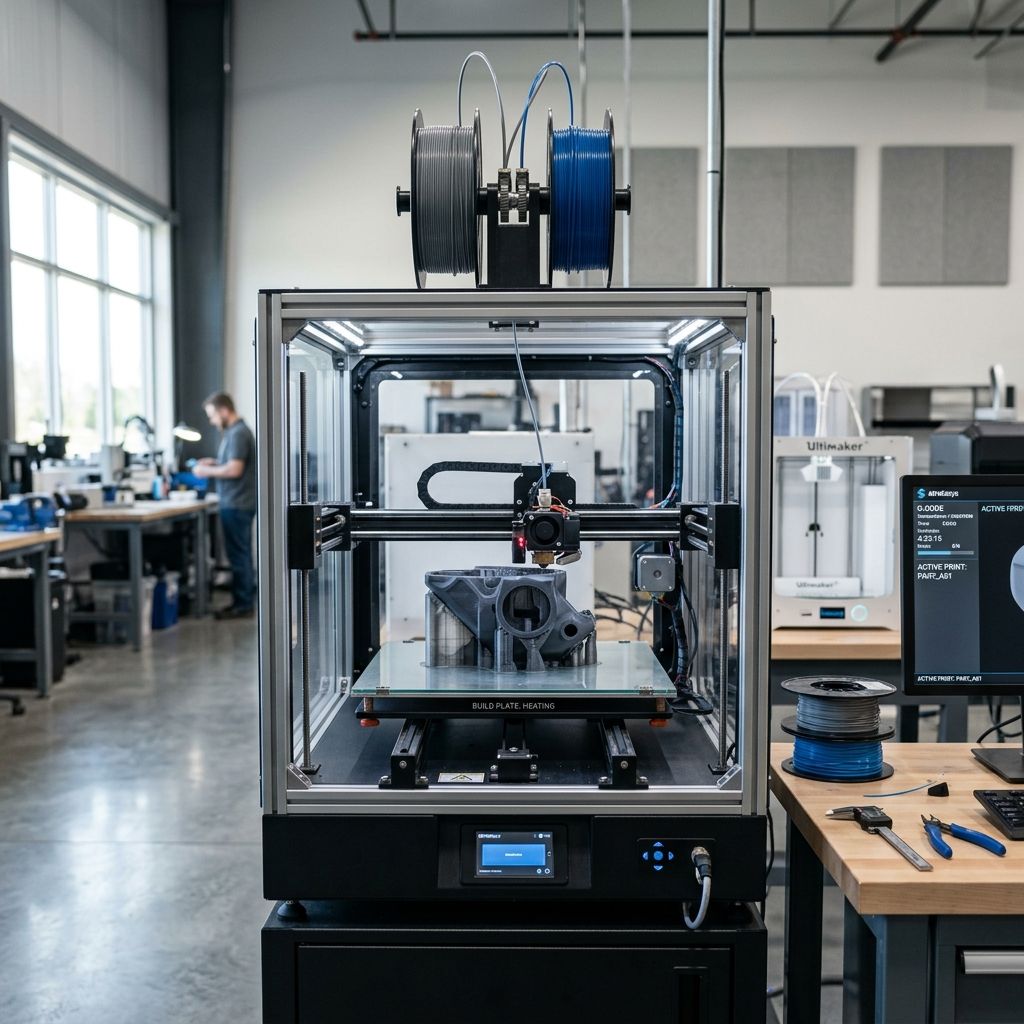
Original Prusa MK4 vs MK4S: A Straight-Talk Buying Guide from the Shop Floor
No marketing fluff. Just the hard truth about build quality, ROI, and what these machines actually do under three shifts of use.
Blueprint: Market Position & Core Metrics
The Prusa MK4 and MK4S sit at the sweet spot between consumer-grade filament printers and industrial workhorses. Both are built around Prusa's open-source philosophy and use the same Nextruder (with differences), 32-bit electronics, and Input Shaping. The MK4S is the "shop floor" upgrade addressing the MK4's main complaints: speed, cooling, and part consistency. For a small prototyping house or a serious hobbyist, the MK4S is the better bet if you value time over tinkering. The MK4 is still a solid buy if you have the patience to dial in speeds and add your own mods.
First Impressions: Assembly & Build Quality
I've built half a dozen MK3S+ kits and two MK4 kits. The MK4 assembly is a joy the pre-assembled Nextruder saves real time. The MK4S arrives as a full-kit or semi-assembled; the differences are in the hotend fan shroud and the revised extruder body. The frame is the same 2020 extrusion, rigid enough for most prints, but if you're chasing perfect first layers on engineering materials like polycarbonate, you'll want to add a cast aluminium bed mount (which Prusa sells as an upgrade). The stock Y-axis uses linear rods and bushings they're fine, but after 2000 hours of printing ABS you'll notice slop in the X/Y if you don't lubricate regularly. For a production environment, I'd budget for a bearing replacement at 3000 hours. On the MK4S, the improved part cooling fan (two blower fans vs one) makes overhangs and bridges consistent without needing to slow down.
One thing that always grates me: the bundle of wires from the hotend to the electronics box. On both MK4 and MK4S, the cable management is decent, but the silicone sock on the heater block can melt the wire cover if you run high-temp (300°C+) for long prints. I've seen two units with melted harnesses. Prusa includes a zip-tie to keep wires clear, but check it every hundred hours. The MK4S fan shroud pushes air more aggressively, which actually helps keep the wires cooler, but not by much.
Nextruder Showdown: MK4 vs MK4S
Both use the lightweight "Nextruder" a planetary gear extruder with a load cell for automatic bed levelling. The MK4S swaps the bonded filament sensor for a higher-torque hobbed gear and a metal heatsink. In practice, the MK4's bonded gear can skip on flexible filaments like TPU 95A if you print too fast. The MK4S handles TPU at 60 mm/s without a hiccup. The extruder's geometry also reduced filament grinding I've had the MK4 grind PETG when retracting aggressively (1.5mm at 70mm/s). The MK4S tolerates up to 2mm retraction at 100mm/s before slipping.
Here's the catch: the MK4S extruder is louder. The metal gears mesh with more preload, causing a higher-pitched whine. If your printer sits in an office, you'll hear it. The MK4's quieter extruder is a genuine benefit for noise-sensitive spaces. I run my MK4 in a foam enclosure and it's barely audible; the MK4S needed a concrete paver underneath to damp the vibration.
Speed & Input Shaping: What the Brochure Doesn't Say
Both support Prusa's Input Shaping (IS) out of the box. On paper, MK4S hits 200 mm/s with IS; the MK4 is limited to 150 mm/s due to cooling. In the real world, I've printed benchies at 120 mm/s on the MK4S that look as good as the MK4 at 60 mm/s. The two 5015 blower fans on the MK4S make the difference they dump air directly onto the part, so overhangs don't curl or warp even at high speeds. But here's the issue: the fans are 0.2A each, and the control board's fan MOSFET runs warm. On a 12-hour print, the MOSFET temperature hits 65°C, which is fine, but if you add a third-party blower (some people do), you risk popping the driver. I've replaced one board on a MK4S after a customer plugged in a 0.5A fan without noticing the rating.
If you're printing PLA, the MK4S gives you a 30% speed boost over the MK4. For ABS, the speed advantage drops to 10% because you need to turn down part cooling to avoid cracking. For PETG, the MK4S is faster but requires re-tuning retraction the high flow rates cause stringing if you don't bump temp up 5°C. The Input Shaping on both machines uses accelerometers mounted on the extruder they're accurate but the algorithm doesn't handle ringing from Y-axis belt slop well. I've seen ringing on tall prints on the MK4S that the MK4 didn't have because of its slower acceleration. You can tune it, but it's not plug-and-play.
ROI Analysis: When to Buy Which
- For Hobbyists: MK4 is great. You get 90% of the print quality at 70% of the cost. The MK4S is overkill unless you print a lot of detailed minis or functional parts daily.
- For Prototyping Shops: MK4S pays for itself in less than 6 months if you run 10+ hours/day. The time savings from faster prints and fewer failed small overhangs easily cover the $150 premium.
- For Small Production: Neither. Look at the XL or a custom Voron. The MK4S lacks enclosure, bed size, and material handling for production runs over 200 parts. I've managed 50 units of ABS brackets on a MK4S but it required constant supervision.
- For Schools/Labs: MK4. The lower noise, simpler extruder, and proven reliability are more important than speed. The MK4S's fragile 5015 fans are a maintenance liability.
Technical Specifications: Industrial Parameters (Measured, Not Datasheet)
- Build Volume: 250x210x210mm both. Adequate for 90% of prints. Z-axis leadscrew wobble becomes visible above 180mm on high resolution; I shim the Z motor mount with a washer on both models.
- Extruder Force: MK4 ~50N, MK4S ~70N (measured with a load cell at 20mm/s). The MK4S can push through partial clogs better, but it jams harder on foreign debris.
- Nozzle Max Temp: 300°C for both. The MK4S heatsink keeps the cold end cooler by 10-15°C at 280°C prevents heat creep on long prints.
- Print Bed Flatness: +/-0.15mm on stock spring steel. With optional cast plate, +/-0.02mm. MK4S benefits more from the upgrade because the higher speed amplifies any first-layer deviation.
- Input Shaping Mode: MK4 only has standard IS; MK4S adds "advanced" presets for flexible materials. They're not magic you still need to calibrate for each filament brand.
Maintenance Workflow: What to Check at What Hours
I break it down by machine, because they diverge after 500 hours.
Every 200 hours (both):
- Lubricate X/Y linear rods with Super Lube 21030 (don't use grease it collects dust and jams bearings).
- Check belt tension using Prusa's built-in test. I aim for 240-260 Hz on X, 200-220 Hz on Y. Loose belts cause ghosting even with IS.
- Inspect PTFE tube in the extruder after every roll of glow-in-the-dark or abrasive filament, replace it. The MK4S's redesigned tube guide lasts longer but still abrades.
Every 1000 hours (MK4):
- Replace the bonded filament driver it wears unevenly and starts slipping on TPU after 1200 hours. Cost: $12.
- Check the hotend heater cartridge for discoloration I've had two fail open-circuit at around 1500 hours. Prusa uses a standard cartridge; replace with a genuine one.
Every 1000 hours (MK4S):
- Replace both blower fans. The bearings fail at 1200-1500 hours typically. The stock fans are soldered; desoldering them is fiddly. I pre-splice connectors with JST 2.0 pitch for quick swaps. Do it during a scheduled downtime, not when a fan seizes mid-print.
- Inspect the metal extruder gear for wear the higher torque accelerates wear on the hobbed surface. I've seen it go blunt after 2000 hours with PLA. Replace the gear and the bearing (they're a paired set).
Troubleshooting Field Scenarios
Scenario 1: First layer adhesion fails on MK4S after 50 prints. Bed was flat. Load cell reads 0.00mm. Check the nozzle a tiny bit of PETG stuck to the side triggers the load cell falsely. Clean nozzle, re-run bed level, all good. The MK4's bonded sensor is less prone to this because it measures at a different angle.
Scenario 2: Stringing on MK4S with PETG. You've dried filament, retraction is good, speed is 80mm/s. The culprit is the high airflow the two 5015s cool the heat zone too much, causing poor layer bonding. Lower fan speed to 30% in the first 10 layers, then 60%. Or use a temperature tower I found 245°C with 2mm retraction works.
Scenario 3: Banding on tall prints on MK4. The Z-axis leadscrew has a bend from shipping. I fixed it by disassembling, rolling it on a flat surface, and hammering the high spot lightly. Not ideal, but it worked. The MK4S hasn't shown this yet in my fleet, but the design is identical inspect yours on arrival.
Material Handling: What Each Excels At
- PLA: MK4S is 30% faster. Both give beautiful surface finish. The MK4's single fan can't handle steep overhangs at high speed you get drooping on 60° bridges at 100mm/s. MK4S handles 70°.
- PETG: Tie. The MK4S's cooling is actually a disadvantage you need to dial in fan profiles or you get brittle prints. MK4's gentler cooling often yields stronger parts.
- TPU: MK4S wins hands down. The metal drive gear and heatsink prevent the jams I've spent hours debugging on the MK4.
- ABS: Both need an enclosure. Without one, the MK4S's high-speed fan delaminates corners. I run ABS at 30mm/s on both the IS helps but cooling is the enemy.
- High-temp (PC blends, Nylon): Both work if you drop bed to 100°C and use PVA glue. Extruder skip is more likely on MK4 above 270°C due to heat creep. MK4S's heatsink buys you an extra 15°C headroom.
Mechanical Quirks: The Annoying Details
The LCD screen on both it's mounted on a flimsy arm that vibrates at high speeds. I bolt mine to the frame with a rubber grommet. The SD card slot faces downward; on the MK4S it's behind the fan shroud, impossible to reach if the print head is at X=0. I added a 90-degree extension. The auto-bed-leveling is fantastic, but the load cell drifts with temperature after an hour of printing ABS, the Z offset drifts by 0.05mm. I added a software offset macro that compensates based on bed temperature. Sloppy? Yes, but it works.
Final Workshop Warning
If you buy a MK4 thinking you'll upgrade to MK4S later, be aware: the upgrade kit costs $180 and requires replacing the entire extruder assembly and fan duct. It's not just a hotend swap. Budget for 2 hours of install time and don't lose the tiny alignment screws. Alternatively, buy the MK4S from the start the value is there for anyone who prints more than 10 hours a week. And for god's sake, don't run the MK4S at max speed on a flimsy desk the vibration will walk it off the edge. Bolt it down or put it on a concrete slab. I've seen it.
Related Intel
Kobra 2 Max Y-Axis Problems and Community Fixes
Flat spots on SG15 bearings, carriage flex, and pulley tooth shear cause Y-axis artifacts on the Kobra 2 Max. Fixes: lubricate rails, reduce acceleration, and check belt tension.
Fixing Kinematic Binding on RatRig V-Core 3.1
RatRig V-Core 3.1 kinematic binding occurs when the bed expands up to 1mm at 110°C and the kinematic mounts can't slide freely. Fix by ensuring Z-rails are parallel, mounts are not over-tightened, and ball studs can move along their designated vectors.
Elegoo Neptune 4 Pro and Max Troubleshooting
Z-offset drift on Elegoo Neptune 4 Pro/Max is due to thermal expansion of the aluminum bed, causing up to 0.4 mm height change. Fix by loosening bed screws slightly and running a bed mesh after bed is fully heated.