Common Bambu Lab X1-Carbon Problems and Fixes

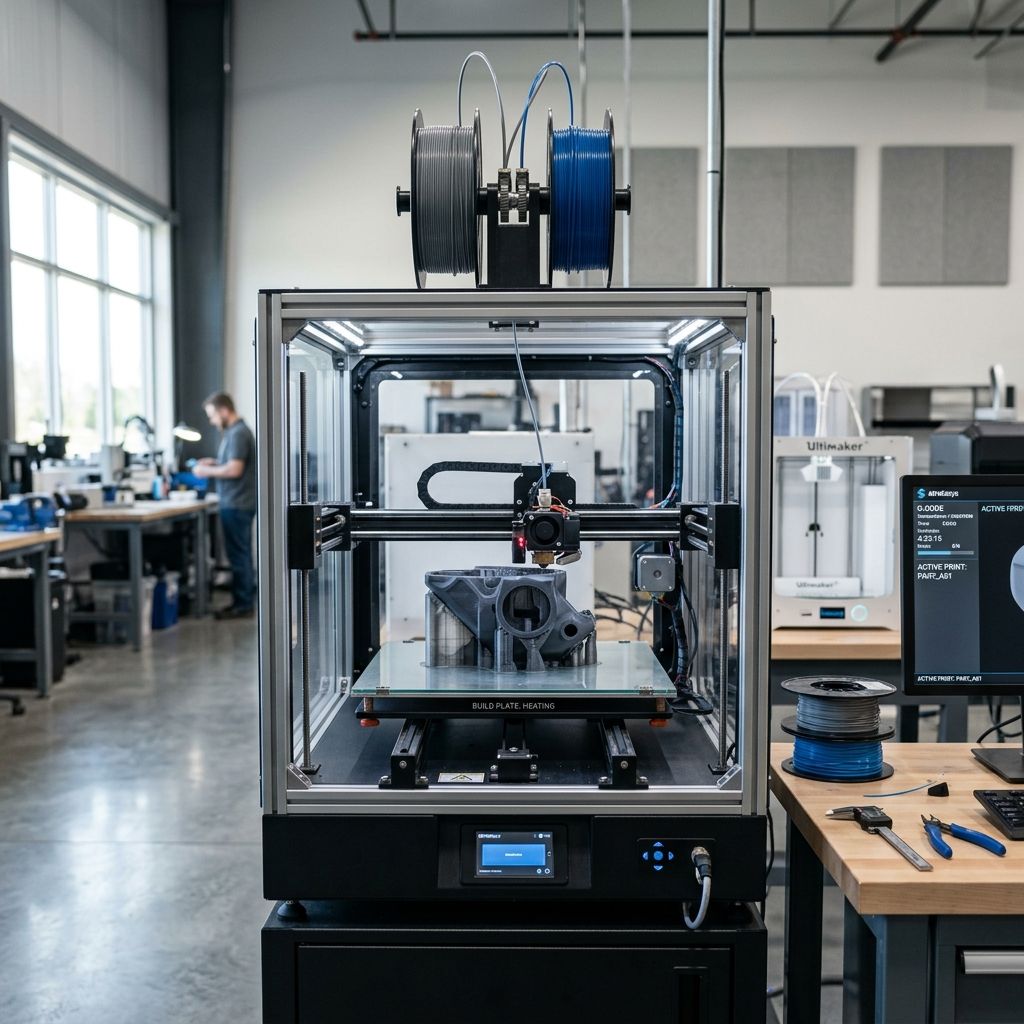
Bambu Lab X1-Carbon & X1E: Field Troubleshooting & Community Solutions
A deep-dive engineering log dissecting the three most common hardware failures, mechanical fatigue points, and shop-floor recovery protocols for the X1 series.
The Reality of Desktop Industrial Fleet Management
In our shop, we treat the Bambu Lab X1-Carbon (X1C) and X1E as high-speed production tools. We do not baby them, and we do not run them only with friendly PLA. We run them 24/7 with abrasive composites, high-temperature polycarbonates, and flame-retardant nylons. If you run these machines long enough, the marketing polish wears off and you are left with real-world mechanical realities: parts wear, pathways clog, and tolerances drift. Under continuous load, the speed of CoreXY movement accelerates wear in ways that traditional, slower desktop machines never experienced.
Understanding these machines requires looking beyond the automated sensor checks. The lidar, load cells, and accelerometers are excellent diagnostic aids, but they cannot fix a worn PTFE path, a grooved plastic feeder, or a dry composite bearing. To keep these machines operating at peak performance, you must understand their specific mechanical failure modes and implement a rigorous, manual preventive maintenance routine.
Field Highlights: Mechanical Reality Checks
The speed of these machines means that wear cycles are compressed. A component that lasts three years on a standard 60 mm/s printer can fail within 500 operating hours on an X1 series machine running at 300+ mm/s with heavy accelerations. Tracking operating hours, rather than calendar days, is critical for maintaining fleet reliability.
Failure 1: AMS Feeding and Retraction Failures (The "Red Flashing LED of Death")
If you run multi-material prints or use the Automatic Material System (AMS) for support structures, you will eventually encounter the dreaded feeding or retraction failure. The toolhead stops, the AMS slot flashes red, and the system reports that filament is stuck in the toolhead or the internal hub assembly. This is rarely a simple software glitch; it is almost always a physical friction or wear issue along the feed path.
The Anatomy of the Feed Path Failure
The AMS feed path is long and contains multiple transition points. Filament travels from the spool, through the first-stage feeder, into the internal AMS hub, through a rear buffer or splitters, through the main PTFE line to the toolhead, and finally into the extruder. Each of these transitions introduces friction, and any wear along this path increases the drag force required to push or pull the filament.
The primary culprit is the first-stage feeder. The entry funnel is made of molded plastic. Over time, abrasive filaments like carbon-fiber or glass-filled polymers act like a saw blade, cutting a deep groove into the plastic funnel. Once this groove forms, the filament snags on the lip during retraction, preventing the AMS feeder from pulling it back. Inside the toolhead, the filament cutter must also slice cleanly through the filament. If the blade is dull, it deforms the tail of the filament, creating a bulbous tip that cannot pass back through the tight tolerances of the hotend or PTFE fittings.
- Standard PTFE Inner Diameter: 2.0 mm (provides tight guide constraints but increases friction when worn or bent)
- First-Stage Feeder Life: ~300 to 500 hours with abrasive composites before groove formation occurs
- Cutter Blade Life: ~1,000 cuts on standard PLA; less than 200 cuts on carbon-fiber nylon (PA-CF)
- Max Extruder Push/Pull Torque: Constrained by small stepper motors; easily stalled by elevated friction paths
Step-by-Step Diagnostic and Reconstruction Workflow
When an AMS feeding error occurs, do not simply yank the filament. Follow this systematic approach to isolate and fix the high-friction zones:
- Isolate the Jam Location: Unlatch the PTFE tube at the back of the printer where it exits the AMS buffer. Pull the filament manually. If it pulls easily from the buffer, the jam is inside the printer cabinet or toolhead. If it is locked solid, the jam is inside the AMS unit or the first-stage feeder.
- Examine the Toolhead Filament Cutter: Heat the hotend to 250°C. Manually depress the filament cutter lever on the left side of the toolhead. If it requires excessive force or feels mushy, the blade is dull or bent. Inspect the blade for chips and replace it. A clean cut is critical for reliable AMS retractions.
- Inspect and Replace Worn PTFE Tubes: Look for sharp bends in the PTFE lines, especially where the tube enters the toolhead or passes through the rear grommet. Replace any worn sections with premium PTFE tubing. Keep the tube lengths as short as possible to minimize drag, but leave enough slack to allow the toolhead to reach all four corners of the bed without straining the lines.
- Rebuild the First-Stage Feeder: If the plastic funnel of the feeder is grooved, replace the feeder assembly or install a custom wear-resistant guide. You can find several community designs that allow you to insert a small metal eyelet or a short piece of PTFE tubing directly into the entry funnel, preventing the filament from sawing into the plastic housing.
Failure 2: Toolhead Toolpath Slop, Carbon Rod Wear & Resonance Drift
The CoreXY kinematics of the X1 series rely on lightweight carbon fiber rods for the X-axis carriage. This design allows the toolhead to accelerate at up to 20,000 mm/s², but it introduces a unique maintenance challenge: the carbon rods cannot be lubricated with grease or oil. The carriage uses dry composite bushings that slide directly on the carbon rods. Introducing grease to these rods creates a sticky paste with carbon dust and environmental debris, which quickly destroys the dry bushings and ruins the rods.
The Physics of Graphite Carbon Rod Degradation
As the carriage moves back and forth millions of times, fine graphite dust and environmental debris build up on the surface of the carbon rods. This buildup creates friction, which manifests as fine surface artifacts, ghosting, or ringing on printed parts. Over time, this friction can cause the automated input shaping calibration to drift, leading to poor print quality as the controller struggles to compensate for changing mechanical resonances.
If you ignore this buildup, the grit will begin to wear away the resin binder of the carbon fiber rods, creating permanent flat spots or grooves. Once the rods are physically damaged, the only solution is to replace the entire X-axis gantry assembly, which is a major, multi-hour tear-down. To prevent this, you must keep the rods clean by following a strict Bambu Lab X1-Carbon Preventive Maintenance Protocol.
Carbon Rod Field Care Parameters
Clean carbon rods should have a matte, dry appearance. If you run your finger along the rod and it comes away greasy or black with soot, the rod is contaminated. Never use WD-40, mineral spirits, or machine oil on these carbon rods. These liquids will penetrate the dry bushings and cause them to swell or degrade, permanently ruining the smooth glide of the carriage.
Deep-Cleaning and Re-Tensioning Protocol
To restore mechanical accuracy and stop resonance drift, use this process every 200 to 300 operating hours:
- Wipe Down the Carbon Rods: Dampen a clean, lint-free microfiber cloth with 99.9% anhydrous isopropyl alcohol (IPA). Thoroughly wipe down the carbon rods, rotating the cloth to use a clean section with each pass. Slide the toolhead all the way to one side, clean the exposed rods, then slide it to the other side and repeat. You will see black carbon residue on the cloth; keep wiping until the cloth comes away completely clean. Refer to this guide on How to Clean Bambu Lab X1 Carbon Rods and Rails for more detailed, step-by-step instructions.
- Clean the Y-Axis Linear Rails: Unlike the carbon X-axis, the Y-axis uses steel linear rails that require active lubrication. Clean any old, dirty grease off the Y-axis rails using IPA, then apply a thin, even coat of high-quality synthetic grease (such as Super Lube 21030) using a lint-free swab. Slide the gantry back and forth manually to distribute the grease along the bearings.
- Perform the Belt Tensioning Procedure: Loosen the two belt tensioner spring screws located at the back of the printer gantry. Manually slide the toolhead slowly back and forth through its full range of motion to allow the internal spring-loaded idlers to balance the tension across both belts. Move the gantry to the center, then carefully retighten the tensioner screws. Avoid over-tightening these screws, as you can strip the plastic threads in the mounting blocks.
- Run a Full Calibration Cycle: Turn on the printer and run the complete calibration routine from the menu. This forces the printer to run a new input shaping sweep, recalibrating the resonance frequencies to match the freshly cleaned and tensioned mechanical system.
Failure 3: Thermal Creep & Nozzle Clogs under Continuous Load
The compact design of the X1 toolhead places the extruder, filament cutter, cooling fans, and hotend in very close proximity. While this allows for a lightweight assembly, it creates a tight thermal envelope. When printing high-temperature engineering filaments or running long prints in a hot, enclosed chamber, the heat from the hotend can travel upward into the cold section of the heatbreak. This is known as heat creep.
The Mechanics of Heat Creep Clogging
Heat creep occurs when the heatbreak cooling fan cannot keep the upper radiator block cool enough to prevent the incoming filament from softening before it reaches the melt zone. This is especially common when printing PLA (which has a low glass transition temperature of around 55°C) inside a fully closed chamber, or when running high-temp materials like polycarbonate (PC) or carbon-fiber nylon (PA-CF) with elevated chamber temperatures on the X1E.
As the filament softens prematurely in the upper section of the heatbreak, the extruder gears continue to push down on it. This causes the soft filament to deform and swell, jamming it tightly inside the cold-end radiator block. The extruder gears will then strip the filament, leading to a complete loss of extrusion. This failure can be difficult to diagnose because it often looks like a simple nozzle clog, but clearing the tip of the nozzle will not resolve it; you must remove the entire hotend assembly to clear the jam. For a detailed guide on diagnosing these failures, see the X1-Carbon Hotend Failure Diagnosis and Replacement guide.
Tech Alert: High-Temp Chamber Management
When printing low-temperature materials like PLA, PETG, or TPU, always leave the top glass cover propped open or keep the front door cracked if your chamber temperature exceeds 35°C. This allows excess heat to escape, keeping the upper radiator cool and preventing premature filament softening. On the X1E, always monitor the active chamber heating settings to ensure they do not exceed the glass transition temperature of the filament you are printing.
Step-by-Step Hotend Unclogging and Thermal Management Protocol
If you experience a heat creep jam or a stubborn nozzle clog, use this structured recovery process to clear the path and prevent future issues:
- Perform a Hot Needle Clear: If the clog is at the tip of the nozzle, heat the hotend to 250°C. Take the thin acupuncture needle included with the printer and insert it up through the nozzle tip. Twist gently and pull it out. This can break up carbonized debris or particles that are blocking the orifice.
- Execute a Cold Pull: Heat the hotend to 220°C (or the printing temperature of the loaded filament). Insert a piece of cleaning filament or nylon manually into the toolhead, pushing until a small amount extrudes. Lower the hotend temperature to 90°C (for nylon) or 80°C (for PLA) and allow it to cool completely. Once the temperature is reached, pull the filament upward with a firm, steady tug. The filament should release from the hotend, pulling the debris out with it in a perfect mold of the internal nozzle geometry.
- Disassemble the Hotend Assembly: If the cold pull fails, the clog is likely in the upper heatbreak. Turn off the printer power. Remove the two mounting screws holding the hotend to the toolhead. Unplug the ceramic heater, thermistor, and cooling fan connectors. Pull the hotend out of the toolhead carriage.
- Clear the Upper Heatbreak: Use a heat gun to gently warm the upper radiator block of the hotend until the trapped plastic softens. Use a brass rod or a stiff wire to push the softened filament block out through the top of the heatbreak. Avoid using steel drill bits or sharp metal tools inside the nozzle, as they can easily scratch the polished internal walls of the heatbreak, leading to permanent friction points and frequent clogs.
- Apply Fresh Thermal Paste: When reinstalling the hotend, clean off the old thermal grease from the ceramic heater and the thermistor cartridge. Apply a fresh, thin layer of high-performance boron nitride thermal paste to the contact surfaces. This paste is critical for ensuring efficient heat transfer from the heater to the nozzle block, and from the cold-end radiator to the heatsink. Tighten the hotend mounting screws to approximately 0.5 to 0.6 Nm of torque.
Comparing Industrial and Hacky Field Solutions
When running these machines in a fast-paced environment, you often have to choose between waiting for official replacement parts or using quick, field-tested modifications to keep production moving. Both approaches have their place, depending on your uptime requirements and maintenance budget.
- Official Bambu Hotend: Factory matched performance, plug-and-play installation, but has a non-replaceable nozzle that requires discarding the entire unit when the tip wears out.
- Aftermarket Revo/TZ Style Hotend: Features replaceable nozzle tips (like hardened steel or ruby), allowing you to change nozzles without disconnecting the heater wires, though it may require custom slicer profiles.
- Stock PTFE Connectors: Cheap and simple, but they wear out quickly and add significant drag to the filament path.
- Pneumatic PC4-M10 Fittings: A common field upgrade that replaces the stock push-connectors with secure, low-friction couplers, reducing feeding errors on long runs.
In my experience, modifying the feeding path with premium, low-friction PTFE tubing and replacing the stock plastic AMS funnel guides with ceramic-lined inserts saves dozens of hours of maintenance over the lifespan of the machine. These small, preemptive upgrades pay for themselves by keeping your printers running and preventing the common filament sensor errors that interrupt overnight production prints.
Critical Torque Spec and Tooling Warning
The M2 screws used throughout the Bambu toolhead and AMS assemblies are soft and strip easily if you use cheap hex keys. Always use high-quality, precision-ground hex drivers (like Wera or Wiha) when working on these machines. When tightening screws into aluminum or plastic threads, turn the screw counter-clockwise first until you feel the thread drop into its seat, then tighten it gently until it is snug. Over-tightening will strip the threads, requiring you to replace the entire plastic toolhead housing or use helicoil inserts.
Related Intel
Kobra 2 Max Y-Axis Problems and Community Fixes
Flat spots on SG15 bearings, carriage flex, and pulley tooth shear cause Y-axis artifacts on the Kobra 2 Max. Fixes: lubricate rails, reduce acceleration, and check belt tension.
Fixing Kinematic Binding on RatRig V-Core 3.1
RatRig V-Core 3.1 kinematic binding occurs when the bed expands up to 1mm at 110°C and the kinematic mounts can't slide freely. Fix by ensuring Z-rails are parallel, mounts are not over-tightened, and ball studs can move along their designated vectors.
Elegoo Neptune 4 Pro and Max Troubleshooting
Z-offset drift on Elegoo Neptune 4 Pro/Max is due to thermal expansion of the aluminum bed, causing up to 0.4 mm height change. Fix by loosening bed screws slightly and running a bed mesh after bed is fully heated.