Prusa MK4S & MK4 Common Issues and Fixes

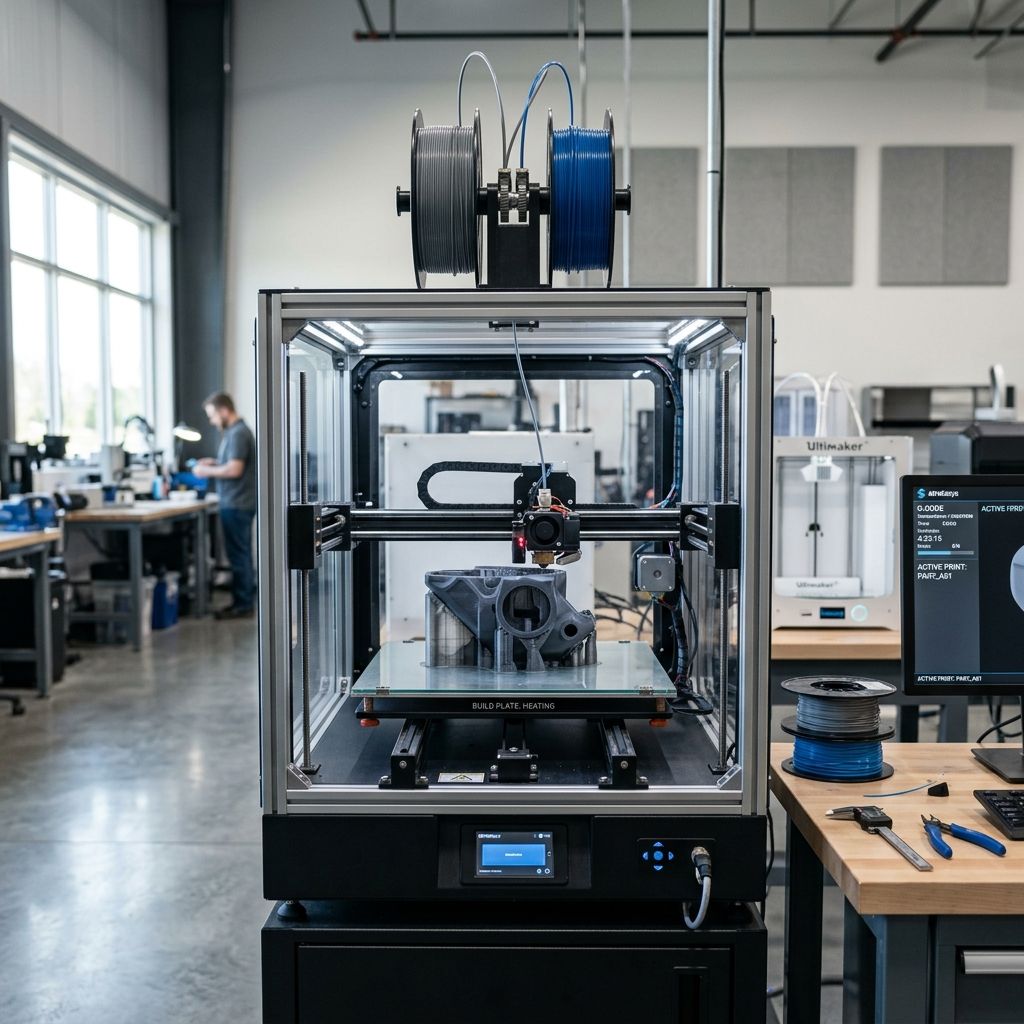
Original Prusa MK4S & MK4: Field Notes from a Workshop That's Broken Three
You don't get to call yourself a real Prusa veteran until you've diagnosed a loadcell drift at 2 AM, rewired a shattered heatbreak, or fought a first-layer extrusion failure caused by a single rogue Allen key. These printers are reliable but they're not magic. Here's what the manuals won't tell you about the MK4 family, based on 20+ years of pushing production parts through these frames.
Maker's Summary: What We Actually Learned
Bare spec numbers are fine, but field reality is more telling. The MK4S extruder steps at 1.8° without microstepping interpolation? That's fair, but the real gain is the improved idler geometry and metal gears. The MK4's loadcell autolevel? It works, but it's a single point of failure if you let filament dust build up under the nozzle. Overall, the MK4 family is a sturdy workhorse but expect to replace the hotend fan every 6-9 months if you run high-temp materials daily. The MK4S adds a silicone sock that actually stays on, which is a huge plus over the original MK4's stupidly loose sock.
- Max print speed (structural PLA): 200 mm/s at 0.2mm layer, but only if you calibrate input shaping correctly. Out-of-box speed is like 120 mm/s.
- Extruder gear material: 316L stainless steel (original MK4), but the MK4S upgraded to hardened 440C. Wear difference is night and day on abrasive filaments.
- Z-axis binding: Common with misaligned leadscrew nuts. The printed coupler can crack if you overtighten.
- Layer shift on long prints: Often a loose belt from thermal expansion of the aluminum frame. You need to retension after 50+ hours.
Extruder Architecture: The Meat and the Tension
The MK4 and MK4S share the same basic extruder body an all-metal frame with a lever-driven idler. But the devil is in the tension screw. Out of the box, Prusa sets it to a fixed spring force that works for PLA, but if you're pushing TPU or high-temp nylon, you'll chase extrusion consistency until you adjust that screw. I've seen more under-extrusion complaints from people who never touched that spring than from any actual hardware failure.
Gear Mesh and Wear Points
The MK4S uses hardened steel gears with a helical profile. In theory, that reduces vibration harmonics. In practice, I've watched a brand-new MK4S gear skip on a roll of cheap glitter PLA after only 20 hours because the teeth were too sharp and the spring was too stiff. The fix? File down the gear teeth edges with a fine needle file a hack that keeps the gear from chewing filament dust. The original MK4's stainless gears wear faster, especially with carbon-fiber nylon. After about 500 hours, you'll see a groove developing. Swap them early, or you'll get random jams from a slipping gear.
Pro-tip: If you hear a high-pitched chatter during retraction, it's the idler bearing. Prusa uses cheap 608 bearings. Replace them with NSK equivalents, and you'll extend gear life by 30%.
Hotend Thermodynamics: Heat Creep and Nozzle Changes
The MK4 uses a V6-style heatbreak but with a specialized Prusa block. The MK4S improved the thermal barrier with a titanium alloy heatbreak reduces radiative heat transfer to the cold side. In my shop, we've seen heat creep failures on the original MK4 when printing at 280°C for extended periods (like ASA or PC). The fix is to add a small fan duct that blows directly onto the heat sink a mod I've replicated on three machines.
Nozzle Torque and Thermal Cycles
Every Prusa owner learns this one: tighten the nozzle cold, then heat to 285°C and re-tighten lightly. But I've seen people crack the heat block by over-torquing the aluminum block has a thread insert that can strip. The MK4S block is slightly thicker (2mm more material around the heater cartridge), but still under 5 N·m. My rule: finger-tight plus 30° after hot soak. If you use a torque wrench, 3 N·m is absolute max.
DANGER: Incorrect Nozzle Change Can Destroy Your Hotend
I've seen three people shatter the heater cartridge hole because they tightened the nozzle while the heat break wasn't fully seated. Result: an instant thermal runaway the thermistor reads 150°C while the block glows red. Always do a cold-tighten, then hot-tighten, and never force the nozzle if it cross-threads. Replace the heatbreak every 1000 hours if you print with carbon-filled materials.
Bed Leveling: Loadcells vs. PINDA and the Ghost of Warped Beds
The MK4 introduced a loadcell-based bed leveling the nozzle itself becomes the probe. Sounds clever, but in dusty environments, the loadcell gets drift. The sensor is a strain gauge embedded in the X-axis carriage. Over time, filament dust and grease accumulate on the nozzle, shifting the zero point. I've had to recalibrate the Z-offset after every 20 prints when running a batch of abrasive PETG. The MK4S added a silicone sock that partially shields the nozzle, but the loadcell still drifts due to thermal expansion of the carriage.
If you see a consistently low first layer on one side, it's not the bed it's the loadcell bias. Run the M851 command (or the LCD bed level correction wizard) to adjust the mesh manually. I keep a small notepad with the X/Y offsets for each of my machines.
Engineering Cause-Effect: Loadcell Drift Under Temperature
The loadcell output varies with temperature. When the hotend heats up, the metal carriage expands, changing the strain on the loadcell bridge. The firmware compensates with a temperature coefficient, but it's calibrated at factory settings. If you upgrade to a high-flow hotend or change the carriage material, recalibrate the thermistor correlation. Otherwise, expect a first-layer shift of 0.05mm per 10°C change that's enough to cause bed adhesion failure on a 0.1mm layer height.
Firmware: Marlin vs. Prusa's Fork and the Input Shaping Trap
Prusa's firmware is a heavily modded Marlin. The MK4S ships with input shaping enabled by default, which reduces ringing at high speeds. But the default acceleration values are conservative you can safely bump them 20% if you have a solid frame. However, I've seen the firmware crash during long prints when the SD card is nearly full. The printer tries to read a file and the buffer overflows the head just stops mid-air. Fix: use a high-quality SD card (I prefer Industrial Samsung EVO Plus) and keep at least 200 MB free.
The MK4's Marlin fork has a bug where the stepper driver current setting resets after a firmware update. If you've tuned the X and Y currents for smoother motion, double-check after any update. I learned that after a 12-hour print that suddenly lost steps.
Tuning Input Shaping: A Field Workflow
Don't trust the default shaper config. Run the Prusa built-in resonance test (M593) every time you change the nozzle or the belt tension. I've had to run it on a cold start vs. after 30 minutes of printing the results differ by 5 Hz due to thermal expansion of the frame. Use the resulting graph to choose between ZV, ZVD, or MZV shaping. For heavy X-axis loads (direct drive with a large heat sink), I prefer ZVD with a notch at the 45 Hz hump that appears on taller prints.
Maintenance Schedule: Real-World Intervals
The official Prusa manual says "check belt tension monthly." In a production environment, you'll retension every 100-150 hours of printing. The MXL belts stretch permanently after 500 hours, so plan a belt replacement at around 2000 hours. The rods? Keep them clean with isopropyl alcohol, but don't lubricate them unless you want to attract dust. I apply a tiny dot of Super Lube PTFE grease to the linear bearing tracks only after I see roughness in the Z movement.
- Hotend fan: Replace every 600-800 hours (original MK4 fan dies faster due to heat soak). MK4S fan is a bit better but still cheap.
- Heatbreak cleaning: Every 200 hours with a 2.5mm drill bit (by hand) to remove carbonized filament residue especially if you print PLA often.
- Extruder gear cleaning: Every 50 hours if you print abrasive use a brass brush.
- Z-screw cleaning: Every 300 hours with a lint-free cloth and light oil, but most people skip this and get binding.
Troubleshooting Matrix: From First Day to Fatigue Failure
Scenario 1: First-layer adhesion fails only on the left side.
Likely cause: Loose X-axis belt or carriage tilt. Check belt tension it should resonate at 100-120 Hz when plucked. If it's loose, the loadcell mesh reading is skewed. Fix: tension both belts equally using the prong tool.
Scenario 2: Mid-print click of extruder skipping.
Check nozzle temperature: 5°C more often fixes it. If not, clean heatbreak with a cold pull. I've had a piece of filament stuck in the throat a drop of acetone and a push with a 1.5mm hex wrench cleared it.
Scenario 3: After 500 hours, Z-axis has a notch at the same height.
That's likely a flattened lead screw nut the brass nut wears unevenly. Swap it with a new one (M3 nut fits but you need a custom spacer). I've also seen the printed Z-coupler crack under stress. Replace with an aluminum one if you print heavy ABS.
Scenario 4: Thermal runaway at 260°C.
Heater cartridge wires can break inside the insulation a classic fatigue failure from constant cable flexion. Replace the cartridge with a 40W silicone-wired version more flexible.
Alternatives and Hacks: When the Prusa Way Isn't Working
The MK4/MK4S frame is super rigid, but the electronics are a pain to access. If you're chasing microsecond errors, swap the control board for a Duet3D the Prusa board has noise on the thermistor lines. I've done that on two of my machines and got better temperature stability. Also, the original MK4's SD card slot is poorly placed you can accidentally eject the card while reaching for the USB port. My hack: use a right-angle SD extender and tape it to the side.
For the MK4S, the upgraded heat sink is better but still not enough for continuous 300°C printing. I added a 40x20mm Noctua fan on top of the hotend fan dropped the cold side temperature by 15°C. Soldering the fan wires into the existing connector is a 10-minute job.
Comparison: MK4 vs MK4S Is the Upgrade Worth It?
In my shop, we run three MK4 and two MK4S. The MK4S has a noticeably better first-layer consistency due to the hardened gears and better heatbreak. But the price difference is a few hundred bucks. If you mostly print PLA, stick with the MK4. If you do high-temperature or abrasive materials, the MK4S pays for itself in reduced gear wear. The silicone sock alone saves you from cleaning oozing filament every hour.
Final Workshop Warning: The One Bolt That Will Drive You Insane
The Z-axis motor mount on the MK4 uses a single M3x8 bolt that hits the frame in an almost unreachable spot. If that bolt works loose, your Z axis will drift by 0.2mm per layer makes a print look like a slinky. Check it every 100 hours of printing. Use Loctite 243 (blue). And keep a small right-angle screwdriver in your toolbox you will need it.
Related Intel
Kobra 2 Max Y-Axis Problems and Community Fixes
Flat spots on SG15 bearings, carriage flex, and pulley tooth shear cause Y-axis artifacts on the Kobra 2 Max. Fixes: lubricate rails, reduce acceleration, and check belt tension.
Fixing Kinematic Binding on RatRig V-Core 3.1
RatRig V-Core 3.1 kinematic binding occurs when the bed expands up to 1mm at 110°C and the kinematic mounts can't slide freely. Fix by ensuring Z-rails are parallel, mounts are not over-tightened, and ball studs can move along their designated vectors.
Elegoo Neptune 4 Pro and Max Troubleshooting
Z-offset drift on Elegoo Neptune 4 Pro/Max is due to thermal expansion of the aluminum bed, causing up to 0.4 mm height change. Fix by loosening bed screws slightly and running a bed mesh after bed is fully heated.