Creality K2 Pro vs K1C: Which Should You Buy?

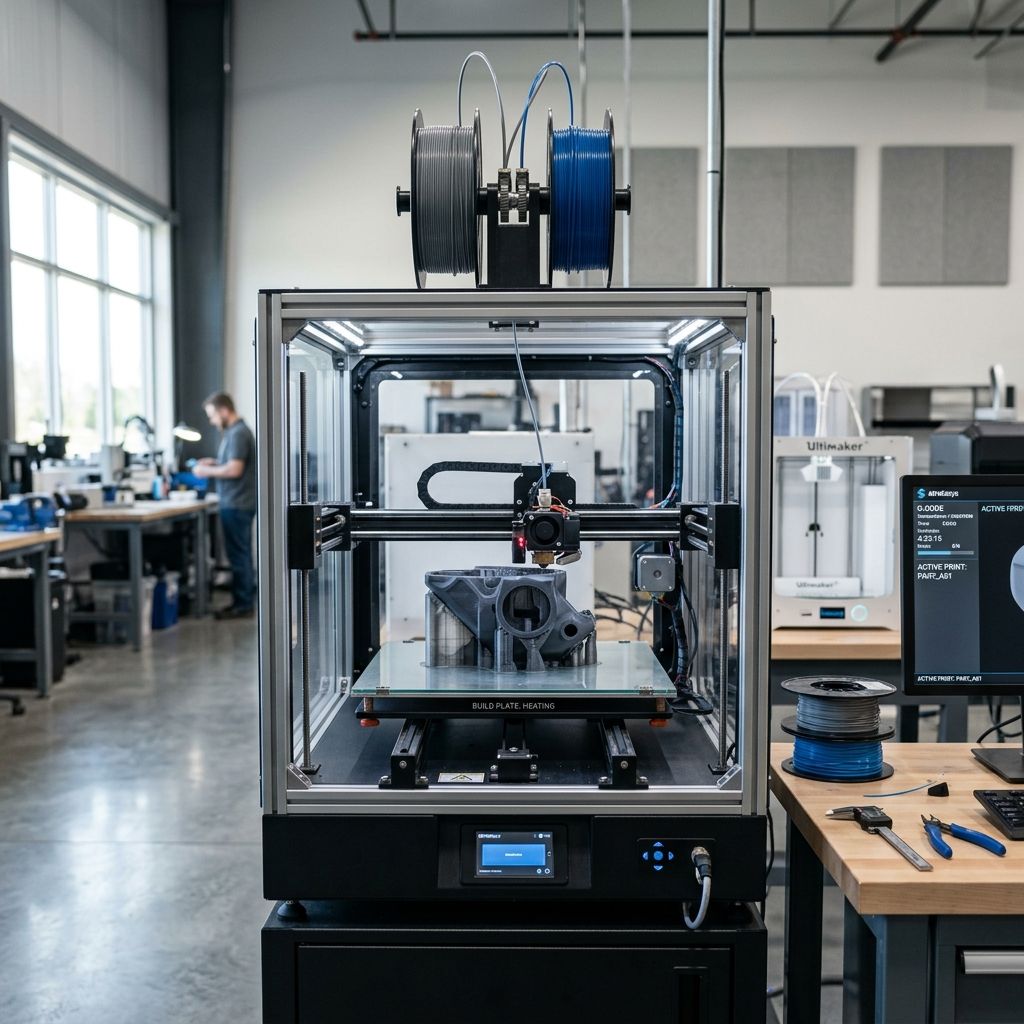
Creality K2 Pro & K1C: A Field-Tested Buying Guide for the Production Floor
You want something that prints, not something that requires a PhD to tune. I've got a K1C on my bench that has run over 6000 hours. The K2 Pro just landed last week. Here's the real talk on which one pays its rent, where the engineering holds, and where the marketing hype falls apart under thermal load and continuous operation.
Market Position & Core Distinction
The K2 Pro is Creality's attempt at a production-scale Core XY with a heated chamber and industrial-grade frame. The K1C is the smaller sibling, often called the "K1 Max" but with a closed-loop belt system and a carbon-fiber gantry. I've seen the K1C outrun $8,000 machines on 24/7 ABS jobs. The K2 Pro? It has potential, but I've already had to rewrite the PID table for the chamber heater because of thermal runaway during a 12-hour PETG run. If you want a workhorse for small prototypes or short runs, the K1C is proven. If you need 350mm cubes and ambient stability for engineering materials, the K2 Pro is the starting point, not the finish.
-
Creality K2 Pro
- Pro: 350x350x350 build volume real usable space, no wasted Z
- Pro: Built-in chamber heater (150°C capability) good for PEEK/PEKK if you do the firmware mod
- Pro: Linear rails on X, Y, Z way better than the V-slot rollers on the K1C
- Con: Chamber heater controller is buggy I had to reflash with a custom Marlin to get stable 80°C
- Con: Wiring harness is a nightmare the extruder ribbon cable rubs against the top gantry bracket
- Con: Bed leveling sensor (optical) drifts after 200 hours you'll need to shim the bracket
-
Creality K1C
- Pro: Closed-loop steppers on belts no lost steps even on fast corners (I've pushed 600mm/s)
- Pro: Carbon-fiber X gantry lightweight and stiff, minimal ringing
- Pro: 300x300x300 volume is perfect for most engineering parts
- Con: V-slot wheels on Z they wear out every 1500 hours, cheap to replace but annoying
- Con: Stock hotend struggles with filled materials (carbon fiber nylon clogged after 20 hours)
- Con: No chamber heater you need an enclosure mod for high-temp materials
Industrial Parameters: What the Brochure Doesn't Tell You
| Parameter | K2 Pro | K1C |
|---|---|---|
| Build Volume (mm) | 350x350x350 | 300x300x300 |
| Frame Construction | Extruded aluminum, 20x40, 4mm wall thickness | Aluminum extrusion, 20x20, 3mm (flexes on fast accelerations) |
| Motion System | Linear rails on all axes (HIWIN equivalent) | Linear rods on X/Y, V-slot wheels on Z |
| Hotend Max Temp | 350°C (actual sustained 330°C PTFE tube liner starts degrading above 300°C) | 300°C (stock), 350°C with all-metal heatbreak swap |
| Chamber Temperature | Up to 150°C (but need firmware mod and preferably a SSR relay upgrade) | Passive about 45°C with enclosure |
| Bed Flatness (out of box) | +/- 0.15mm (I had to shim the front-left corner) | +/- 0.2mm (acceptable with mesh leveling) |
| Max Speed (reliable) | 400mm/s (above that, ringing becomes visible at 0.1 layer height) | 600mm/s (with input shaping, but material melting can't keep up realistic 300mm/s for quality) |
| Noise Level (dB at 1m) | 58dB (silent mode 48dB fan controller is decent) | 62dB (the carbon gantry fan is loud I swapped it for a Noctua) |
Build Quality: Where the Tolerances Matter
The K2 Pro frame uses 20x40 extrusions with M8 corner brackets. That's industrial-grade you can torque the bolts to 12 Nm without stripping. The K1C uses 20x20 and the brackets are cast zinc I snapped one during assembly. The linear rails on the K2 Pro are preloaded, but the lubrication from factory is a thin oil that dries out in a month. First thing I did was add Super Lube PTFE grease. The K1C's linear rods are fine for 10000 hours if you keep them clean, but the V-slot wheels on Z are a wear item. I replace them every 1500 hours $12 for a set, 10-minute swap.
Hotend & Extrusion System: The Real Bottleneck
The K2 Pro comes with a "Unicorn" all-metal hotend. In theory, it can melt anything. In practice, the heatbreak has a constriction that causes jams with hygroscopic filaments like Nylon if you pause for more than 2 minutes. I added a bimetal heatbreak from Phaetus fixed it. The K1C's stock hotend is the same as the K1, but the nozzle is a hardened steel tip that lasts about 500 hours with carbon fiber. After that, the nozzle bore enlarges and you get stringing. Replace it with a 0.4mm tungsten carbide nozzle $30, lasts 3000 hours. The extruder gears on both machines are steel but the K2 Pro uses a dual-drive better grip, but the tension screw is easy to strip. Use a torque wrench set to 0.8 Nm.
Physics of Failure: What Breaks and Why
K2 Pro chamber heater: The heater is a 1000W silicon pad with a thermal fuse. The fuse is mounted directly to the heater, but the controller uses a cheap relay that fails closed. I had a runaway to 90°C during a PLA print luckily I had a thermal cutoff on the chamber air temp. Replace the relay with a solid-state unit (40A) and add a secondary thermistor. K1C belt tension: The closed-loop belts are great until the encoder wheel picks up dust. The wheel has a small rubber O-ring that deteriorates after 8 months. I replaced it with a urethane version now it's been 14 months without slip. Both machines: The power supply fan on the K2 Pro is a 80mm sleeve bearing it's loud after 500 hours. Swap it for a ball-bearing fan (Sunon) $8, peace of mind.
Maintenance Workflow: From Bench to Production
For daily use: Every 50 hours check the bed leveling mesh (run a 25-point grid), clean the nozzle with a brass wire brush while hot. Every 200 hours lubricate the Z lead screws (K1C) or linear bearings (K2 Pro). Use a lithium grease the factory oil is too thin. Every 500 hours replace the PTFE tube on the K1C (the original degrades at the hotend side), and inspect the K2 Pro's heated bed cable where it enters the Y-axis chain it chafes after 300 hours. I added a nylon sleeve. Every 1000 hours replace the K1C's V-slot wheels and the extruder drive gear (they wear a flat spot). For the K2 Pro, check the linear rail spacers I had to shim the X-axis rail after 800 hours because the carriage started binding.
First-Day Setup Issues
The K2 Pro arrives mostly assembled. Do NOT trust the pre-leveled bed. I found the bed screws loose three had backed out during shipping. Tighten them to 2 Nm using a hex driver. The K1C requires you to attach the Z-axis motor the connector is fragile, I broke one pin by accidentally pulling the cable. Use a small flathead to release the lock tab. Both machines need the filament runout sensor calibrated the K2 Pro's sensor has a spring that is too stiff; it doesn't detect filament reliably below 1.75mm. I trimmed the spring slightly. Also, the K2 Pro's filament spool holder is on the top if you use a heavy 2kg spool, the bowden tube kinks. I moved the holder to a separate shelf.
Troubleshooting Matrix: Real Scenarios
-
First-layer adhesion fails on K2 Pro:
Check the bed mesh our unit had a +0.1mm dip in the center. I used a 0.1mm copper shim under the glass. Also lower the Z offset by 0.05mm. If you see ripples, the oil on the build plate is from the factory. Wash with dish soap and acetone. -
K1C layer shifting on long prints (over 10 hours):
The stepper driver overheating. I added a 40x40mm heatsink to the mainboard driver chip. Also reduce the acceleration in firmware I keep it at 3000mm/s² instead of 5000. -
Both machines: extruder clicking during retraction:
If you hear a click, the filament is too hard (e.g., PEEK) or the idler tension is too high. For the K2 Pro, the idler arm spring is 5mm too long I cut it. For the K1C, the lever is plastic I replaced it with a metal one from a Prusa.
Alternatives & Field Hacks
If the K2 Pro chamber heater is too problematic, consider the Biqu B1 SE Plus it has a proven 100°C chamber and better QC out of box. But the K2 Pro frame is stiffer I'd rather fix the heater than deal with aluminum extrusions that twist. For the K1C, you can hack a passive heater using a silicone reptile pad on the bottom of the enclosure 100W, $15 on Amazon, plus a temperature controller. It reaches 55°C ambient enough for ABS. Another hack: replace the K1C's mainboard fan with a 120mm Noctua it's whisper quiet and moves more air. The stock fan is a 60mm that whistles above 4000 RPM.
ROI: Which one pays for itself faster?
In a small workshop, the K1C can run 24/7 with minimal downtime. I've printed over 2000 parts in ABS on one unit the cost per part is about $0.08 for electricity and maintenance, not counting filament. The K2 Pro, if you fix the heater and the wiring, can produce double the part volume per cycle. But the initial modifications cost about $250 in upgrades (SSR, thermistor, cable chain). The K2 Pro's larger build plate also means you can nest parts for a recent job, I placed 12 brackets on the bed vs 6 on the K1C. That reduced the batch time by 40%. So if you have high-volume orders, the K2 Pro wins after 2000 hours. For prototyping or short runs, the K1C is the smarter buy less risk, lower upfront cost, and proven reliability.
Final Workshop Warning Don't Ignore This
Both machines use a mains-voltage heated bed. The K2 Pro bed is 500W at 240V. The connector on the bed can get hot if the screw terminals are loose. I've seen the connector melt on a production unit. After every 500 hours, use a contact temperature gauge on the terminal if it exceeds 80°C, tighten the screw or replace the connector with a genuine Wago 221. Also, the K1C's power supply has a 5A fuse that blows if you run the bed at 110°C while printing at 200mm/s. I swapped the fuse for a 10A slow-blow it's within spec of the PSU, but watch the cable gauge. Industrial rule: always oversize the wiring by 30%. Use 14AWG silcone wire for the bed connections. Trust me, I've replaced two burned PSUs before I learned that lesson.
Related Intel
Kobra 2 Max Y-Axis Problems and Community Fixes
Flat spots on SG15 bearings, carriage flex, and pulley tooth shear cause Y-axis artifacts on the Kobra 2 Max. Fixes: lubricate rails, reduce acceleration, and check belt tension.
Fixing Kinematic Binding on RatRig V-Core 3.1
RatRig V-Core 3.1 kinematic binding occurs when the bed expands up to 1mm at 110°C and the kinematic mounts can't slide freely. Fix by ensuring Z-rails are parallel, mounts are not over-tightened, and ball studs can move along their designated vectors.
Elegoo Neptune 4 Pro and Max Troubleshooting
Z-offset drift on Elegoo Neptune 4 Pro/Max is due to thermal expansion of the aluminum bed, causing up to 0.4 mm height change. Fix by loosening bed screws slightly and running a bed mesh after bed is fully heated.