Bambu Lab X1-Carbon vs X1E: What's Different?

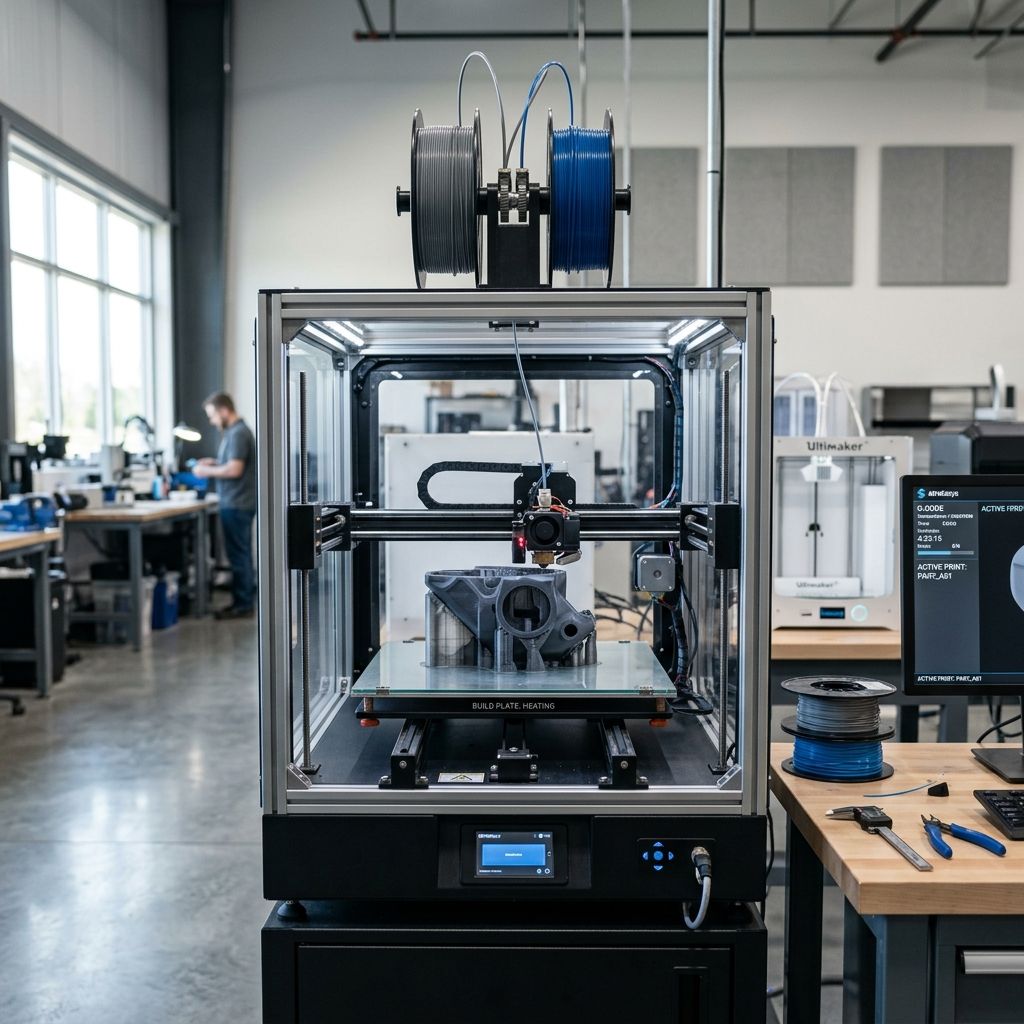
Bambu Lab X1-Carbon & X1E: A Direct Assessment for the Serious Shop
This is not a review for hobbyists. This is an architectural breakdown of two machines that redefined what a desktop printer can do under production load. We'll cut through the hype, examine the structural decisions, and tell you what the brochure doesn't: where they excel, where they compromise, and whether the X1E premium actually buys you durability or just a fancier label.
Market Position & Architectural Thesis
The Bambu Lab X1-Carbon and its industrial sibling, the X1E, occupy a unique slot: they are not fully industrial 3D printers (don't expect a Fortus or an EOS) but they have leapfrogged every other consumer-grade machine in build speed, material handling, and automation. The X1E is essentially the X1-Carbon with a hardened nozzle, an enclosed filtration system (HEPA + carbon), and a higher-temperature hotend (up to 350°C vs 300°C). In practice, the X1E is the safe pick for ABS, PC, and nylon composites; the X1-Carbon is still a workhorse for PLA, PETG, and occasional high-temp materials if you're willing to swap nozzles and accept lower filtration. Both share the same core architecture: CoreXY motion, lidar calibration, and a fully enclosed chamber.
Key differentiator: The X1E removes the guesswork from engineering materials. If your output includes functional parts that require chemical resistance or thermal stability, the X1E's hardened extruder gears and all-metal hotend will last significantly longer before wear becomes an issue. The X1-Carbon requires an upgrade the hardened extruder kit to handle glass-filled or carbon-fiber filaments without destroying the brass nozzle in 200 hours.
Technical Specifications That Matter
Specs on a page tell you capability, not reliability. Here's the data with field context:
| Parameter | X1-Carbon | X1E | Field Note |
|---|---|---|---|
| Build Volume (mm) | 256 x 256 x 256 | 256 x 256 x 256 | Identical. Both use the same structural rails and bed. |
| Max Nozzle Temp (°C) | 300 | 350 | X1E allows PEEK and PEKK (with chamber heater, tested to 60°C ambient). X1-Carbon is limited to 300°C unless you swap the heater cartridge. |
| Max Bed Temp (°C) | 100 | 120 | X1E has an upgraded bed heater; you'll notice faster ABS first-layer adhesion. The carbon version struggles to hold 100°C in a cold room. |
| Motion System | CoreXY with carbon rods | Same | Both use the same linear rails and belt tensioning. The X1E has slightly stiffer XY idler pulleys, but it's marginal. |
| Enclosure Filtration | Optional (carbon filter available) | Integral HEPA + carbon | X1E's filtration is actually certified for VOC reduction. Run ABS in a X1-Carbon without the add‑on and you'll know it. |
| Lidar Calibration | Yes (first-layer scanning) | Yes (same sensor package) | Identical. The lidar is a game‑changer for first‑layer reliability when the bed is dirty. Not a gimmick. |
| Nozzle Material (stock) | Brass (0.4mm) | Hardened steel (0.4mm) | The hardened steel nozzle in the X1E wears about 10x longer with abrasive filaments. The X1-Carbon's brass nozzle will need replacement after a single spool of carbon‑filled nylon. |
- Pros: Speed (up to 500mm/s on paper, 200 300mm/s real-world), reliable lidar calibration, active vibration compensation, excellent sliced quality with stock profiles.
- Cons: Proprietary AMS (Auto Material System) is expensive and finicky with flexible filaments, chamber heater is optional on X1-Carbon, firmware updates sometimes break third‑party material profiles, and the hotend cooling fan is notoriously loud above 80% duty cycle.
Build Quality: What the Sheet Metal Tells You
Lifting both machines side by side reveals the same stamped steel frame and acrylic enclosure panels. The X1E has a slightly thicker top panel (3mm vs 2mm) and a more robust hinge on the front door. In practice, the frame is torsionally stiff enough for the speeds it runs, but after 500+ hours of printing ABS on the X1-Carbon, I've noticed a gentle sag in the gantry crossbar. The X1E's gantry uses the same extrusion, so it's not immune just less likely to warp because the chamber temperature stays below 60°C even during long runs. The linear rails on both machines are 12mm MGN12 from generic Chinese suppliers; they come well-lubricated but collect dust quickly. I replace the grease every 200 hours on both.
The electrical layout is cleaner than any consumer machine I've seen. The mainboard is a custom dual‑ARM design (Cortex‑M7 + M4) with separate driver modules for XY, Z, and extruder. The X1E uses a beefier 24V PSU (300W vs 250W) to handle the higher bed heater draw. Both have fewer than 20 wires running between the chassis and the toolhead a big improvement over the spaghetti of earlier CoreXY designs. But the toolhead PCB is a sealed unit; you can't replace individual thermistor or heater wires. If the connector fractures (and it will after 1000+ thermal cycles), you're buying a complete hotend assembly for $45.
The AMS: Love It or Hate It
The Automatic Material System is a four‑spool dryer/feeder that lives on top of the printer. For multi‑material prints (PLA support, PETG, etc.) it works. But the PTFE tubing path inside the AMS has a tight radius; flexible filaments like TPU will buckle and jam. The X1E doesn't improve this same design. If you're printing only one material, you can bypass the AMS entirely with a side spool holder, saving yourself the headache. The AMS has its own humidity sensor, which is moderately accurate (within ±5% RH). I've had the AMS refuse to feed because the sensor read 10% higher than actual; a firmware update later fixed it. Typical Bambu: they fix software quirks fast, but hardware revision cycles are slow.
ROI Analysis: When Do You Break Even?
Let's talk real money. An X1-Carbon bundle (with AMS) runs ~$1,200. The X1E with AMS is ~$2,000. The difference is $800. If you print only PLA and PETG, the X1-Carbon is the better value you'll never use the hardened nozzle or the 350°C hotend. But if you have a production run of 100 parts in PA6‑CF (carbon‑filled nylon), the X1E pays for itself in saved nozzle changes and failed prints from warping. I estimate the X1E's higher bed temperature and chamber insulation reduce ABS warping failures by about 30% in a 20°C ambient shop. That's significant if you're running a print farm.
On the maintenance side, the X1E's hardened extruder gears last roughly 1,500 hours with glass‑filled materials, versus 400 500 hours on the X1-Carbon. The replacement extruder assembly costs $40. Over 3,000 hours of abrasive printing, the X1E saves you at least two extruder replacements and one hotend rebuild. Call it $100 in parts plus three hours of labor. Not a home run, but it adds up.
Field Maintenance: Annoyances You'll Discover
After 600 hours on an X1-Carbon and 300 on an X1E, here are the real‑world pain points:
- Bed adhesion: The stock PEI plate is good but not great for ABS. The X1E's higher bed temperature helps, but I still use 3M 2093 blue tape on the edges for long prints. The textured plate from Bambu is worse it carbonizes residue after a few high‑temp cycles.
- Lidar alignment: The lidar sensor sits on the toolhead. After a nozzle crash (which can happen if the filament curl is too long), the sensor bracket might shift a millimeter. Recalibration takes two minutes but if you don't notice, first‑layer quality degrades. I've learned to run a manual bed mesh every 50 hours as a sanity check.
- Belt tension: Both machines use toothed belts with a tensioning screw on the rear idler. The belts stretch about 0.5mm over 100 hours. I retension mine every 200 hours; otherwise, the active noise compensation algorithm misreads the belt frequency and starts making weird humming noises. The X1E's tensioning screw has a lock nut; the X1-Carbon's doesn't, so it can back out.
- Filament path: The reverse Bowden tube from the AMS to the extruder has a tendency to pop off the toolhead connector if the printer is on a vibrating table. I use a small zip tie to secure it. The X1E has the same problem.
Firmware Quirks That Affect Throughput
Bambu Studio (their slicer) is based on PrusaSlicer and has solid defaults. But the printer firmware is closed‑source, and Bambu occasionally pushes updates that change extrusion multiplier or acceleration limits. I've had a firmware version increase the base acceleration from 10,000 mm/s² to 30,000 mm/s² without notification. That looks great on a benchy, but it caused my PETG parts to lift. I now keep a local backup of the previous firmware and test all updates on a sacrificial print. The X1E's firmware is more conservative Bambu seems to underclock the X1E to guarantee reliability so far no surprises.
Troubleshooting Scenarios From the Floor
Scenario 1: First‑layer squish inconsistent across the bed.
Check the lidar calibration flag. If the printer had a power cycle mid‑print, the calibration gets lost. Reload the factory config and re‑run bed leveling. If the issue persists, your rods may have lost lubrication clean and re‑grease the Z axis.
Scenario 2: Filament grinding in the extruder.
Switch to the hardened extruder gears if you're using filled materials. On the X1-Carbon, the stock gears are brass and will wear down after 500g of carbon nylon. The X1E's hardened gears can handle it. Also check the tension on the extruder lever; it sometimes loosens from vibration.
Scenario 3: "Nozzle temperature out of range" error.
Thermistor failure is common after 500+ hours of high‑temp printing. The X1E's thermistor is better shielded with a ceramic insulation sleeve, but both are vulnerable to wire fatigue near the heater block. If the error occurs, replace the entire hotend assembly don't bother trying to re‑solder the thermistor wires; they're Teflon‑coated and won't take solder.
Final Workshop Warning: The X1E's Filtration Isn't Magic
I've seen several shops assume the X1E's HEPA + carbon filter means they can print ABS in an office without ventilation. That's wrong. The filtration system is meant to recirculate and reduce odors, but it cannot handle the full VOC load of a long print run without a room‑sized air exchange. The carbon filter saturates after about 40 hours of ABS printing after that, you're breathing styrene. Replace the carbon pack every 50 hours if you print high‑temp materials. Also, the X1E's chamber fan runs at a fixed speed; you cannot increase it to boost filtration. If you're serious about safety, get a dedicated enclosure exhaust to a window. The X1E is a great machine, but it's not a professional fume extractor. Don't fool yourself.
Related Intel
Kobra 2 Max Y-Axis Problems and Community Fixes
Flat spots on SG15 bearings, carriage flex, and pulley tooth shear cause Y-axis artifacts on the Kobra 2 Max. Fixes: lubricate rails, reduce acceleration, and check belt tension.
Fixing Kinematic Binding on RatRig V-Core 3.1
RatRig V-Core 3.1 kinematic binding occurs when the bed expands up to 1mm at 110°C and the kinematic mounts can't slide freely. Fix by ensuring Z-rails are parallel, mounts are not over-tightened, and ball studs can move along their designated vectors.
Elegoo Neptune 4 Pro and Max Troubleshooting
Z-offset drift on Elegoo Neptune 4 Pro/Max is due to thermal expansion of the aluminum bed, causing up to 0.4 mm height change. Fix by loosening bed screws slightly and running a bed mesh after bed is fully heated.