Bambu Lab X1-Carbon Preventive Maintenance Protocol

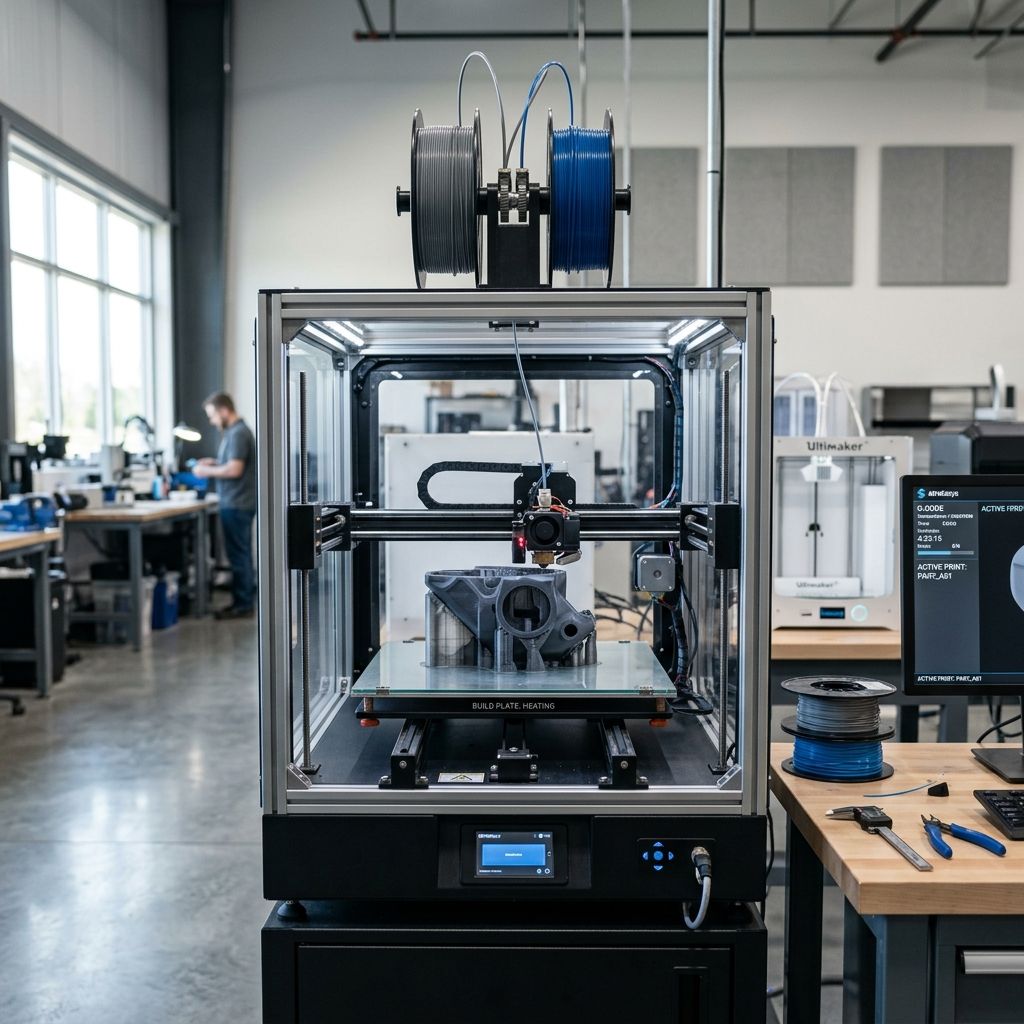
The Bambu Lab X1-Carbon & X1E: A Senior Tech's Preventive Maintenance Protocol
Let's kill the myth right now that this is a "set it and forget it" appliance. The X1C is a high-speed, high-temperature CoreXY robot riding on porous carbon rods. I've installed a dozen of them in a production workshop running 24/7, and I've pulled apart units that were mechanically totaled at 300 hours because someone treated it like a 2D paper printer. This protocol is based on field reality material fatigue, thermal drift, and contamination kinetics not marketing brochures.
The Maker's Summary: Systemic Risk & Cadence
The X1-Carbon is an over-constrained mechanical system. It uses linear rods instead of V-slot wheels. This gives it speed and repeatability, but makes it highly vulnerable to contamination. Carbon fiber dust from the rods themselves, mixed with ambient humidity and inadequate lubrication, forms an abrasive slurry that destroys linear bearings. The primary threat is particulate ingress into the motion system.
- Core PM Cadence: 200 operational hours (rods, lube, belts)
- Thermal System: 500 hours (carbon filter, hotend torque, heater retention)
- Full Geometry Check: 1000 hours (Z-tram, belt tension frequency, bearing play)
- Floor Tools Required: ISO 68 way oil, PTFE grease (lithium-based), 99% IPA, 1.0 Nm torque screwdriver, contact tachometer (for belt Hz)
1. The Carbon Rod Paradox (...and the Abrasive Slurry)
The carbon fiber rods are stiff and light. The factory oil dries up quickly in a warm chamber. Once dry, the porous carbon surface acts like a fine abrasive against the steel ball bearings. I've measured rod diameter loss of 0.01mm after 2000 hours on a poorly maintained machine that's enough to introduce measurable slop in the X/Y gantry.
Field Procedure: The Wipe & Oil Cycle
Do not spray oil directly onto the rod while the carriage is moving that just flings oil into the chamber. Use a lint-free wipe with 99% IPA to strip the old oil and carbon dust. Wait 30 seconds for the IPA to evaporate. Apply one drop of ISO 68 way oil per bearing block, then manually cycle the carriage end-to-end 20 times to distribute. Wipe off the excess.
CAUTION: The Dust Magnet
Too much oil attracts carbon dust and forms a black sludge. Too little oil increases bearing wear rate exponentially. The correct state is a "damp film," not a wet bead. If you see black oil on the rod, you are already generating wear debris. Clean it immediately.
On the X1E, Bambu claims a "wear-resistant coating" on the rods. In my experience, it holds the oil film slightly better but is not a substitute for regular cleaning. The physics still apply: abrasive particles exist, and they will score the bearing races over time.
2. Hotend Integrity: Torque, Heat Creep, and Thermal Runaway
I've seen more hotend failures from loose heater cartridges than blown thermistors. The vibration at 20k mm/s² is real. If that M2.5 set screw on the heater cartridge backs out by half a turn, the PID control becomes unreliable. The thermistor reads fine, but the heater has poor thermal contact, cycling harder and overshooting.
Bi-Annual Hotend PM (Every 500 hrs or after a major jam)
- Heater Cartridge Set Screw: Check retention torque. Snug, but do not strip the aluminum block. Use threadlocker (Loctite 222) if it keeps backing out.
- Thermistor Bulb: Ensure it's fully seated in the bore. A lifted thermistor reads low, causing the heater to run away. Verify resistance at room temp (approx 100k ohms).
- Nozzle Torque: 1.0 Nm when cold. Overtightening at high temp can deform the heatbreak throat. Undertightening causes plastic leaks.
- Heatbreak Fan: Check for debris. This 4010 fan is the single point of failure for heat creep. If it stalls, you will get a clog within 5 minutes of printing.
Material-specific note: Hardened steel nozzles are magnetic and have lower thermal conductivity than brass. If you switch back to brass from hardened steel, expect a different extrusion response. Always re-run flow rate calibration after a nozzle material change don't trust the profile.
3. The AMS Hub: Filament Path Wear
The AMS is a great material handling system, but the PTFE hub is a consumable item. After about 500 hours of abrasive filament (PA-CF, GF), the internal diameter of the PTFE path in the hub can wear out by 0.2 0.3 mm. This causes friction jams that look like a feeder problem, but are actually a path geometry problem.
Diagnosing Hub Wear
If you're getting random "AMS retry" errors or filament not loading, remove the PTFE tube from the hub and look at the entrance. If the hole is oval or shows a sharp edge, replace the hub body. I rotate my PTFE tubes at the hub every 200 hours to even out the wear pattern.
Desiccant Drying Agent
The stock desiccant packs are okay for low-humidity climates. For the rest of us, use rechargeable orange-indicator silica gel beads. Once they turn green, bake them at 120°C for 4 hours. Do not use the printer's chamber to dry them you'll just outgas moisture into the electronics.
4. Z-Axis Geometry: Tramming and Backlash Compensation
The X1C uses a single Z-axis motor driving two lead screws via a timing belt. If that belt slips or stretches, the gantry goes out of tram. The machine has an automatic tramming routine (Z_TILT_ADJUST), but it compensates within a limited range. Physical tramming is required.
Field Tramming Check
I use two precision-ground aluminum blocks (50mm high) placed under the left and right sides of the gantry. Home Z. If the gantry doesn't touch both blocks simultaneously, adjust the Z-belt tension at the rear of the machine. The belt should deflect about 5mm with moderate finger pressure.
DANGER: Gantry Sag (Power-off Binding)
When the machine is powered off, the heavy X-axis gantry can sag on the Z-axis lead screws, causing the POM nuts to cold-flow or bind. If your machine sits powered off for more than 8 hours, use a gantry support block (or the foam packing piece). This is the #1 cause of Z-binding on startup.
The lead screw nuts are brass or POM. They wear over time. If your first layer height is inconsistent despite a clean bed, check for backlash in the Z nuts. Firmware compensation works up to ~0.05mm, but beyond that, the hardware needs rebuilding.
5. Belt Tension & Resonance Compensation
The X1C has active vibration compensation (Input Shaping). It relies on the belt tension being within a specific frequency range. I use an accelerometer app (Vibration Analyzer) on my phone placed on the gantry to check belt resonance. X-axis target: 110 130 Hz. Y-axis target: 90 110 Hz.
When Tension Drifts
If the frequency drops below 90 Hz, the resonance compensation algorithm actually amplifies the vibration instead of canceling it. You'll get "ghosting" on vertical surfaces. Tighten the belt tension until the frequency returns to spec. The idler pulleys are standard 6000ZZ bearings. If they feel notchy, replace them. They are cheap ($2 each) and readily available.
The Gates belts are good, but tension decays over time. I budget for a belt replacement at 5000 8000 hours depending on average print speed.
6. Sensor Hygiene: LiDAR and Camera
The micro-LiDAR on the toolhead is a great concept, but it's an optical sensor in a hostile environment. ABS/ASA fumes deposit a thin film on the lens over time, reducing the signal-to-noise ratio for first-layer inspection.
Cleaning Protocol
Use a soft swab with 99% IPA. Gently wipe the LiDAR window. Do not scratch it it's a plastic cover. The chamber camera suffers from the same micro-plastic film buildup. This film is what causes "spaghetti detection" to miss failures. Clean the camera lens every 200 hours.
If the chamber is dark, the AI is effectively blind. Add a chamber LED strip if your machine doesn't have one. The camera needs sufficient contrast to detect a failure.
7. Filament Cutter & Wiper
The cutter is a small hardened steel blade. It gets dull. After about 500 hours of cutting filament, it will start tearing instead of cutting cleanly. This leaves a burr that causes loading jams. Flip the blade to the unused edge. If the other side is also dull, replace it.
The wiper (steel brush on the purge bucket) loads up with filament boogers and plastic strings. Use a heat gun to burn off the residue, or replace the assembly. A clogged wiper causes the nozzle to drag through debris, which can knock the bed leveling off.
8. Electronics Bay & PSU Thermal Management
The mainboard and PSU are enclosed in the base of the printer. They have intake fans that pull in everything: carbon fiber dust, fine plastic particles, and ambient workshop dust. This is a fire risk and an electrical reliability issue.
Annual Electronics PM (Every 1000 hours or when opening the bottom)
- Visual Inspection: Look for bulging capacitors on the PSU or mainboard. Look for burnt MOSFETs (especially on the heatbed relay).
- Compressed Air Blowout: Use compressed air to blow out dust. HOLD THE FANS when blasting spinning them with compressed air generates voltage and can blow the fan controller.
- Carbon Fiber Dust: This is conductive. A stray piece across a 24V trace can cause a short circuit or intermittent fault. Keep the floor of the electronics bay spotless.
9. Calibration Cycles: When to Trust the Machine
Do not run the full calibration routine (resonance, flow rate) every single print. It wears out the belts and bearings unnecessarily. Run it when you change nozzle types, or every 500 hours. Trust the stored profile, but verify the first layer manually once a week.
The flow rate calibration in Bambu Studio is aggressive and can often result in insane pressure advance values if you have a partial clog. I calibrate Pressure Advance manually using the line method first, then let the machine calibrate flow. This prevents the machine from compensating for a mechanical problem with a software value.
FINAL WORKSHOP WARNING: The Hidden Layer Shift Culprit
If you take nothing else from this guide, take this: The #1 killer of the X1-Carbon chassis in a production environment is a neglected chamber fan exhaust filter. When the carbon filter gets saturated (usually after 300-400 hours of ASA/ABS), the chamber exhaust struggles. Heat builds up inside the chassis. The stepper drivers on the mainboard overheat and start skipping steps or dropping microsteps. This manifests as random, intermittent layer shifts that are nearly impossible to diagnose. The machine says "thermal OK," but the driver MOSFETs are cooking. Check the filter. Replace it. It is a ten-dollar part that saves a three-hundred-dollar mainboard.
Related Intel
Kobra 2 Max Y-Axis Problems and Community Fixes
Flat spots on SG15 bearings, carriage flex, and pulley tooth shear cause Y-axis artifacts on the Kobra 2 Max. Fixes: lubricate rails, reduce acceleration, and check belt tension.
Fixing Kinematic Binding on RatRig V-Core 3.1
RatRig V-Core 3.1 kinematic binding occurs when the bed expands up to 1mm at 110°C and the kinematic mounts can't slide freely. Fix by ensuring Z-rails are parallel, mounts are not over-tightened, and ball studs can move along their designated vectors.
Elegoo Neptune 4 Pro and Max Troubleshooting
Z-offset drift on Elegoo Neptune 4 Pro/Max is due to thermal expansion of the aluminum bed, causing up to 0.4 mm height change. Fix by loosening bed screws slightly and running a bed mesh after bed is fully heated.