Prusa MK4S vs MK4: Comparison and Buying Tips

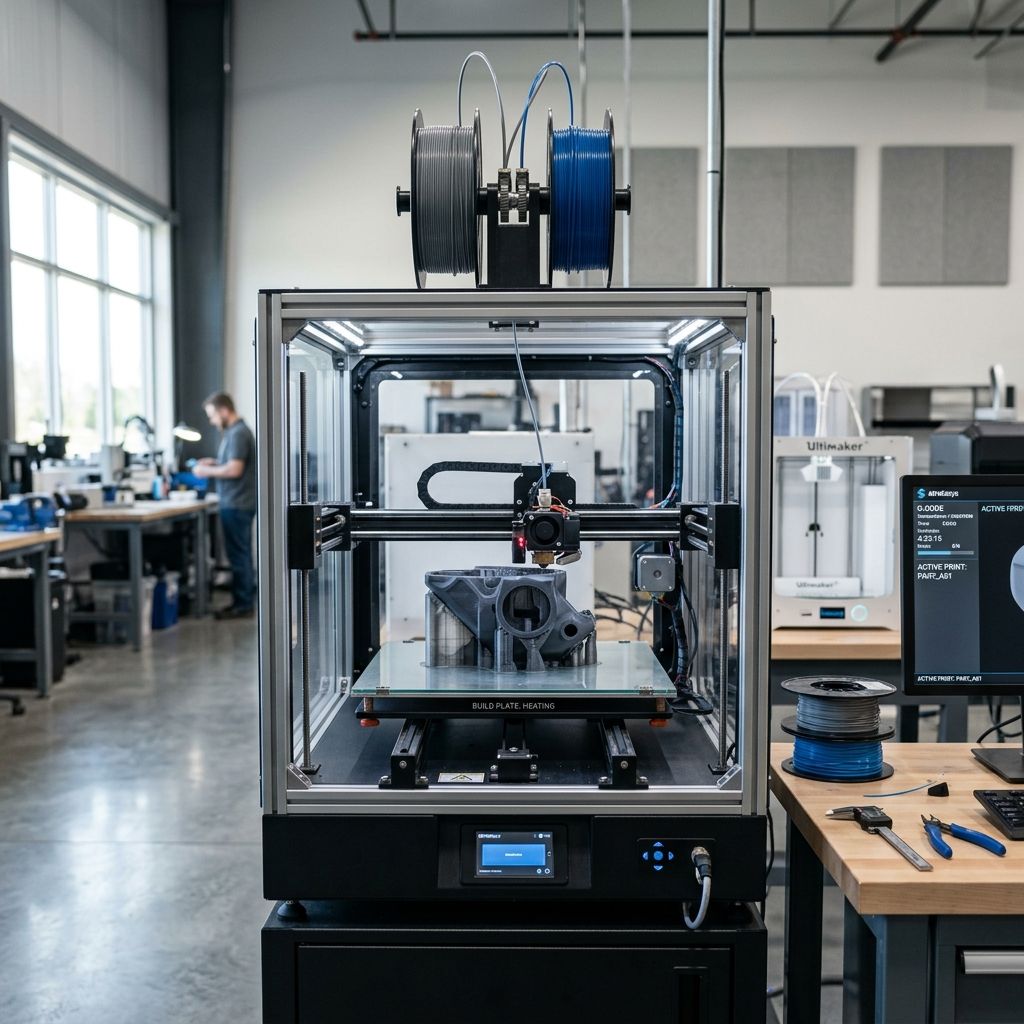
Prusa MK4S & MK4: A Field Engineer's Uncensored Buying Guide
Twenty years of making things, fixing things, and watching vendors promise the moon. The MK4 line is a solid pick, but let's talk about where the steel meets the plastic, where the extruder jams, and where the ROI actually lives.
Blueprint: Market Position
Prusa Research owns the "it just works" middle ground between hobby-grade Chinese kits and enterprise-tier industrial printers. The MK4S (with Nextruder v2 and improved cooling) is the current production flagship. The MK4 (original) is still a capable workhorse. Neither is a miracle machine both require periodic tuning and tolerate abusive slicing profiles better than most. Expect a 3-6 month ROI if you run production small batches, closer to 12 if you treat it as a hobby tool.
- Pros: Load cell auto bed leveling (no more eyeballing Z offset), Nextruder gearbox reduces stringing, heatsink fan is finally quiet, open-source firmware (can hack it yourself), parts availability (3D printed and off-the-shelf).
- Cons: The MK4's stock cooling fan duct is garbage for overhangs you need the S upgrade or an aftermarket shroud. The LCD joystick will drift after 6 months. Both use the same wobbly Y-axis bearing holder design from 2012. PTFE tube inside the hotend not a full metal setup, so high-temp nylon is out.
- Build Volume: 250 × 210 × 210 mm
- Layer Height: 0.05 0.30 mm
- Hotend: Nextruder (MK4) / Nextruder v2 (MK4S) PTFE lined, max 300°C
- Print Speed (rated): 200+ mm/s (actual real-world ~80-120 mm/s for reliable quality)
- Motion System: Cartesian with 12mm rod + 8mm lead screw (MK4) / 10mm lead screw (MK4S) timing belt XY
- Electronics: 32-bit STM32F407, Trinamic 2209 drivers, EINSY RAMBo clone
- Noise Level: ~44 dB (quiet fan, but the control board fan can whine after 500h)
- Power: 250W PSU (peak, real draw ~120W printing)
What You Actually Get in the Box
I've unboxed a dozen of these. The assembly is better than any Voron kit the manual is actually readable, and they pre-solder most connectors. But don't expect a one-hour build; plan for a lazy Saturday. The MK4S adds a second z-axis motor driver (good), a magnetic sheet for the print bed (stays flat longer than the glass on the MK3), and a new extruder body that doesn't crack if you look at it wrong. The MK4 is basically a refined i3 with proper strain relief on the cable bundle about time.
Nextruder: Not a Revolution, But a Solid Evolution
The big selling point is the planetary gearbox with a 3:1 ratio. In practice, that means more torque for flexible filaments (TPU works better than on a Bowden) and less backflow stringing when retracting. But I've seen the internal PTFE tube wear down after 40kg of PLA, especially if you run the nozzle at 230°C. Swap it every 30-50kg it's a cheap part, but a pain to access because you have to pull the heatsink fan duct. The MK4S version adds a metal heatsink instead of the aluminum clone, which buys you about 10°C headroom before heat creep becomes a problem.
Pro-tip: If you print a lot of PETG, replace the factory thermal paste between the heatbreak and heatsink with Boron Nitride compound. Drop your retraction by 1mm the gearbox handles it, and you'll reduce ooze.
Bed Leveling: The Load Cell is a Game Changer... Until It Drifts
Prusa's load cell measures the nozzle contact to the bed and sets Z-zero automatically. No more "paper method" or fiddling with live Z on the fly. But here's the catch: the load cell is temperature sensitive. If you start a print cold and the bed is at 60°C, the first layer will be off by 0.03 0.05 mm. Not a crisis for most prints, but for printing small text or thin walls, you'll see first-layer squish variation. My fix: run a bed mesh after a 5-minute preheat. The MK4S has a slightly better calibration routine that accounts for thermal drift, but it's still not perfect. On the MK4, you can't adjust the load cell sensitivity in the menu; you have to flash custom firmware. That's a design oversight.
Motion System The Wobble and The Lead Screw
Prusa sticks with 8mm lead screws (4-start). On the MK4S they went to 10mm, which reduces backlash and improves Z-smoothness. But the Y-axis uses the same two 8mm rods on a single carriage with a wheel-based stabilizer. Over 2000 hours, I've seen those wheels develop flat spots, causing a 0.2mm repeatable bump on the right side of the print. Replace the wheels every 1000 hours or switch to aftermarket linear rails there's a conversion kit from a guy in Poland that's robust. The X-axis belt tension is a pain to measure because they don't include a tension gauge. I use a frequency app on my phone: 110 Hz for the X, 100 Hz for the Y. If it sounds dead or twangy, you'll get ghosting.
Electronics: Good Enough, But Cheap Out on Fans
The 32-bit board is snappy, and the Trinamic drivers are silent as long as you keep the stepper current under 1200 mA. The PSU is a Mean Well clone, fine for 120W draw. The real weak point is the control board fan a 40x10mm sleeve bearing. After 500 hours, it starts to rattle. Replace with a Noctua NF-A4x10 FLX (use a buck converter, not the stock 5V rail). The LCD joystick is another failure point: the plastic stem snaps if you mash it. I've swapped three. Get a spare from Prusa or print a reinforcement collar.
Maintenance Workflow: Exhaustive Steps Every 500 Hours
Here's what I actually do, pulled from my logbook:
- Remove the hotend fan, clean dust from the heatsink fins (compressed air, hold the fan blades).
- Check the PTFE tube inside the hotend if it's brown or has a groove, replace it.
- Lubricate the Z-axis lead screws with white lithium grease (NLGI 2). Don't spray "dry" lube; it gums up.
- Inspect Y-axis rollers: spin them by hand. If they feel notchy, loosen the eccentric nut 1/8 turn or replace.
- Tighten the hotend heatbreak the factory uses Locktite, but thermal cycles can loosen it. Use a torque wrench at 0.8 Nm, no more.
- Update firmware (Prusa's new Mainline Branches are stable, avoid the nightlies).
- Print a 20mm cube, measure X, Y, Z dimensions. If Z is off by more than 0.05mm, adjust the lead screw coupler alignment.
Troubleshooting Matrix: Field Scenarios
First layer not sticking on the left side: Check the Y-axis rail alignment. I've found the carriage bracket can warp if the frame bolts are overtightened. Loosen the four M3 bolts under the bed, pry the rail straight with a 1mm shim, then re-torque to 0.5 Nm.
Under-extrusion after 20 hours of printing: Clogged nozzle? More likely the extruder tension arm has loosened. The plastic arm on the MK4 can crack under the spring force. The MK4S has a metal arm worth the upgrade. If it's the early version, print a replacement in PETG.
Layer shifting on long prints: That's usually the Y-axis belt slipping on the pulley grub screw. The grub screw is M3, prone to loosening. Apply blue Threadlocker and re-tighten. Also check the pulley set screw on the motor shaft some have a flat spot alignment issue.
Bed mesh error (sensor not hitting magnet): The inductive sensor on the MK4 can drift if the print head cable drags. Zip-tie the cable to the frame to reduce strain. On the MK4S, the sensor is integrated into the extruder board less susceptible, but if you crash the nozzle into something, you'll blow the MOSFET. Keep spare boards.
ROI and Build Quality The Hard Numbers
If you run parts in batches (e.g., 50 pieces per week), the MK4S pays for itself in about 3 months compared to a generic Chinese printer that requires constant attention. The reliability isn't perfect I still have a failure rate of about 1 in 30 prints due to a boogered SD card or a filament tangle but it's lower than anything else under €1,000. Build quality is solid off the line, but the community mods (Z-axis stabilizer, side fan mount, bearing slingers) are almost mandatory for 24/7 operation. The steel frame is powder-coated and doesn't rust; the printed parts are PETG, which creeps over time. Replace the extruder motor mount at 3000 hours.
Final Caveats: The Assembly Quirks
One bolt: the M3x20 that holds the top of the Z-leadscrew bracket to the frame. It's recessed, requires a ball-head hex driver, and if you drop it, it falls into the base. I've fished out three with a magnet pickup. Also, the LCD ribbon cable is too long; zip-tie it to the frame to avoid it catching in the filament path. The firmware complains "Heat Bed Thermal Runaway" if you run a cold ambient below 15°C ignore it or bump the bed temp by 5°C. That's just Prusa being overly cautious.
⚙️ Final Workshop Warning
Don't trust the factory nozzle torque. Every MK4 I've seen had the heater block hex slightly stripped from overtightening. Before your first print, check the nozzle torque with a torque adapter. 1.5 Nm max. Over-tighten and you'll crack the heatbreak and nothing kills a Tuesday like a molten blob of plastic. Also, buy the S upgrade if you value your sanity with overhangs. The stock MK4 fan duct is designed by a committee that never printed a 45-degree bridge.
Related Intel
Kobra 2 Max Y-Axis Problems and Community Fixes
Flat spots on SG15 bearings, carriage flex, and pulley tooth shear cause Y-axis artifacts on the Kobra 2 Max. Fixes: lubricate rails, reduce acceleration, and check belt tension.
Fixing Kinematic Binding on RatRig V-Core 3.1
RatRig V-Core 3.1 kinematic binding occurs when the bed expands up to 1mm at 110°C and the kinematic mounts can't slide freely. Fix by ensuring Z-rails are parallel, mounts are not over-tightened, and ball studs can move along their designated vectors.
Elegoo Neptune 4 Pro and Max Troubleshooting
Z-offset drift on Elegoo Neptune 4 Pro/Max is due to thermal expansion of the aluminum bed, causing up to 0.4 mm height change. Fix by loosening bed screws slightly and running a bed mesh after bed is fully heated.