How to Clean Bambu Lab X1 Carbon Rods and Rails

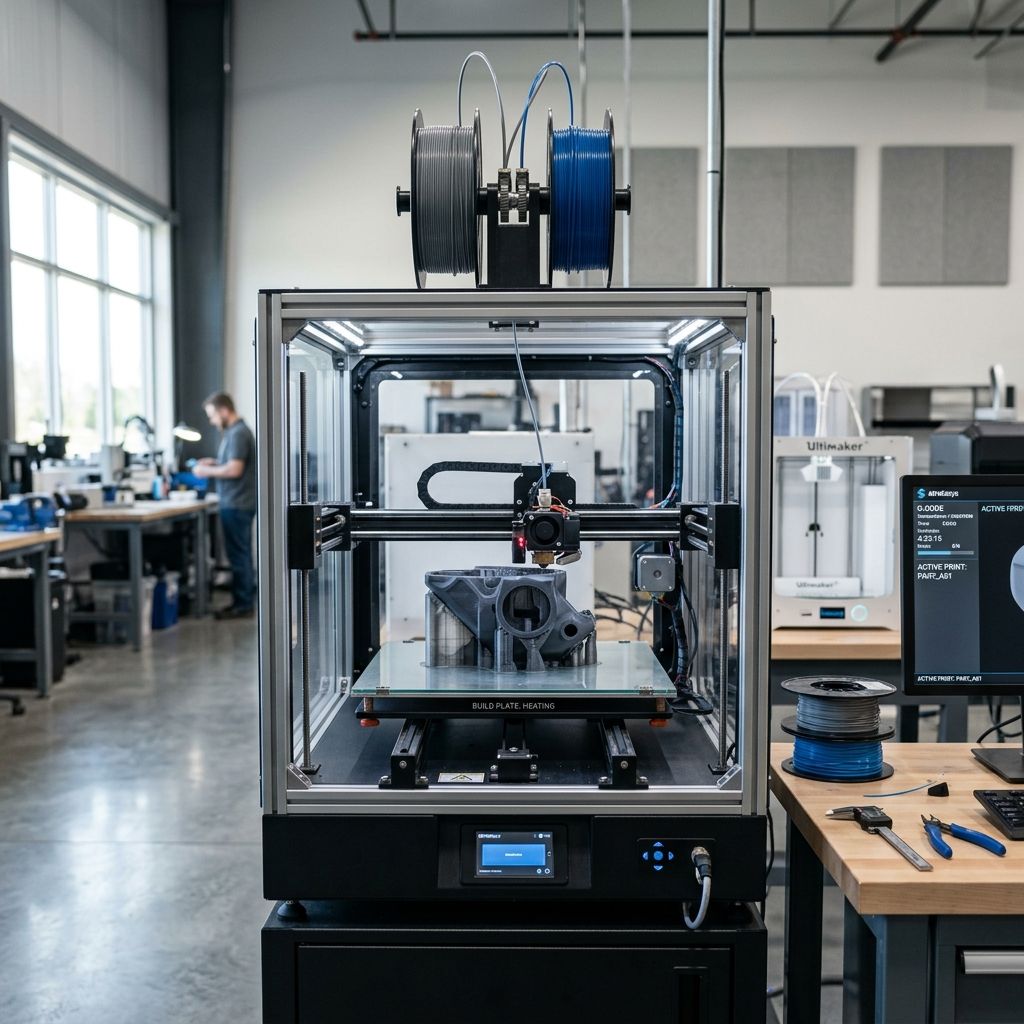
Field Guide to Cleaning the Bambu Lab X1 Series What the Manual Doesn't Tell You
After two years of running these machines in a shared shop, I've learned the hard way where the dust hides and which cleaning steps actually matter. You'll find no "wipe with a soft cloth" fluff here this is the real dirt.
The Maker's Summary
Bambu Lab's X1‑Carbon and X1E are closed‑loop motion systems that rely on clean mechanical interfaces to maintain the sub‑50 micron repeatability they're famous for. The biggest failure modes I've seen are: grease contamination on linear rails causing increased friction and micro‑steps, pitted carbon rods from using the wrong solvent, and hotend clogs from not cleaning the nozzle before thermal cycling. This guide breaks down the cause‑effect of each cleaning step and what to do when the machine starts complaining.
The Carbon Rods Don't Polish Them Like You Think
Let's get one thing straight: those black rods are not chrome‑plated steel. They're carbon‑fiber reinforced polymer (CFRP) with a thin surface coating that can be worn off if you scrub aggressively. The X‑axis uses two rods, the Y‑axis two more all four are part of the CoreXY belt path but they only support the print head's linear motion. Lubrication is strictly verboten; they're meant to run dry.
Why They Get Dirty
In a shop that prints a lot of PLA with carbon‑fiber fill or wood‑fill, the airborne abrasives land on the rods. Every time the head shuttles back and forth, those particles get pressed into the surface. Over time you'll feel a "gritty" friction if you slide the head by hand. I've seen this cause the Y‑axis to miss steps on long prints the motors just can't push through the added resistance.
Proper Cleaning Procedure
Use only 99% isopropyl alcohol (IPA) and a lint‑free Kimwipe or a microfiber cloth that's been washed at least once (new ones shed fibers). Lay the cloth flat, soak it lightly, then pinch the rod between the cloth and slide the head back and forth the full length of the rods. Do this three times, flipping the cloth each pass. Never use acetone, MEK, or any petroleum‑based solvent they will swell the carbon matrix and ruin the surface finish within a month.
⚠ DANGER: Do Not Use Compressed Air
Bambu's own forums are full of people who blew dust off the carbon rods with canned air. What happens: the high‑velocity air drives particulates into the linear ball bearings that ride on the rods. Those bearings are unsealed (or poorly sealed) on the X1. Once grit gets in, the bearings start to gall, you get play in the head, and you're looking at a $150 replacement carriage assembly. I know, because I did it myself once. Now I only use the IPA wipe method.
Linear Rails and Lead Screws Grease Math
The X1‑Carbon uses MGN9 linear rails on X and Y, and the Z‑axis uses lead screws with anti‑backlash nuts. Grease is your friend, but too much is as bad as too little. The factory grease (a #2 lithium soap grease) lasts about 500 hours of printing. After that, it oxidizes and becomes tacky, attracting every particle in the chamber.
When to Regrease
I check the rails every 100 print hours by running a finger along the rail car (with the machine off, obviously). If I feel any gumminess or see a brownish discoloration, it's time. For the lead screws, look for a thin even film if the threads look dry or you hear clicking during Z hops, regrease.
Step‑by‑Step Regrease
- 1. Wipe off old grease with a cloth dampened with IPA. Do not let IPA drip into the bearings it can wash out the internal grease.
- 2. Apply a rice‑grain sized drop of PTFE‑based grease (Super Lube 21030 is my go‑to) to the rail car's grease port.
- 3. Cycle the axis end‑to‑end manually (or send a G91 G1 Y200 F6000 command) to spread it.
- 4. Wipe off excess that squeezes out that excess is what traps dust.
The Lead Screw Cleaner Trick
Don't try to reach the Z lead screws from the top you'll strip the thread engagement. Lower the bed all the way, then use a small, stiff brush (acid brush works) dipped in IPA to scrub the threads. Then apply a drop of grease to the brass nut and run the bed up and down. If the nut spins, you've over‑lubricated and will attract dust. I keep a paper towel under the bed to catch drips.
Nozzle and Hotend The Thermal Soak Trap
This is where 90% of print failures start. A partially clogged nozzle causes underextrusion, stringing, and eventually a jam that requires disassembling the hotend. The X1's hotend is a "fully metal" design with a titanium heat break prone to thermal creep if the fan is dirty.
Cleaning the Nozzle Externally
Heat the nozzle to the material's lowest printing temperature (e.g., 200°C for PLA). Use brass wire brush (soft) to gently scrape away burnt filament. Do this with the machine off? No the heat helps the crud come off, but be careful not to short any heater wires. I hold a vacuum nozzle near the hotend while brushing to catch flakes.
Cold Pull The Only Internal Clean That Works
When you see a print quality drop that's not fixed by a new nozzle, do a cold pull. Use a dedicated cleaning filament (e.g., eSun cleaner) or a piece of natural nylon. Heat to 250°C, insert the cleaning filament, push until it oozes, then let cool to 100°C. Pull hard and fast (the "cold pull"). The idea is to rip out any charred particles. I've seen people skip cooling if you pull at 250°C, the filament just snaps and you make the clog worse. Your mileage may vary with the exact pull temperature; nylon works best for me.
⚠ CAUTION: Don't Abrade the Nozzle Bore
Brass wire brushes are fine for the outside, but never stick a drill‑bit or needle into the nozzle while it's hot. You'll deform the orifice and cause permanent stringing. I've done it. Buy a nozzle cleaning kit with .4mm wire use it only when cold, and only to push out a soft cold‑pull residue.
Build Plate Adhesion and Surface Prep
The textured PEI sheet on the X1 is great, but it gets contaminated with oils from your fingers (yes, even if you wear gloves), outgassed from ABS, and fine plastic dust. A clean plate is the difference between a perfect first layer and a spaghetti monster.
Cleaning Frequency
I wipe the plate with 99% IPA between every print. Once a week (more if I'm printing ABS) I wash it with warm water and dish soap (Dawn, not the stuff with moisturizer), rinse thoroughly, and dry with a clean paper towel. No acetone on PEI it can cloud the surface.
Restoring Adhesion
If the center of the plate stops holding even after cleaning, the PEI coating may have been worn shiny. Use a green Scotch‑Brite pad (very lightly) to scuff it. I've restored many plates this way. But don't go overboard you're only trying to remove the glazed layer, not the coating. After scuffing, wash with soap and water.
Chamber and Electronics The Dust Bunny Infestation
The X1 has a carbon filter for the chamber, but it's not HEPA it doesn't catch fine dust. Over months, dust builds up on the motherboard fan (inside the base) and the chamber fan. This reduces airflow, raises chamber temp, and eventually causes thermal shutdown warnings.
Cleaning the Chamber Fan
Turn the machine off. Use a small brush (paintbrush or electronics brush) to gently sweep dust off the fan blades. Do not use compressed air see earlier warning. The fan is mounted inside the top cover, accessible by removing two screws. I also vacuum the chamber floor and the area around the filament guide.
The Carbon Filter Replacement
The X1 uses a consumable carbon cartridge that Bambu says lasts 600 hours. In my experience, it's half that if you print ABS or ASA. The filter is just activated carbon beads in a plastic mesh it's not magic. When you start smelling fumes even with the chamber closed, replace it. You can also buy generic carbon granules and refill the cartridge saves money but you need to be careful not to spill carbon dust into the chamber.
Diagnostic Checklist When Cleaning Creates Problems
Sometimes you clean everything and suddenly the printer sounds different or prints worse. Here's my run‑down of what you probably did wrong.
- Weird noises after cleaning rails: You likely dislodged a piece of dust that fell into the rail carriage. Cycle the axis several times, and if the noise persists, apply a tiny bit more grease to flush it out.
- First layer adhesion suddenly poor after cleaning: You left soap residue on the build plate. Wipe with IPA again, or do another water rinse. Soap film leaves a thin insulating layer.
- Z‑axis binding after cleaning lead screws: You probably over‑greased one side more than the other. Clean off both screws completely and re‑lubricate with equal amounts. The anti‑backlash nuts will fight each other if the friction differs.
- Hotend temperature fluctuations after cleaning: You may have bumped the thermistor wires. Check the connector on the toolhead board it's a JST latch, easy to unseat accidentally. Reseat it.
Maintenance Cycles Real‑World Intervals
Don't follow the marketing schedule. Here's what I recommend based on material:
- PLA only (no abrasives): Carbon rods clean every 200 hours. Rails regrease every 500 hours. Nozzle cold pull every 100 hours. Build plate IPA wipe every print, soap wash every 50 prints.
- PLA with carbon/wood fill or glow: Carbon rods clean every 50 hours (abrasives wear them faster). Rails regrease every 200 hours. Nozzle cold pull every 30 hours, replace nozzle every 100 hours. Build plate same, but expect PEI coating to wear faster.
- ABS/ASA: Carbon rods clean every 100 hours. Rails regrease every 300 hours (chamber heat breaks down grease). Nozzle cold pull every 50 hours. Build plate soap wash every 10 prints (ABS outgasses plasticizers that form a film).
I log these intervals on a whiteboard next to the machine. The X1's app doesn't track maintenance well, so you'll have to do it manually. I know, it's annoying.
Final Workshop Warning Never Use Compressed Air on the Carbon Rods
I'm saying it again because I keep seeing people do it. A blast of air drives dust into the linear bearings. Once those bearings start to fail, the head will have play in it not the kind of slop you can see, but the kind that shows up as a 0.02mm first layer shift every ten layers. You'll chase it for weeks, blaming the belt tension or the extruder. The fix is replacing the carriage assembly, which costs time and money and involves disassembling the entire gantry. Don't learn like I did. Keep the shop vacuum with a soft brush head handy, and use the IPA wipe method on the rods.
Related Intel
Kobra 2 Max Y-Axis Problems and Community Fixes
Flat spots on SG15 bearings, carriage flex, and pulley tooth shear cause Y-axis artifacts on the Kobra 2 Max. Fixes: lubricate rails, reduce acceleration, and check belt tension.
Fixing Kinematic Binding on RatRig V-Core 3.1
RatRig V-Core 3.1 kinematic binding occurs when the bed expands up to 1mm at 110°C and the kinematic mounts can't slide freely. Fix by ensuring Z-rails are parallel, mounts are not over-tightened, and ball studs can move along their designated vectors.
Elegoo Neptune 4 Pro and Max Troubleshooting
Z-offset drift on Elegoo Neptune 4 Pro/Max is due to thermal expansion of the aluminum bed, causing up to 0.4 mm height change. Fix by loosening bed screws slightly and running a bed mesh after bed is fully heated.