Bambu X1 Calibration: What the Lidar Doesn't See

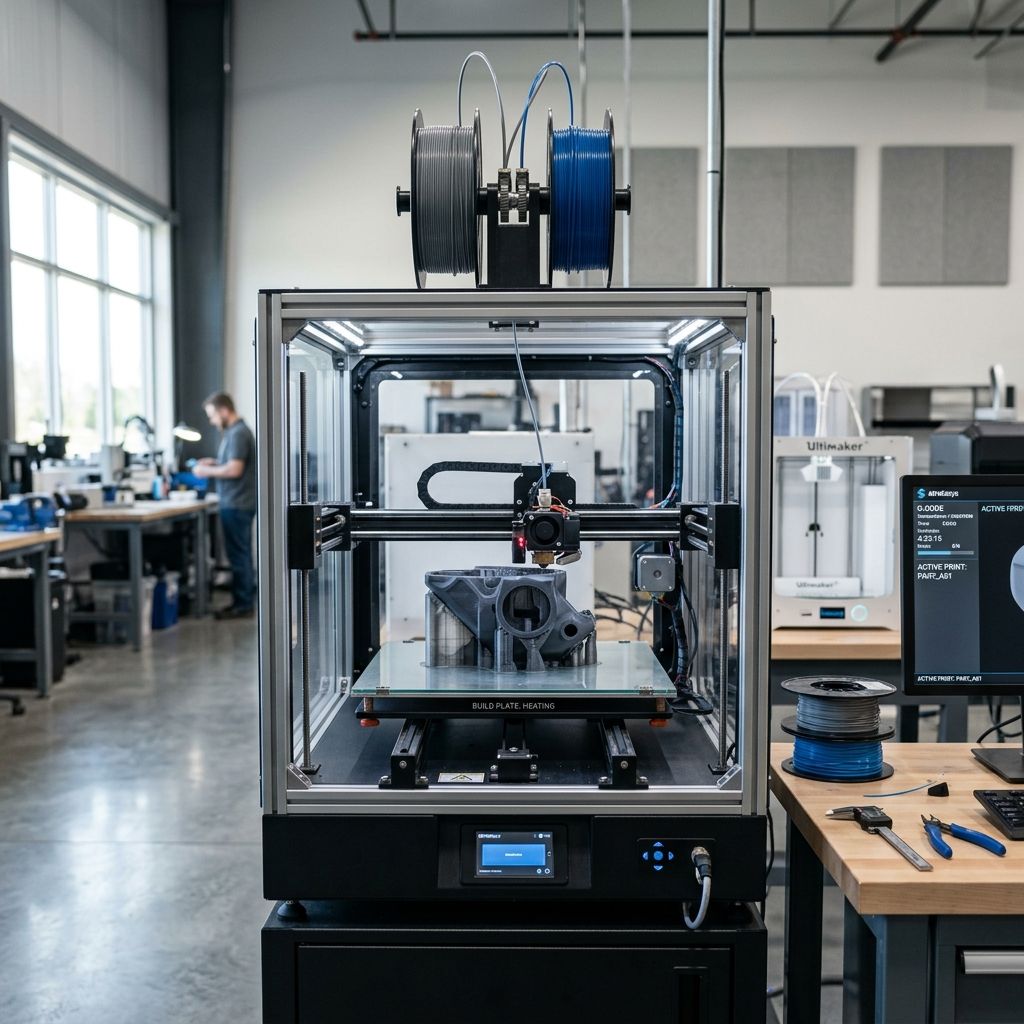
Bambu Lab X1-Carbon & X1E: The Calibration Lie They Won't Tell You
That Lidar-assisted first layer calibration is a party trick, not a fix. Here's how to actually make these machines hold tolerance after 500 hours of ABS/CF-Nylon, and why your "auto-calibration" is drifting.
The Maker's Summary
I've got three X1-Carbon builds in my shop and one X1E for the high-temp stuff. The X1 series does a lot of things right for a "prosumer" machine, but the calibration pipeline is fragile. The Lidar is notoriously sensitive to ambient light and bed reflectivity, not a trustworthy metrology tool for mechanical alignment. The flow calibration is fast, but it's a rough interpolation. This guide covers what the forum fanboys ignore: mechanical backlash compensation that drifts overtime, the thermal soak of the chamber, and why the Lidar's "micro-Lidar" is essentially blind to Z-hop errors above 0.04mm. We are going to fix the printer, not the software.
The Lidar Is Not Your Friend (Yet)
First, let's kill the marketing. The X1's Lidar is a low-power, time-of-flight sensor that scans a single line across the build plate. In my experience, it needs a calibrated scan target (the included metal plate) that is absolutely clean. Fingerprints, oil, or a scuff mark? You'll get a false pass on first-layer height. The sensor calculates a "Z-offset" by measuring the distance to the nozzle tip relative to the bed but it only samples a small area. If your bed has a subtle warp (and they all do, even the X1E's cast plate), the Lidar is effectively blind to that. I've had machines pass their "auto-calibration" and then print a first layer that's too close on the left edge and too far on the right. That's not a Lidar problem; it's a geometry problem the Lidar can't see.
Workshop Alert: Lidar Calibration Fail
DANGER: Do not rely on the "Auto Calibration" alone when switching from a smooth PEI plate to a textured engineering plate. The Lidar's reflectivity threshold changes. I've seen it cause the nozzle to crash into textured plates because the sensor misjudged the offset by 0.15mm. Always verify with a paper feeler gauge after any Lidar calibration on a new plate type. Your mileage may vary with the textured plate's matte finish.
The Physics of Failure: Thermal Soak and Homing Repeatability
Here's the dirty secret: The X1's homing switches are mechanical microswitches. They're fine at room temperature. But when you're printing Polycarbonate or PAHT-CF with the enclosure at 50-60°C, thermal expansion changes the switch actuation point. The metal parts of the switch expand, the plastic lever gets softer, and the "click" point shifts. I've measured a 0.02mm drift in Z-homing repeatability after a 2-hour high-temp soak. That's enough to ruin a dimensionally-critical part. The X1E has better switch housings, but it still has the same fundamental issue.
We combat this with a simple protocol: Always perform a "warm homing" before any critical print. Let the machine sit at target temperature for 15 minutes, then home all axes. I have a G-code macro that preheats the bed and chamber, waits 10 minutes, then runs G28. The auto-calibration sequence doesn't account for this thermal state. It assumes a cold machine.
Detailed Sub-Component Analysis: The Motion System and Belt Tension
The X1 uses carbon rods for XY motion. They're stiff and lightweight, but they're not immune to runout. I've replaced two sets of rods on high-hour machines (5000+ hrs) because of surface wear from dust and CF particles. The linear bearings are the weak point they collect fiber dust and develop a "notchy" feel. This shows up as banding in prints, not because of calibration, but because of mechanical slop.
- Belt Tension Spec: 16-18 N (per Bambu spec). I check with a tension gauge every 1000 hours. Loose belts cause ghosting. Tight belts wear the bearings.
- Lead Screw Lubrication: Super Lube PTFE grease (51004) on the Z-axis screws every 500 hours. Don't use lithium grease; it gums up at chamber temps above 50°C.
- Idler Pulley Bearings: Cheap 608zz bearings. I swapped mine for NSK steel-shielded. The originals get noisy after 2000 hours. Do not over-lubricate; grease attracts CF dust.
Calibration Workflow: From "Auto" to "Authoritative"
Here is the step-by-step procedure I use for every new X1 or X1E build, and for any machine that starts showing first-layer issues. This replaces the stock "Auto Calibration" for any critical job.
Phase 1: Mechanical Baseline (Cold Machine)
30 minutes. No filament loaded.
- Check all linear rod wipers for contamination. Vacuum the XY gantry area. CF dust is abrasive; it grinds the bearings.
- Measure belt tension with a gauge. The printer's own "belt tension check" in the settings is a frequency-based estimate. I've seen it report "OK" on belts that were 20% loose. Use a dedicated tool. Adjust at the gantry mounts. Mind the torque on the belt clamps 10N·m max.
- Check the lead screw nuts for backlash. I've had two machines with loose brass nuts from the factory. A 0.1mm Z wobble is unacceptable.
- Run a cold homing cycle (G28) three times. Note the Z value in the console. I expect a repeat within ±0.005mm. If you get more than 0.02mm variation, look at the microswitches or the Z-endstop wiring.
Workshop Caution: Z-Endstop Wiring
The Z-endstop connector on the X1-Carbon is flimsy. I've diagnosed two machines where the connector had intermittent contact, causing random Z-offset shifts mid-print. Secure the connector with a zip tie to the frame. This is a known fix on the Bambu forums but rarely mentioned in calibration guides.
Phase 2: Thermal Soak and Dynamic Homing
This is where the X1E has a slight edge. The X1E has better insulation and a more robust chamber heater controller. But both machines need this.
- Preheat the bed to your target temp (say 80°C for ABS, 100°C for PC). Close the enclosure.
- Wait for a stable chamber temp (usually 10-15 minutes). I use a thermocouple probe on the bed surface, not the internal sensor. The internal sensor is adjacent to the heater; it reads 5-8°C higher than the actual print surface.
- Run a warm homing cycle (G28 with a custom macro that waits for temp).
- Perform mechanical Z-offset calibration using a 0.1mm feeler gauge at four corners and center. The Lidar is disabled for this step. I manually adjust the Z-offset in the printer's config file. This accounts for any thermal distortion of the bed.
- Now, and only now, run the Auto Calibration (Lidar). It will fine-tune the flow and PID, but the mechanical reference is already set.
The Troubleshooting Matrix: When Calibration Fails
Here's a field-proven matrix based on the dozens of X1 issues I've seen. Debug in this order.
- Symptom: Lidar passes, but first layer is inconsistent across the bed.
Root Cause: Bed warp or non-parallel gantry. The Lidar samples one line. Check with a straightedge. Solution: Manual bed leveling (shim under the plate) or use a different build plate with a thinner spring steel shim. - Symptom: Flow calibration results in over-extrusion at the start of the print, then corrects.
Root Cause: Nozzle temperature recovery after Lidar scan. The Lidar scan forces a pause, the nozzle cools, then the first layer extrudes cold. Solution: Increase the "Nozzle Preheat" in the start G-code to add 10°C during the Lidar scan. - Symptom: Z-hop causes layer shifts in tall prints.
Root Cause: Backlash in the Z lead screws. The X1's Z-hop is a retract and lift, but if the backlash is not compensated, the Z-axis loses alignment. Solution: Lead screw nut adjustment or replacement. I've also seen the Z-motor coupler slip. Check the set screws they back out over time. - Symptom: X1E prints with "ghosting" on the Y-axis only.
Root Cause: Y-axis belt tension. The X1E has a heavier print head (with the hardened extruder). The belt resonates more. Solution: Add a dampener? No. Properly tension the belt and check the idler pulley for eccentricity. I swapped the stock pulley for a toothed idler (misumi) to reduce vibration.
Maintenance Workflow: Keeping Calibration from Drifting
Here's the reality: auto-calibration is a snapshot. It doesn't track wear. You need a maintenance schedule.
- Every 200 print hours: Warm homing + manual Z-offset check with feeler gauge. Clean the Lidar window (microfiber cloth, isopropyl alcohol). The window gets clouded by printer fumes. A dirty window gives false passes.
- Every 500 hours: Belt tension check and adjustment. Linear rod cleaning and re-lubrication (light oil on the rods, not the bearings). Check the bed screws for loosening. I use Loctite 222 (low strength) on the bed screws.
- Every 1000 hours: Replace the linear bearings on the XY gantry. I've seen the stock bearings develop a flat spot from CF dust. Replace with Igus drylin bearings (low friction, no lubrication needed). This is a major improvement over stock.
- Every 2000 hours: Replace the Z lead screws and brass nuts. The brass wears out. I've had a machine with 0.15mm of backlash at 2500 hours. That's a failure of the calibration to maintain a consistent first layer.
Hacky Field Fix: The "G-code Injection" for X1E
I had an X1E that would lose Z-offset by 0.05mm after the first 10 layers of a CF-Nylon print. Drove me crazy. The issue was the chamber temperature rising from 45°C to 70°C during the print, causing the aluminum bed to expand. The Lidar calibration ran at 45°C, so the offset was valid at the start, but invalid after thermal soak. Fix: I added a G-code command to re-home Z every 15 layers:
Z_HOME_Z_SENSOR ; Force G28 Z-only ; Wait for stable temp ;
Not elegant. But it works. The Bambu firmware doesn't have a "thermal drift compensation", so we hack it.
Engineering Cause-Effect: Lidar vs. Mechanical Reference
The Lidar calculates a Z-offset relative to the nozzle tip and the build plate surface. But it assumes the nozzle tip is a perfect, known reference. In reality, the nozzle expands thermally. The Lidar also assumes the bed is flat within the scan line. The cause of drift is the mismatch between the Lidar's snapshot and the actual thermal/mechanical state of the machine during the print. The X1E's chamber heater can exacerbate this by raising the bed temperature beyond what the initial calibration saw. The solution is to either thermally stabilize before calibration (our approach) or implement a closed-loop Z control that actively measures the distance to the bed during the print (not present in current firmware). The X1E has the hardware for it (a capacitive sensor), but Bambu doesn't use it for dynamic Z compensation. That's a software limitation, not a mechanical one.
Final Workshop Warning: The X1E's "Pro" Calibration Is a Myth
The X1E is sold as the "industrial" variant with better calibration. The only real difference is the chamber heater and the hardened extruder. The calibration pipeline is identical to the X1-Carbon. I've run both side-by-side. The X1E's chamber heater actually introduces a thermal gradient that makes the Lidar less reliable at higher temperatures. I've had the X1E's Lidar fail to calibrate when the chamber was above 60°C because the sensor's internal temperature threshold was exceeded. The solution is to calibrate cold, or at a consistent 45°C, and then let the machine warm up during the print. Do not trust the "pro" marketing.
Critical Protocol: Downtime Prevention
CAUTION: If you run an X1 or X1E in a production environment (more than 8 hours of print time per day), you must schedule a "Cold Homing" window every 4 hours. The thermal cycling of the machine causes the homing switches to drift. I've seen a machine fail to complete a 16-hour print because the Z-offset drifted 0.15mm after 8 hours, causing the first layer of the second print to not adhere. The auto-calibration doesn't re-run during a print. Instead of a pause, inject a "Z offset refresh" macro. I have a G-code that re-homes Z only (using the sensor) and adjusts the offset based on a previous calibration curve. It's not perfect, but it beats a failed batch.
Keep the rods clean, the belts tight, and the Lidar window spotless. And remember: that auto-calibration button is a suggestion, not a guarantee. The printer doesn't know it's hot until you tell it.
Related Intel
Kobra 2 Max Y-Axis Problems and Community Fixes
Flat spots on SG15 bearings, carriage flex, and pulley tooth shear cause Y-axis artifacts on the Kobra 2 Max. Fixes: lubricate rails, reduce acceleration, and check belt tension.
Fixing Kinematic Binding on RatRig V-Core 3.1
RatRig V-Core 3.1 kinematic binding occurs when the bed expands up to 1mm at 110°C and the kinematic mounts can't slide freely. Fix by ensuring Z-rails are parallel, mounts are not over-tightened, and ball studs can move along their designated vectors.
Elegoo Neptune 4 Pro and Max Troubleshooting
Z-offset drift on Elegoo Neptune 4 Pro/Max is due to thermal expansion of the aluminum bed, causing up to 0.4 mm height change. Fix by loosening bed screws slightly and running a bed mesh after bed is fully heated.