Fixing Kinematic Binding on RatRig V-Core 3.1

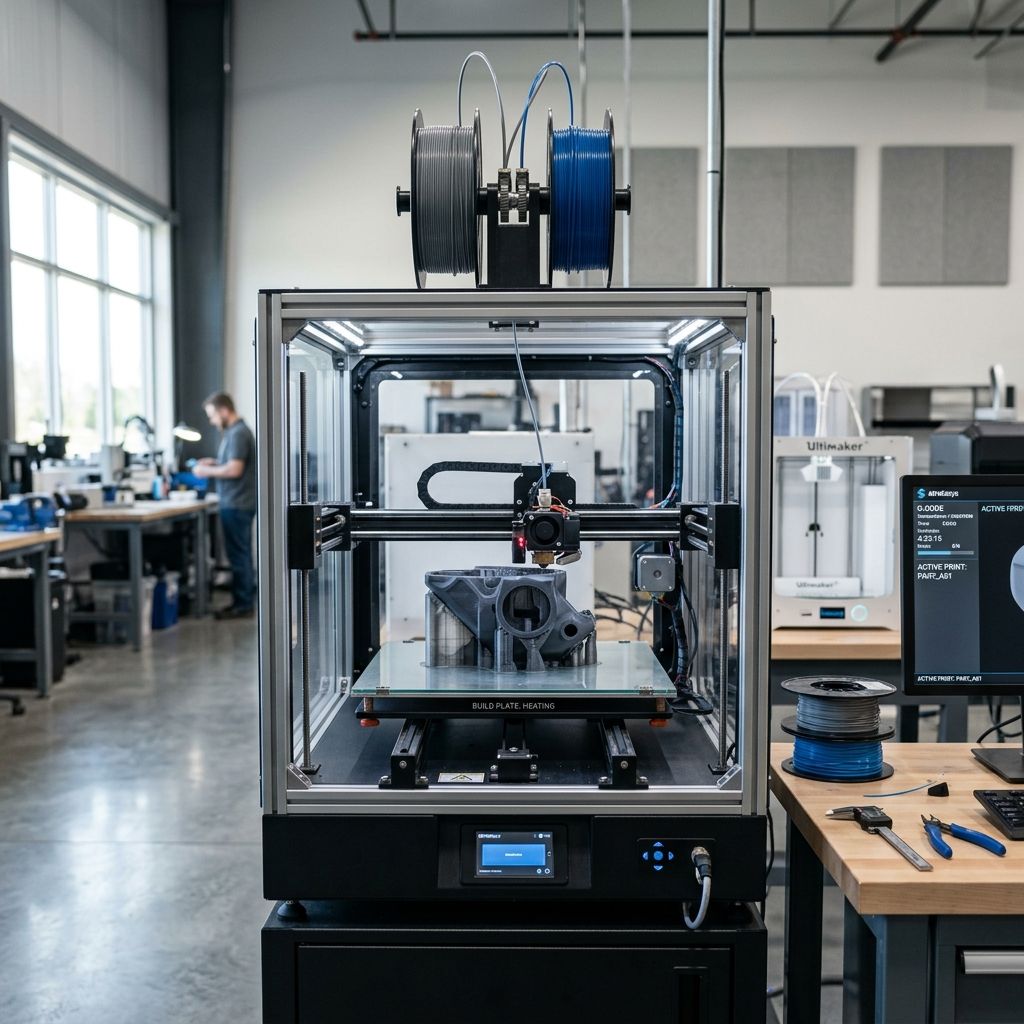
Field Troubleshooting & Community Solutions: The RatRig V-Core 3.1 Survival Log
An elite, shop-tested teardown of kinematic binding, belt resonance dynamics, and structural tolerances in the wild.
Field Specifications & Blueprint Limits
The RatRig V-Core 3.1 is an open-source beast, but its 3030 extrusion frame and massive kinematic bed can easily fall victim to tolerance stack-up. When you are pushing a 400mm or 500mm bed plate to 110°C at accelerations exceeding 10,000 mm/s², minor assembly oversights manifest as severe surface artifacts, layer shifts, or catastrophic kinematic binding. If you are experiencing extrusion-related failures at these high speeds, use our Print Speed Calculator to compute stable volumetric flow limits before diagnosing physical mechanical failures.
The Core Challenge: DIY Precision Meets Industrial Inertia
The RatRig V-Core 3.1 is not a consumer appliance; it is a heavy-duty industrial kit. In my twenty years on the workshop floor, I have seen dozens of these machines built by hand. When built correctly, they rival industrial machinery costing ten times as much. When built poorly, they are expensive, noisy space-heaters that chew through belts and scar print beds. The issues do not stem from bad design they stem from a lack of appreciation for the physics of high-speed kinematic systems.
Below, we dissect the top three failure modes we encounter on the shop floor, followed by field-tested repair workflows, a hard-nosed troubleshooting matrix, and the maintenance routines we use to keep these machines running 24/7 in production environments.
1. The Triple-Z Kinematic Bind (The Thermal Expansion Nightmare)
The V-Core 3.1 utilizes a true kinematic bed suspension system. The cast aluminum tooling plate (typically Mic6 or Alca 5, ranging from 6mm to 8mm in thickness) rests on three ball-headed studs that interface with three distinct mounts on the Z-axis carriers: a pin/groove (restricting two degrees of freedom), a V-groove (restricting one), and a flat (restricting none). This design prevents the bed from warping when it expands under heat.
However, many builders make the critical mistake of clamping the bed down rigidly, or misaligning the Z-axis linear rails. If the three MGN12H rails on the Z-pillars are not perfectly parallel, or if the kinematic mounts are restricted from sliding, the bed plate acts as a massive thermal wedge, forcing the carriage blocks to bind against the rails as the assembly heats up.
The Physics of Thermal Expansion in Aluminum Beds
To understand why this happens, we have to look at the numbers. Aluminum has a high coefficient of thermal expansion (CTE) compared to the steel and aluminum extrusions that make up the frame. Let's calculate the expansion of a 500mm x 500mm Mic6 aluminum bed plate heated from a ambient shop temperature of 20°C to a typical ABS printing temperature of 110°C.
The formula for linear thermal expansion is:
$$\Delta L = \alpha \cdot L_0 \cdot \Delta T$$
Where:
- $\alpha$ (CTE of Mic6 / 7000-series Aluminum): $23.6 \times 10^{-6} \, \text{K}^{-1}$
- $L_0$ (Initial length of the bed): $500 \, \text{mm}$
- $\Delta T$ (Temperature change): $110^\circ\text{C} - 20^\circ\text{C} = 90 \, \text{K}$
Plugging in these values:
$$\Delta L = (23.6 \times 10^{-6}) \times 500 \times 90$$
$$\Delta L \approx 1.062 \, \text{mm}$$
Over one millimeter of expansion! If your kinematic mounts do not allow the ball-studs to slide freely along their designated vectors, that 1.06mm of expansion will exert thousands of Newtons of force outward. This force bends the Z-axis leadscrews, twists the Z-carriages, and induces extreme stiction in the MGN12H linear guide blocks. This results in periodic layer lines, Z-wobble, or complete Z-axis lockups mid-print.
Field Fix & Kinematic Alignment Protocol
To fix this, we implement a strict "floating bed" alignment procedure during setup and maintenance:
- Loosen the Kinematic Clamps: The brass or stainless steel retaining clips that hold the bed's ball-studs down must not clamp the balls tightly. There should be a visible gap of roughly 0.2mm to 0.5mm. Use a feeler gauge. The clips are there to prevent the bed from tipping if you lift one side, not to lock it down.
- Check the Vector Alignment: The pin/groove mount must point directly toward the fixed ball mount. The flat mount must be perpendicular to that line of action. If these mounts are rotated even 5 degrees out of phase, the expansion path is blocked, causing the bed to buckle.
- Lubricate with High-Temp MoS2 Grease: Do not use light machine oil on the kinematic contact points. It burns off or runs. Use a high-temperature molybdenum disulfide (MoS2) grease or a fluoropolymer-based grease (like Krytox GPL 205) on the contact spheres and grooves to facilitate frictionless sliding under high thermal loads.
2. CoreXY Gantry Kinematics, Belt Resonance, and Axis Racking
The V-Core 3.1 features a massive CoreXY belt path utilizing 9mm wide Gates LL-2GT belts. While 9mm belts offer incredible stiffness compared to 6mm alternatives, their length (up to 4.5 meters per belt on a 500mm build) introduces significant elasticity and high-frequency resonance. If the belt tensions are unequal or if the gantry is racked (out of square), the machine will produce severe ghosting/ringing and exhibit asymmetric diagonal dimensional accuracy issues.
Unequal belt tension pulls the X-axis gantry out of square with the Y-axis rails. When this happens, the stepper motors must fight each other to maintain a straight line, generating high heat, chewing up the belt teeth on the idler flanges, and causing sudden layer shifts.
The Physics of Belt Tension & Frequency Tuning
We do not tension belts by "feel" or by measuring the deflection with our thumbs. That is a recipe for a twisted gantry. Instead, we treat the belt like a guitar string and measure its fundamental resonant frequency over a fixed span.
The relationship between tension force ($T$ in Newtons), linear mass density ($m$ in kg/m), span length ($L$ in meters), and resonant frequency ($f$ in Hz) is defined by the classical wave equation:
$$f = \frac{1}{2L} \sqrt{\frac{T}{m}}$$
Solving for Tension ($T$):
$$T = 4 \cdot m \cdot L^2 \cdot f^2$$
For a standard Gates 2LL-2GT-9 belt (9mm wide), the linear mass density ($m$) is approximately $0.0031 \, \text{kg/m}$. Let's say we set our X-gantry all the way to the front of the frame to establish a clear, repeatable belt span ($L$) of exactly $0.45 \, \text{meters}$ from the stepper pulley to the gantry corner idler.
If we want to target a safe, high-performance operating tension of $60 \, \text{Newtons}$ to minimize elastic deformation under high acceleration, we calculate the target frequency ($f$):
$$f = \frac{1}{2 \times 0.45} \sqrt{\frac{60}{0.0031}}$$
$$f = 1.111 \times \sqrt{19354.8}$$
$$f \approx 154.6 \, \text{Hz}$$
Using a frequency analysis app (or a guitar tuner microphone) held close to the belt span, pluck the belt. Adjust the tensioners until both the A and B belts read precisely 155 Hz over that identical 0.45m span. This ensures the gantry is perfectly balanced and won't rack during high-speed moves.
Tech Alert: Never exceed 80 Newtons of static tension on these 9mm belts. Over-tensioning will bend the 5mm stepper motor shafts, crush the bearings inside the flanged idlers, and cause the plastic EVA 3 toolhead mounts to creep and sag over time.
For users experiencing persistent layer shifts or unexplained motion glitches, tuning these parameters is the first step. If your slicer settings are exacerbating these mechanical limits, check out our guide on Fixing Layer Shift in Simplify3D: Acceleration Settings to realign your slicer's kinematics with your physical hardware constraints.
3. EVA 3 Toolhead Creep & Linear Rail Stiction
The EVA 3 toolhead system is a highly modular, 3D-printed carriage assembly. It is brilliant for customization, but it has a major structural vulnerability: material creep under chamber heat. Many hobbyists print their EVA parts out of PETG or even PLA because "it's what they had on hand." Under the radiant heat of a 100°C bed inside an enclosed V-Core, PETG softens. The glass transition temperature ($T_g$) of PETG is only around 75°C.
Once the EVA parts reach 60°C to 65°C under mechanical load, the plastic begins to deform. The belt anchors slowly pull out, the hotend mount tilts, and the extruder drive gears lose their axial alignment. This causes mysterious under-extrusion, inconsistent first layers, and eventually, a total structural failure of the toolhead carriage.
The Menace of Transit Grease and Rail Stiction
Furthermore, the V-Core relies heavily on MGN12H linear guide rails. Cheap or improperly prepped rails are a frequent cause of poor print quality. Linear rails are shipped from the factory packed with a thick, sticky rust-inhibitive oil (often mistaken for lubricant). If you install the rails out of the box without flushing this protective coating, it acts as a dust magnet. Within 50 hours of printing, the carriage balls turn the oil into a grinding paste, causing "stiction" (static friction that resists initial motion) and micro-stutters in the toolhead path.
The Heavy Duty Toolhead Rehab Workflow
- Re-Print in PA-CF or ABS/ASA: The minimum acceptable material for the EVA 3 toolhead on an enclosed V-Core is ABS or ASA (printed with at least 4 walls, 5 top/bottom layers, and 40% gyroid infill). For production environments, use Carbon Fiber reinforced Nylon (PA-CF). PA-CF has an extremely high heat deflection temperature (often over 150°C) and resists creep under continuous belt tension.
- The Multi-Stage Rail Flush:
- Remove the MGN12H carriages from the rails (be incredibly careful not to let the ball bearings slide out of the plastic retainers use a spare piece of rail or a plastic guide block).
- Submerge the carriages and rails in a bath of pure Isopropyl Alcohol (IPA, 99%) or mineral spirits. Agitate them for 10 minutes to dissolve the sticky packing grease.
- Blow them dry with compressed air. Ensure the carriage slides along the rail with zero resistance, clicking, or gritty feedback.
- Pack the carriages with a high-performance linear guide grease. We use Mobilux EP2 or Super Lube 21030 (Synthetic Grease with PTFE). Do not use thin liquid oils; they migrate out of the carriage within days.
Field Troubleshooting Matrix
This matrix covers common symptoms, immediate floor diagnoses, and permanent mechanical fixes compiled from years of troubleshooting the V-Core platform.
| Observed Symptom | Probable Root Cause | Diagnostic Verification | Field Action / Resolution |
|---|---|---|---|
| Periodic "wood grain" or diagonal ribbing on flat vertical walls. | CoreXY belt teeth meshing incorrectly or poor idler alignment causing "belt flutter". | Check if the pattern spacing matches the 2mm pitch of the GT2 belts. Inspect belt paths for rubbing against idler flanges. | Ensure all idlers are perfectly parallel to the extrusions. Replace cheap, non-smooth idlers with high-quality toothed idlers on the belt-teeth side. Adjust tension to 150Hz. |
| First layer varies drastically from left to right after bed heating, despite 100-point mesh bed leveling. | Thermal "tacoing" caused by restricted kinematic bed mounts. | Run Klipper's BED_MESH_CALIBRATE at 20°C, then again at 110°C after a 30-minute heat soak. Compare the heightmaps. If the bed bows upward in the center at high temp, it's binding. |
Loosen the brass bed-retaining screws. Add high-temperature MoS2 grease to the kinematic spheres. Verify that the pin/groove mount points directly toward the fixed ball mount. |
| Loud, metallic grinding or rattling noises during high-speed travels (300+ mm/s). | Dry or misaligned linear rails, or stepper motor driver resonance. | Manually slide the X and Y axes with the belts removed. Feel for flat spots or "grittiness". Check stepper temperatures (if over 80°C, they are over-driven). | Perform the multi-stage rail flush. Re-grease with Mobilux EP2. In Klipper, adjust TMC2209 driver settings: set stealthchop_threshold: 0 to run in pure spreadCycle mode for raw torque. |
| Sudden X-axis layer shifts, especially during fast, short infill patterns. | Toolhead drag, loose pulley grub screws, or overly aggressive acceleration limits. | Inspect the pulley set screws on the stepper motor shafts. Mark them with a paint pen to see if they slip relative to the flat shaft. Refer to Common Cura Slicing Errors for issues related to over-extrusion blobs that physically catch the nozzle. | Tighten grub screws onto the flat of the motor shaft. Use medium threadlocker (Loctite 242). Recalibrate Klipper Input Shaper limits; do not exceed 75% of the maximum recommended acceleration. |
Exhaustive Preventive Maintenance Protocol
If you run a V-Core 3.1 in a job-shop environment, you cannot afford unplanned downtime. We implement the following staggered preventive maintenance (PM) schedule to guarantee 98% uptime on our machines.
Weekly Cycle (Run-time: ~10 minutes)
- Debris Sweep: Clean the Y-axis and X-axis linear rails using a lint-free microfiber cloth. Wipe away any plastic crumbs, filament wisps, or accumulated dust.
- Nozzle Inspection: Inspect the hotend nozzle for outer wear or carbonized buildup. A worn nozzle alters volumetric flow and distorts first-layer calibration.
- Heater Cartridge & Thermistor Check: Visually inspect the heater block wires. Ensure the heater cartridge and thermistor grub screws are secure and there are no exposed copper strands.
Monthly Cycle (Run-time: ~45 minutes)
- Belt Tension Equalization: Position the gantry at Y=0. Measure belt resonance using a frequency meter. Adjust to 155 Hz ±3 Hz on both belts.
- Frame Torque Auditing: The 3030 aluminum frame is held together by cast corner brackets and button-head screws. High-acceleration vibrations will back these screws out. Walk the frame with a 2.5mm and 3mm hex key. Tighten every structural fastener to approximately 3.2 Nm.
- Z-Leadscrew Cleansing: Wipe down the three Z leadscrews with solvent. Re-apply a thin coat of PTFE-based dry lubricant. Do not use wet grease on Z leadscrews; it collects airborne filament dust and turns into an abrasive paste.
Quarterly Cycle (Run-time: ~2 hours)
- Linear Rail Re-packing: Inject high-pressure grease into the grease ports of all MGN12H carriages using a specialized grease syringe. Pump until a clean bead of grease squeezes out of the rubber dust seals. Wipe off the excess.
- EVA 3 Creep Assessment: Disassemble the toolhead shroud. Inspect the areas around the stepper motor mounts and belt tensioners for signs of stress whitening, hairline cracks, or warping. Replace any deformed parts with freshly sintered or printed PA-CF components.
- Electrical Terminal Audit: Open the main electronics enclosure. Ensure all screw terminal blocks (especially the high-current 24V input and bed heater SSR terminals) are tight. Copper cold-flows under continuous pressure, causing screw connections to loosen over time and creating high-resistance fire hazards.
Frequently Asked Questions
Why does my RatRig V-Core 3.1 bed tilt during Z-tilt calibration?
This occurs when the Z-motor designations in your Klipper configuration file do not match the physical wiring of the stepper drivers. If Motor 1 is wired to Driver 3, the firmware's corrective leveling moves will run in reverse, driving the bed into extreme angles until it hits the physical limits or binds.
What is the maximum printing speed I can realistically run on a V-Core 3.1?
While the frame can mechanically handle speeds up to 500 mm/s and accelerations of 15,000 mm/s², your real-world limit is dictated by your hotend's volumetric melt capacity. A standard Phaetus Rapido HF hotend tops out at roughly 35 mm³/s, which limits you to 250 mm/s when printing with a 0.4mm nozzle and a 0.2mm layer height.
How do I eliminate the severe bed-mesh tilt on my 400mm/500mm build?
Always perform your bed mesh calibration *only* after a complete 30-minute thermal soak at your target printing temperature. A massive aluminum tooling plate takes a substantial amount of time to reach thermal equilibrium, and running a mesh beforehand will capture a transient, continuously warping state.
Can I use PETG for the structural frame brackets of the V-Core?
Absolutely not. All structural brackets, corner plates, and toolhead mounts should be machined aluminum, steel, or printed in a high-temperature, creep-resistant material like ABS, ASA, or carbon-fiber-filled Nylon. PETG will slowly deform under static screw loads, ruining the frame's squareness.
Critical Torque & Thermal Advisory
When assembling or servicing the frame of your RatRig V-Core 3.1, never use cheap L-shaped hex keys to torque down the M5 and M6 screws. The 3030 extrusions require highly consistent torque to establish stable, square joints. Use a calibrated torque wrench. Over-tightening will strip the aluminum threads inside the T-nuts, while under-tightening will allow the frame to shake itself out of square within 100 hours of high-acceleration printing. Keep it square, keep it lubricated, and let the kinematics do the work.
Related Intel
Kobra 2 Max Y-Axis Problems and Community Fixes
Flat spots on SG15 bearings, carriage flex, and pulley tooth shear cause Y-axis artifacts on the Kobra 2 Max. Fixes: lubricate rails, reduce acceleration, and check belt tension.
Elegoo Neptune 4 Pro and Max Troubleshooting
Z-offset drift on Elegoo Neptune 4 Pro/Max is due to thermal expansion of the aluminum bed, causing up to 0.4 mm height change. Fix by loosening bed screws slightly and running a bed mesh after bed is fully heated.
Sovol SV06 Extruder Overheating Fixes
Reduce the extruder stepper driver Vref voltage from the factory 0.85A to around 0.6A to prevent overheating and filament softening in the planetary gears. Also ensure proper heatbreak cooling.