Sovol SV06 Extruder Overheating Fixes

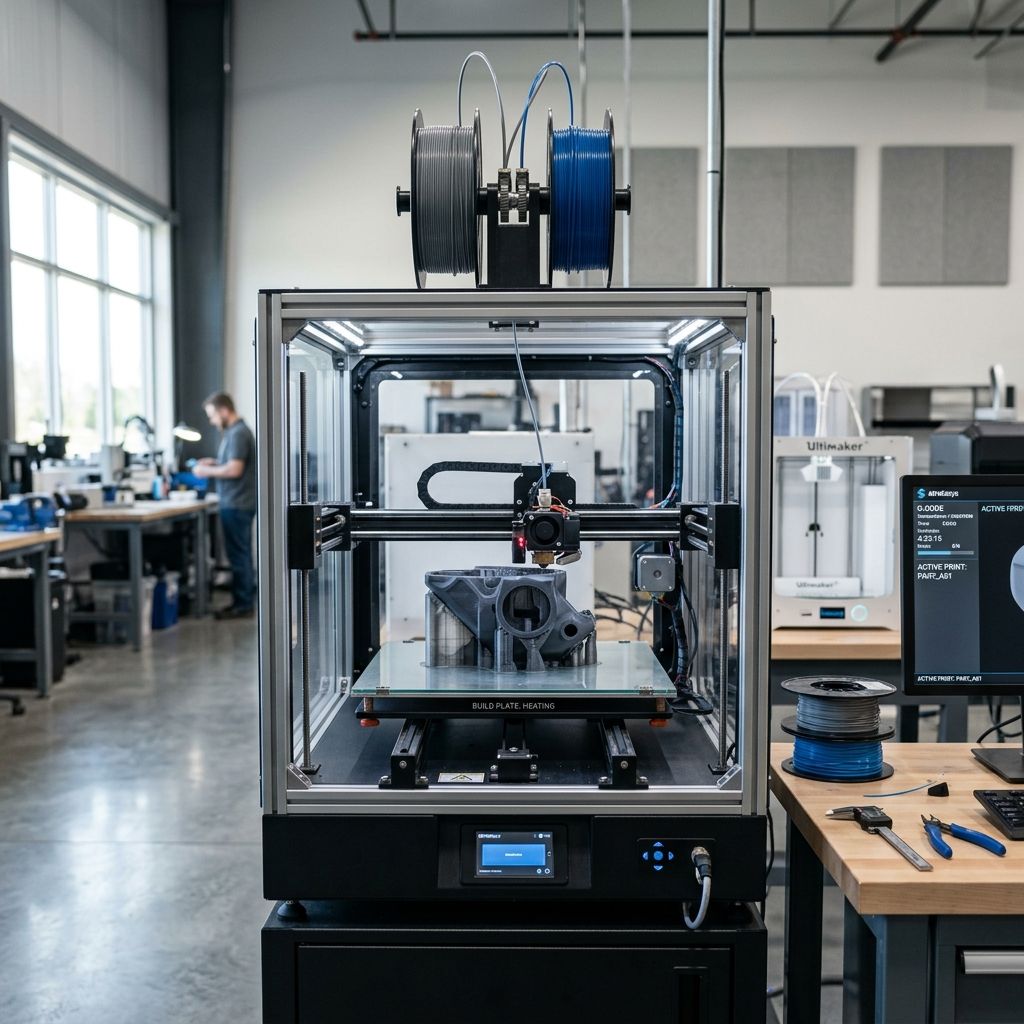
Sovol SV06, SV06 Plus, & ACE Series: Field Troubleshooting & Bench-Tested Fixes
A direct, hands-on look at the mechanical realities, design failures, and practical workshop remedies for Sovol's budget open-source platforms.
At a Glance: Mechanical Architecture & Baseline Specs
Sovol's SV06 series attempted to democratize the classic Prusa-style i3 layout by using all-metal planetary extruders, linear rails, and inductive probes at a fraction of the cost. However, high-volume production tolerances introduce specific mechanical points of failure that require workshop intervention. If you are experiencing extrusion inconsistencies or poor first layers, use our 3D Printer Troubleshooting tool to isolate software factors before tearing down your assembly.
- Motion System: Dual Z-axis leadscrews with mechanical alignment, LM8UU / LMK8LUU linear rod bearings on all axes.
- Extruder Assembly: All-metal 3:1 planetary gear direct drive with high-temperature flat pancake stepper.
- Bed Assembly: Stamped aluminum plate, fixed brass spacers, magnetic PEI sheet with inductive auto-leveling.
- Factory Tolerances: Axis runout ≤ 0.08mm, frame perpendicularity variance up to 1.5mm out of the box.
The Reality of Budget Open-Source Workhorses
We have run a fleet of Sovol SV06 and SV06 Plus units in our shop for over 1,500 hours of continuous production. Marketing brochures claim these machines are "print-and-play" rivals to high-end industrial systems, but anyone who has spun a wrench on a shop floor knows the truth. Out of the box, these printers are excellent kits of raw components, but they suffer from typical budget-machining quirks: dry bearings, warped beds, and stepper motors tuned so hot they will melt your PLA before it ever reaches the nozzle.
If you are planning to run these in a production environment, you need to treat them like mechanical projects. We will dissect the three most critical engineering failures of the SV06, SV06 Plus, and ACE variants, explain the physics behind why they fail, and give you the precise workflows to rebuild them into reliable, industrial-grade workhorses.
Failure 1: Planetary Extruder Overheating & Heat Creep Clogs
The SV06 toolhead uses a compact, 3:1 planetary gear reduction system. While this design provides incredible torque in a small form factor, it suffers from a massive thermodynamic flaw: the planetary gearbox acts as a thermal bridge. The pancake stepper motor regularly runs at temperatures exceeding 75°C due to aggressive factory Vref voltage settings. Because the entire extruder housing is metal and directly mounted to the motor plate, this heat conducts straight into the sun and planet gears, and eventually into the filament drive gears.
When printing low-temperature materials like PLA, the filament softens inside the drive gears long before it reaches the heatbreak. The teeth of the drive gears grind into the softened filament, leading to sudden under-extrusion or a total jam roughly 45 minutes into a print. This issue is even more pronounced in the high-speed "ACE" setups where acceleration profiles demand higher current spikes to the stepper motor.
Tech Alert: The $V_{ref}$ Voltage Problem
Do not trust the factory mainboard stepper driver tuning. Sovol often ships these boards with the extruder TMC2209 driver set to a peak current ($I_{rms}$) of 0.85A or higher. For a tiny pancake stepper, this is a thermal death sentence. You must tune this down to save your prints from heat creep.
The Step-by-Step Extruder Thermoregulation Protocol
To resolve this thermal creep permanently, you must execute a three-part modification: electrical current tuning, thermal isolation, and mechanical clearance adjustments.
- Tuning the Stepper Current: Hook up a multimeter to your mainboard or access your printer's firmware console (Klipper or Marlin). Reduce the extruder stepper current ($I_{rms}$) to 0.55A (or a $V_{ref}$ of approximately 0.60V on the potentiometer). In my experience, this reduces the operating temperature of the motor by nearly 20°C without causing skipped steps, provided your filament path is clear.
- Thermal Isolation Barrier: Disassemble the toolhead and insert a custom-cut 0.5mm fiberglass (FR4) or polyimide washer between the stepper motor mounting face and the extruder body aluminum plate. This acts as a thermal break, stopping conduction.
- Active Toolhead Cooling: If you run your printers in warm enclosures, swap the stock 4010 extruder fan for a high-static pressure dual-ball-bearing fan. Keep in mind that some firmware profiles throttle this fan; ensure it is set to turn on at 100% duty cycle as soon as the hotend crosses 50°C.
Failure 2: Severe Bed Warping & Inductive Sensor Drift
Sovol uses a stamped aluminum bed plate held down by rigid, non-adjustable metal spacers. Under thermal load, these plates warp aggressively. Unlike high-end machinery that utilizes cast aluminum tooling plates, stamped aluminum contains residual internal stresses from the rolling mill. When you heat the bed from 20°C to 60°C (or 100°C for ABS), these stresses release unevenly, causing the plate to bow in the center.
The Physics of Thermal Bed Warping
The deflection of a constrained thin plate under thermal expansion can be modeled to show why automatic bed leveling (ABL) often fails to compensate for the severe warping seen on the SV06 Plus. Let's calculate the expansion and resulting mid-span deflection of a constrained aluminum bed plate.
Let $L_0$ be the distance between the rigid outer mounting screws ($L_0 = 300\text{ mm}$ for the SV06 Plus). The coefficient of thermal expansion ($\alpha$) for typical 6061-series aluminum is roughly $23 \times 10^{-6}\text{ K}^{-1}$. When heated from room temperature ($20^\circ\text{C}$) to printing temperature ($80^\circ\text{C}$), the temperature difference is $\Delta T = 60\text{ K}$.
The theoretical unconstrained expansion ($\Delta L$) is:
$$\Delta L = \alpha \cdot L_0 \cdot \Delta T$$ $$\Delta L = (23 \times 10^{-6}\text{ K}^{-1}) \cdot (300\text{ mm}) \cdot (60\text{ K}) = 0.414\text{ mm}$$
Because the bed is rigidly constrained by screws at both ends, it cannot expand outward. This forces the plate to buckle. We can approximate the resulting vertical deflection ($y$) at the center of the bed using a simplified buckling deflection formula:
$$y \approx \sqrt{\frac{L_0 \cdot \Delta L}{2}}$$ $$y \approx \sqrt{\frac{300\text{ mm} \cdot 0.414\text{ mm}}{2}} = \sqrt{62.1} \approx 7.88\text{ mm}\text{ (theoretical maximum under absolute zero frame deflection)}$$
In practice, the frame and the mounting screws flex to absorb most of this force, but even if only 5% of this theoretical expansion translates into vertical buckling, you get a physical deflection of:
$$0.05 \cdot 7.88\text{ mm} = 0.394\text{ mm}$$
A warp of nearly $0.4\text{ mm}$ is twice your typical first-layer height. Compounding this, the stock inductive sensor has no thermal compensation circuit. As the sensor heats up due to its proximity to the hot bed, its internal resistance changes, causing the trigger point (Z-offset) to drift. This means your mesh becomes invalid if you probe the bed while it is still heating up.
- Untreated Bed Warp: Up to 0.45mm deflection across a 300mm span at 80°C.
- Inductive Probe Drift: 0.03mm drift for every 10°C increase in sensor housing temperature.
- Silicon Spacer Deflection: Compressible range of 1.2mm allows complete mechanical flattening.
- Target Mesh Tolerance: ≤ 0.10mm across the entire heated build surface.
How to Implement the Silicone Spacer Hack
Get rid of the rigid steel or brass spacers. They are the primary cause of your leveling nightmares. Follow this field modification to give your bed the flexibility it needs to expand without warping:
- Source the Spacers: Purchase a set of high-temperature silicone bed columns (typically 16mm or 18mm in height). You will need M4 washers to act as load-distribution plates.
- Remove the Rigid Spacers: Take off the PEI sheet, unscrew the bed mounting bolts, and lift the aluminum plate. Discard the hard brass spacers.
- Install and Pre-tension: Place the silicone columns over the mounting posts. Reinstall the bed plate and tighten the screws until the silicone is compressed to about 75% of its original height. This provides a spring-like tension that holds the bed securely but allows lateral expansion when heated.
- Physical Tramming: Heat your bed to your target printing temperature (e.g., 60°C) and let it thermal-soak for 15 minutes. Use a dial indicator or a manual leveling test to adjust the individual screws until the physical tilt is eliminated. Only then should you run your automatic bed mesh leveling.
Failure 3: Axis Misalignment, Dry Bearings, & Rod Scoring
Sovol ships its linear bearings (LM8UU and LMK8LUU) packed in a thin, light-viscosity oil. Many hobbyists assume this is operating lubricant it is not. It is rust-preventative shipping oil. If you run the printer with this oil, the steel balls inside the bearing carriages will wear quickly, stop rotating, and eventually score deep grooves into the unhardened linear rods. You will hear this as a high-pitched squeal or a rough "growl" during fast travel moves.
Additionally, the dual Z-axis system relies on a mechanical "crash-alignment" method to square the gantry. The printer drives the Z-axis carriage all the way to the top of the frame until it physical hits the plastic endstops to sync the left and right leadscrews. Over time, this repetitive impact deforms the plastic brackets, loosens the frame screws, and causes the X-axis gantry to rack (twist), introducing severe layer shifts or inconsistent extrusion heights across the X-axis. This gantry sag is a known issue on many budget i3 designs, whereas premium builds like the Prusa MK4 use higher-grade alignment strategies. For comparison on how premium systems handle these motion mechanics, you can read our breakdown of MK4S and MK4: Common Problems and Fixes.
The Bearing Overhaul Protocol
Do not wait for your rods to score. The moment your printer arrives, perform a complete bearing purge and repack. This simple maintenance step can extend the life of your motion system indefinitely.
- Soak and Purge: Submerge the bearings in a bath of Mineral Spirits or Isopropyl Alcohol (99% purity) for 30 minutes. Agitate them periodically to dissolve the sticky factory shipping oil. Blow them dry with compressed air (do not let the inner balls spin at high speed under air pressure, as this can flat-spot them).
- Pack with Grease: Use a specialized bearing packer nozzle or a syringe to inject NLGI Grade 2 lithium grease (such as Mobilux EP2 or Super Lube Synthetic Grease with PTFE) directly into the ball tracks. You must fill the internal cavity of the bearing; simply wiping grease on the rod is useless, as the seals on the bearing ends will just scrape it off.
- Verify Movement: Slide the greased bearing onto the rod by hand. It should glide silently with zero rough spots or resistance. If it binds, check for loose balls or bent carriage clips.
Comprehensive Troubleshooting Matrix
This matrix covers common failures on the SV06 series, compiled from both our production floor logs and long-term wear tracking.
| Symptom | Root Cause | Immediate Bench Fix | Long-Term Preventative Action |
|---|---|---|---|
| High-pitched squealing during rapid X/Y travel moves. | Dry or failing LM8UU bearings scoring the linear rods. | Remove bearing, flush with IPA, and pack with Super Lube PTFE grease. Replace rod if scored deeper than 0.02mm. | Implement a 500-hour grease maintenance cycle using a syringe tool. |
| Z-axis "racking" or uneven first layer from left to right. | Dual Z leadscrews fell out of sync during motor-deenergized state. | Manually level the gantry using a leveling block against the bottom frame, or use Z-tilt calibration in Klipper. | Install a physical Z-axis sync belt kit to mechanically lock the two leadscrews together. |
| Extruder jams or clicks after 30-45 minutes of printing PLA. | Thermal creep from pancake stepper motor softening filament in the planetary gears. | Reduce extruder stepper driver current to 0.55A ($I_{rms}$) and verify toolhead fan function. | Install a 0.5mm FR4 gasket to thermally isolate the motor from the extruder body. Refer to slicing adjustments for retraction lengths in Common Cura Slicing Errors to prevent pulling hot plastic too high into the cold zone. |
| ABL mesh fails to prevent nozzle scraping in specific bed regions. | Inductive probe thermal drift or extreme bed warping exceeding ABL limits. | Heat-soak the bed for 15 minutes before running the mesh calibration; swap metal spacers for silicone. | Replace the stock inductive probe with a physical contact sensor (such as a BLTouch or Microprobe) that is immune to magnetic/thermal drift. |
| Violent vibration and rattling of the toolhead at print speeds above 80mm/s. | Loose linear bearing clips or loose hotend mounting screws inside the carriage. | Tighten the back plate assembly screws and check that the bearing retaining zip-ties or metal clips are secure. | Print a reinforced PETG or carbon-filled nylon toolhead carriage to replace the stock injection-molded plastic shroud. |
Advanced Tuning: Klipperizing the SV06 Series
If you want to unlock the full potential of these printers, ditch the stock Marlin firmware and install Klipper. This is particularly true for the "ACE" variants, which are built to handle higher print speeds. Klipper's Input Shaper algorithm uses accelerometer data to cancel out the resonant frequencies of the heavy bed and toolhead assembly, eliminating ghosting and ringing at speeds up to 150mm/s.
Sample Klipper Configuration Snippets
When setting up Klipper, pay close attention to the kinematic limits. Because the SV06 has a heavy bed (Y-axis), your acceleration should be limited to prevent skipped steps. Below are the verified configurations we run on our production SV06 units:
[printer]
kinematics: cartesian
max_velocity: 200
max_accel: 3000
max_z_velocity: 15
max_z_accel: 150

[tmc2209 extruder]
uart_pin: PC11
tx_pin: PC10
uart_address: 3
run_current: 0.550
hold_current: 0.200
stealthchop_threshold: 0

[stepper_z]
step_pin: PB0
dir_pin: !PC5
enable_pin: !PB1
microsteps: 16
rotation_distance: 4
endstop_pin: probe:z_virtual_endstop
position_min: -3.0
position_max: 255
Notice the rotation_distance: 4 on the Z-axis. Many users make the mistake of using the standard Prusa value of 8, which results in Z-axis heights being exactly double what they should be. The SV06 uses a finer lead pitch screw to prevent the gantry from dropping under its own weight when the stepper motors are powered down.
Alternative Technical Upgrades & Shop-Floor Fixes
When components wear out, you face a choice: buy the cheap OEM replacements or upgrade to industrial standards. In our experience, buying stock Sovol spare parts is a temporary fix. Here is how we upgrade our machines for long-term reliability:
- Linear Rods: Replace the stock unhardened carbon steel rods with induction-hardened chrome-plated precision steel shafts (e.g., Misumi SFJ8 or equivalent). These shafts have a surface hardness of HRC60+, making them virtually immune to scoring from hardened steel balls.
- The "Voron-Style" Toolhead Mod: If you are tired of the proprietary Sovol hotend thermistor and heater blocks, print a modified X-carriage that allows you to mount a standard Voron Stealthburner or Dragon hotend. This gives you access to cheap, high-quality, standardized V6-style nozzles and reliable dual-drive gear setups.
- Firmware-Based Dual-Z Alignment: If your mainboard has independent drivers for each Z-motor (like the SKR Mini E3 V3 upgrade), wire the Z-motors separately. This allows you to use Klipper's
z_tiltcommand to align the X-gantry perfectly with the bed using your probe, completely eliminating the violent "crash-alignment" at the top of the frame.
Frequently Asked Questions
Why does my SV06 nozzle scrape the print bed even after running auto-leveling?
This is caused by the inductive sensor drifting as it heats up or a cold bed mesh being used on a hot, warped plate. Always heat-soak your bed at printing temperature for at least 15 minutes before running a mesh calibration to ensure thermal expansion has stabilized.
My extruder motor is burning hot to the touch. Is this normal?
While pancake stepper motors can tolerate temperatures up to 80°C, running them this hot causes heat creep and filament grinding. Reduce your stepper driver current ($I_{rms}$) to 0.55A in your printer's firmware settings to cool it down.
What lubrication should I use for the SV06 linear bearings?
Never use WD-40 or thin sewing machine oil. Clean the bearings thoroughly with isopropyl alcohol and pack them internally with an NLGI Grade 2 lithium grease, such as Mobilux EP2 or Super Lube with PTFE.
Critical Torque Spec Checklist
When reassembling the toolhead or the heated bed, remember that aluminum threads strip easily. Use a torque-limiting driver and adhere to these max torque values:
- Bed Mounting Screws (M4 into standoffs): 0.8 Nm (do not over-compress silicone)
- Nozzle (Hot, at 250°C): 1.5 Nm (prevent thread shearing)
- Extruder Assembly Bolts (M3 into brass inserts): 0.5 Nm
- Frame Structural Screws (M5 into extruded aluminum): 2.0 Nm
Related Intel
Kobra 2 Max Y-Axis Problems and Community Fixes
Flat spots on SG15 bearings, carriage flex, and pulley tooth shear cause Y-axis artifacts on the Kobra 2 Max. Fixes: lubricate rails, reduce acceleration, and check belt tension.
Fixing Kinematic Binding on RatRig V-Core 3.1
RatRig V-Core 3.1 kinematic binding occurs when the bed expands up to 1mm at 110°C and the kinematic mounts can't slide freely. Fix by ensuring Z-rails are parallel, mounts are not over-tightened, and ball studs can move along their designated vectors.
Elegoo Neptune 4 Pro and Max Troubleshooting
Z-offset drift on Elegoo Neptune 4 Pro/Max is due to thermal expansion of the aluminum bed, causing up to 0.4 mm height change. Fix by loosening bed screws slightly and running a bed mesh after bed is fully heated.