Breaking the Entry Barrier: A Beginner’s Guide to Industrial 3D Printing
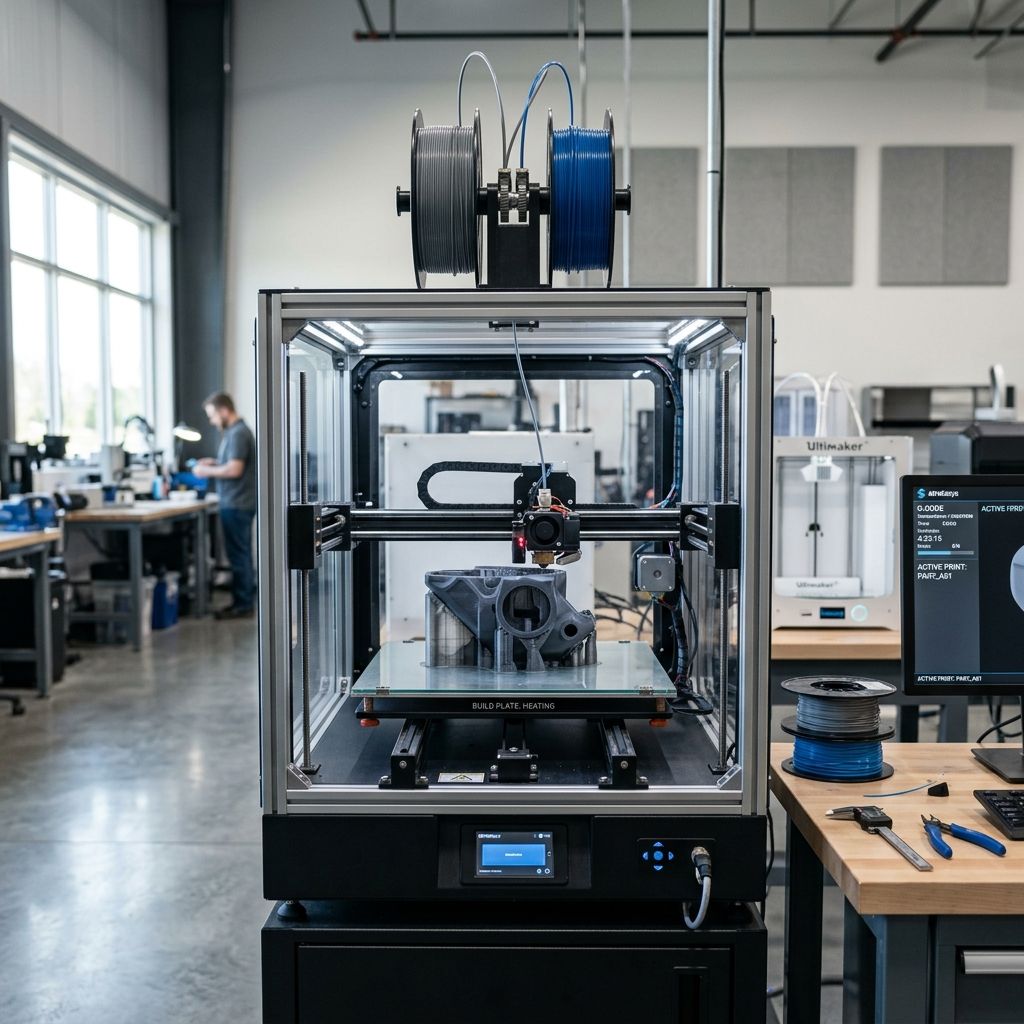
Breaking the Entry Barrier: A Beginner’s Guide to Industrial 3D Printing
For many, "industrial" 3D printing implies six-figure investments and specialized facilities. However, a new architectural standard has emerged, led by systems like the Bambu Lab X1-Carbon, allowing beginners to achieve engineering-grade results with consumer-level accessibility.
Industrial Onboarding Summary
The core difference between hobbyist and industrial systems is repeatability. An industrial machine must produce the same micron-level accuracy on the 100th print as it did on the first, regardless of ambient conditions.
1. The Foundation: Structural Rigidity
Beginners must understand that vibration is the enemy of quality. Industrial systems use all-metal frames and motion compensation. The X1-Carbon’s use of carbon fiber rods minimizes inertia, ensuring that high speeds do not translate into surface artifacts.
2. Advanced Materials: Beyond PLA
Industrial printing is defined by material versatility. To move beyond prototyping, you need a system capable of handling Carbon Fiber (PA-CF), Polycarbonate (PC), and ASA.
- Controlled Environment: A closed chamber is mandatory to prevent warping in engineering filaments.
- Hardened Extrusion: A hardened steel nozzle (0.4mm or 0.6mm) is required to withstand abrasive materials.
- Automatic Filament Management: Systems like the AMS (Automatic Material System) ensure filaments stay dry, which is critical for PA-CF and TPU.
Industrial Specs for Newcomers
| Attribute | Requirement | Why it matters |
|---|---|---|
| Maximum Temp | 300°C+ Hotend / 100°C+ Bed | Compatibility with industrial polymers. |
| Calibration | Full AI Auto-leveling | Removes human error from bed adhesion. |
| Connectivity | WPA2-Enterprise / Local Mode | Essential for corporate security and IP protection. |