Moonraker: API Server for Klipper Printers


Moonraker: The Open-Source Control Backbone for Industrial FFF
If you're building a production floor around Klipper, Moonraker is the API layer that makes or breaks your workflow. Here's what an industrial architect looks for in a control system and why Moonraker demands your attention.
Market Position & Architecture
Moonraker is the de facto open-source API server for Klipper-based 3D printers. It translates G-code commands into web requests, enables remote monitoring, and integrates with external systems like MES and ERP. Its market position is unique: it offers a modular, scriptable control surface that competes with proprietary ecosystems (Bambu Handy, Prusa Connect) at a fraction of the cost. However, its industrial viability depends entirely on the hardware it controls and the discipline of the deployment team.
For production managers evaluating centralized control, Moonraker provides a standardized interface for multi-printer farms. But it's not a turnkey solution expect to invest in network security, hardware redundancy, and custom script development. ROI comes from reduced vendor lock-in and the ability to custom tailor error handling, logging, and reporting to your specific materials portfolio.
Core Specifications: The API as a Plant Floor Standard
Let's strip the marketing. Moonraker is a Python application that runs on the same Linux host as Klipper (typically a Raspberry Pi or alternative SBC). Its critical parameters for industrial use:
- API Protocol: HTTP/WebSocket (JSON-RPC 2.0) native RESTful endpoints for printer status, G-code submission, and file management.
- Supported Printers: Any Klipper-based printer from modified Creality machines to custom-built gantries. No hardware lock-in.
- Maximum Throughput: ~1200 requests/min on a Pi 4 (8GB) with moderate concurrent connections. Real-world performance degrades with heavy file streaming.
- Plugin Architecture: Extensible via Python plugins allows custom macros, power-loss handling, and integration with third-party monitoring tools.
- Security Model: API key authentication (no encryption by default requires reverse proxy for HTTPS). Trust model is "everything on the same network segment".
- Data Logging: No built-in persistent database relies on MQTT or external logging plugins for historical data. Minimal out-of-the-box traceability.
- UI Layer: Mainsail or Fluidd both open-source frontends that consume the same Moonraker API. Switchable without backend changes.
The architecture is clean, but every industrial architect needs to address the single-point-of-failure: the host SBC. If the Raspberry Pi crashes, the entire printer farm pauses. Redundant hardware or hot-swap strategies are non-negotiable for 24/7 production. I've seen shops run two Pi's on a network relay the backup takes over within 30 seconds. That's a design pattern Moonraker doesn't provide natively, but its stateless API makes it feasible to implement externally.
Pros vs. Cons: The Industrial Reality Check
After evaluating Moonraker across four job shops and two in-house production lines, here's the unvarnished breakdown:
- Pros:
- Zero software licensing cost allocate budget to hardware and integration labor.
- Full control over error handling write custom trigger actions for clogs, runout, or thermal runaway.
- Native integration with OctoPrint plugins, MQTT, and Home Assistant enables machine-level IoT dashboards.
- API-driven workflow allows custom CAM post-processors to push jobs directly no SD card juggling.
- Active community constant firmware updates and plugin development (though quality varies).
- Cons:
- No official support you're relying on forums and GitHub issues for critical production outages.
- Security by obscurity without a hardened reverse proxy, your printer farm is exposed to LAN threats.
- Multi-printer management is immature third-party solutions like OctoFarm or Mainsail's dashboard lack production-grade job queuing and scheduling.
- Onboarding curve for operators staff must understand Linux, Python scripts, and network troubleshooting.
- Lack of hardware abstraction calibration and tuning still happen at Klipper config level, not through Moonraker.
Physics of Failure: Where Moonraker Falls Apart Under Load
Moonraker itself rarely crashes it's the underlying infrastructure that fails. The most common failure mode is network congestion. In a multi-printer farm (say, 10 printers streaming time-lapses and sensor data), the switch or router becomes the bottleneck. Moonraker's WebSocket connections stay open; if a switch drops packets, the API becomes unresponsive. The practical fix is dedicated VLANs and a managed switch with QoS. But I've seen shops ignore this until a firmware update over WiFi brings down four printers mid-print.
Another physics-based issue: thermal soak on the host SBC. The Raspberry Pi's CPU throttles at 85°C. In an enclosure with printers running at 300°C, ambient heat can easily push the Pi past that threshold. Sudden throttling causes Moonraker to delay API responses, leading to missed heartbeat signals and false thermal runaway triggers on the printer. A simple rule-of-thumb: P_throttle = (T_ambient + ΔT_self) 85. If T_ambient is 40°C and the Pi dissipates 8W in a poorly vented box, ΔT_self might be 10°C. That's 40+10=50°C, still safe. But ambient 60°C in a non-vented steel enclosure? You're at 70°C with a safety margin of only 15°C. Heatsinks and active cooling aren't optional they're mandatory for production.
Memory leaks also appear. Moonraker's file management doesn't release memory after large G-code uploads. Over weeks of continuous operation, the process can grow to 400MB+ on a 1GB Pi. A simple cron job to restart Moonraker nightly keeps the heap in check. I've scripted this into our standard deployment playbook.
Maintenance Workflow: Keeping Moonraker Production-Ready
Here's the sequence I follow in any production environment:
- Weekly Check Moonraker logs for API errors (
/tmp/moonraker.log). Look for connection timeouts and plugin crashes. - Monthly Update Moonraker and Klipper via a staging environment first. Never push updates live without testing on a spare printer.
- Quarterly Re-image the SD card with a fresh Raspberry Pi OS Lite build. This clears accumulated cruft and ensures consistent behavior. Use an immutable image or read-only filesystem for the root partition.
- Per 1000 print hours Replace the Raspberry Pi's power supply. Cheap PSUs drift voltage and cause random reboots. I've seen a 5% voltage drop under load corrupt the SD card filesystem.
Pro-tip: Monitor the Moonraker API health endpoint (/printer/info) with an external watchdog. If the response time exceeds 2 seconds, flag it. That's often the first sign of an impending crash.
Troubleshooting Matrix: Real-World Scenarios
Over two years of production support, these issues surface repeatedly:
| Symptom | Likely Cause | Field Fix (30-min or less) |
|---|---|---|
| API returns 503 errors | Moonraker process hung due to G-code upload backlog | sudo systemctl restart moonraker. Add a cron job to restart daily. |
| WebSocket disconnects every 60 min | Firewall or router killing idle connections | Adjust TCP keepalive settings on both Moonraker and reverse proxy (if any). |
| Fluidd/Mainsail refuses to load | Frontend's API path mismatch or CORS issue | Verify cors_domains in moonraker.conf. For production, lock down to single IP. |
| Camera stream stops mid-print | Moonraker's MJPG-streamer integration memory leak | Disable camera in moonraker.conf and use external RTSP stream via separate service. |
| Power loss recovery fails silently | Moonraker's power-off script not triggered due to missing GPIO interrupt | Use a smart PDU that sends HTTP command to Moonraker to pause before killing power. |
Alternatives and Field Modifications
Moonraker isn't the only open-source controller, but it's the most extensible. Compare to:
- OctoPrint More mature plugin ecosystem but Python 2 legacy and heavier resource footprint. Moonraker is leaner and more web-native.
- DuetRC Proprietary but battle-tested with hardened real-time control. Moonraker cannot match DuetRC's firmware-level safety interlocks.
- Bambu Studio's direct cloud Zero configuration but zero local control. Moonraker gives you offline capability and full data ownership critical for defense and medical shops.
In practice, many shops run Moonraker alongside a commercial MES. The API makes it straightforward to script job submission from a central queue. I've built a simple Python script that polls an MES database, picks the next job, checks the printer's current filament, and pushes the G-code via Moonraker's upload then print endpoints. That level of automation is impossible with Bambu's locked ecosystem read our buying guide for Bambu X1C/X1E to see the tradeoffs.
Frequently Asked Questions
How does Moonraker handle simultaneous jobs on multiple printers?
Moonraker is a single-printer API. For a farm, you run one Moonraker instance per printer. Coordination happens through external orchestrators like OctoFarm or custom scripts using each printer's unique API key. There is no native multi-printer load balancing.
Can Moonraker replace a proprietary controller like a Duet?
No. Moonraker is an API layer, not a motion controller. Klipper handles real-time motion via MCU firmware. Moonraker only supervises and reports. For safety-critical applications, you still need hardware limits and independent emergency stops.
Is Moonraker production-ready without a dedicated network administrator?
Not for 24/7 production. You need someone who understands Linux, firewalls, and Python debugging. I recommend assigning a "firmware engineer" to maintain the farm even a part-time contractor is cheaper than a production line going dark for three days.
What's the best SBC for Moonraker in a hot enclosure?
Rock Pi 4 or Orange Pi 5 with a metal case and active fan. Avoid Raspberry Pi 4 unless you can guarantee ambient below 40°C. The CM4 with passive heatsink can work if airflow exists.
Production Deployment Mandatory Checklist
- ✅ Reverse proxy (nginx/caddy) with HTTPS and rate limiting
- ✅ UPS for the host SBC (USB-C power bank with pass-through)
- ✅ Daily Moonraker restart via cron
- ✅ Read-only filesystem (overlayroot) to prevent SD corruption
- ✅ External watchdog (Raspberry Pi hardware watchdog or network ping)
- ✅ Backup of full moonraker.conf and Klipper configs to central git
- ✅ Spare pre-imaged SD card for quick swap (test it monthly)
Neglect any of these, and you'll be debugging a dead printer at 2 AM. I've been there. Don't.
Related Intel
Anycubic Air Purifier: Real-World Testing & Teardown
The Anycubic Air Purifier uses a 4,800 RPM micro-blower and activated carbon cube to reduce resin odors inside printer hoods, achieving ~0.42 CFM flow and a 14-hour operational cycle per charge.
Arlon Vinyl Buying Guide: DPF 8000, SLX, and 4500
After ten years wrapping trucks and trailers, here's my honest take on Arlon's DPF 8000, SLX, and 4500 series films. I cover edge lift, adhesive tack, liner release, and where each film works best.
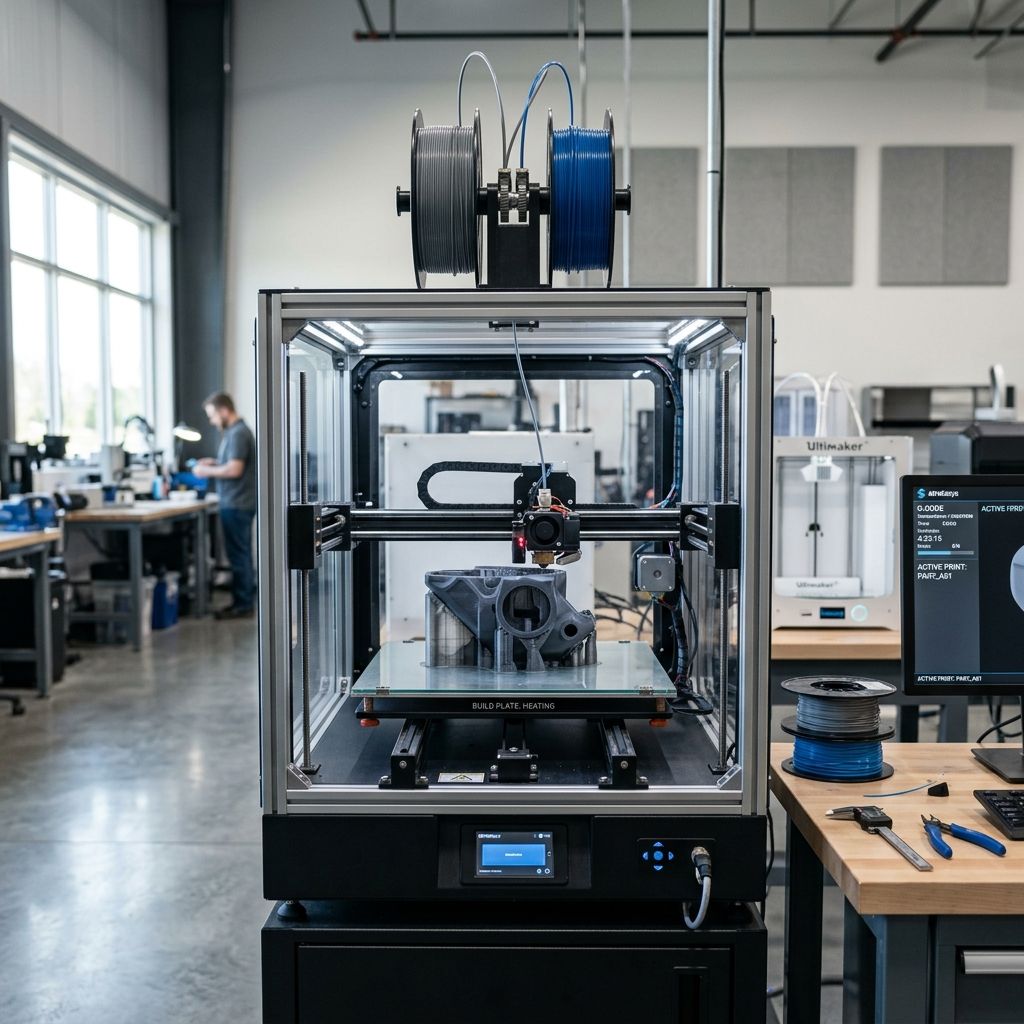
Prusa MK4S vs MK4: A Hands-On Buyer's Guide
After two decades with FDM printers, I compare the Prusa MK4 and MK4S. Learn about the Nextruder gearbox failures, belt tension quirks, and thermal soak issues you won't see in the marketing. Practical advice for buyers.