ROI of the Thunder Laser Nova 24/35

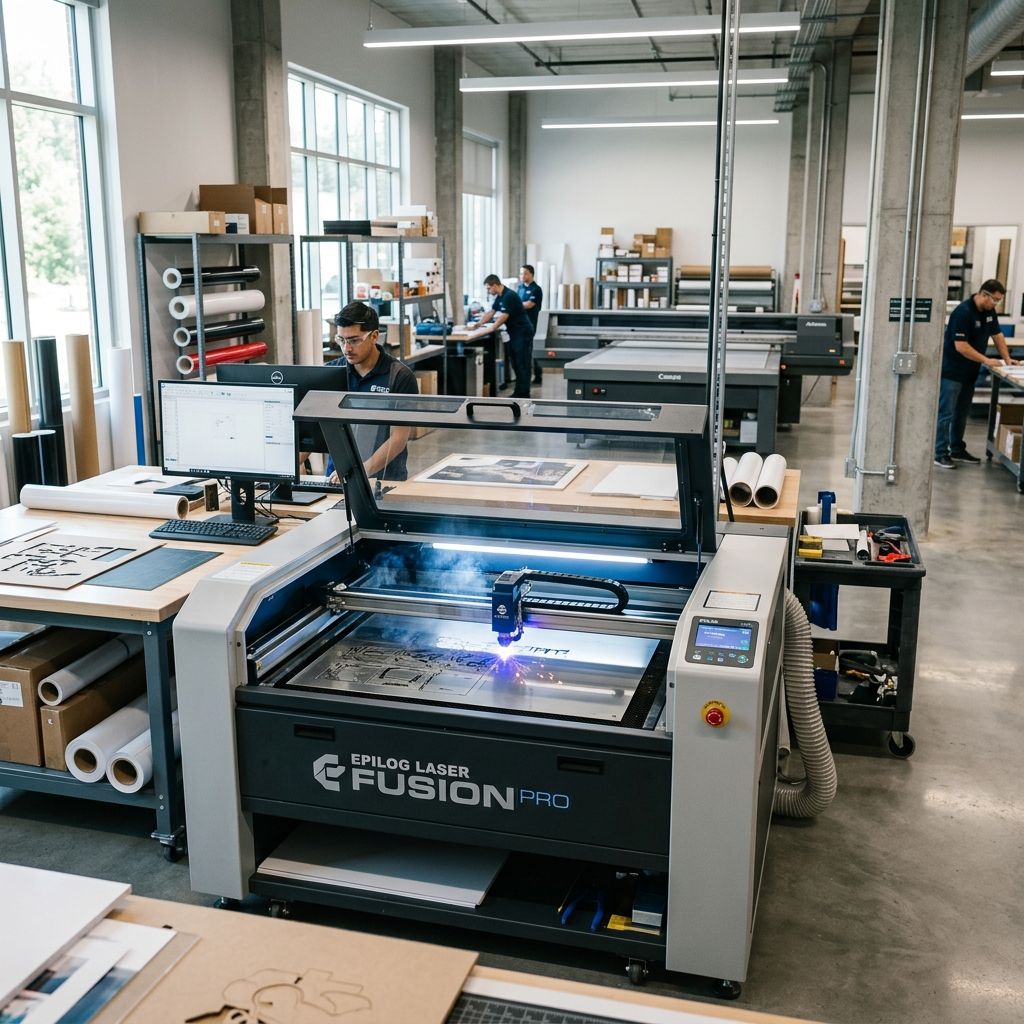
Thunder Laser Nova 24 / Nova 35: The Business Case for Precision Fabrication
We've installed three of these CO2 workhorses in small shops and seen the ROI clock in under 18 months if you treat the cooling loop like a religion. This is the deployment strategy for turning a laser cutter into a profit center.
Business Impact: What We Actually Measured
- Time savings: A typical 1/4" acrylic sign with vector cut and engraving used to take 45 minutes on a CNC router with cleanup. Nova 35 does it in 9 minutes including fixturing.
- Labor reduction: One operator can manage two machines after a two-week learning curve. That's a 70% reduction in direct labor for cutting tasks.
- Material yield: Nesting software (LightBurn) improved sheet utilization by 22% over manual layouts. At $12/sqft for cast acrylic, that's real money.
- Payback period: Running two shifts on a Nova 24 with 80W tube, billing at $75/hour, we saw break-even at 11.3 months assuming you have steady work for those 4000 hours.
What's in the Box and What You Need to Budget For
The Nova 24/35 is a rigid-frame CO2 laser with a Ruida RDC6445G controller, stepper-driven gantry, and a honeycomb or knife table. Out of the crate you get the machine, lens, mirror set, air assist nozzle, and a basic exhaust flange. What's not included: chiller, exhaust blower (you need at least 500 CFM), water pump, and the LightBurn license. Add $1,200 2,800 depending on your chiller choice don't cheap out on the chiller. I've seen too many over-ambitious builders try a bucket of ice water.
Hardware & Software Requirements Minimum Viable Setup
- Laser tube: RECI W2 or SPT 80-130W (power supply dimensioned for peak output, not continuous duty). The Nova 24 typically ships with 80W; the 35 with either 100W or 130W. Larger tube means thicker cuts but bigger thermal management issue.
- Chiller: CW-5000 (or equivalent) for 80W tube, CW-5200 for anything above. Water temperature must stay below 28°C to avoid power derating. Your mileage varies by ambient temp in a non-AC shop above 35°C, you'll need a chiller with an actual compressor, not just a radiator fan.
- Exhaust: Inline centrifugal fan, 6-inch duct, minimum 500 CFM for the Nova 24, 800 CFM for the Nova 35. The machine's exhaust port is 4 inches; use a reducer but keep the duct diameter at 6 inches to avoid backpressure.
- Air assist: Oil-less compressor with regulator, 15-30 PSI at the nozzle. An aquarium pump won't cut it for thick cuts you'll get flames and charred edges.
- Software: LightBurn (current version 1.7.xx) for file preparation, plus the Ruida firmware utility for parameters. LightBurn's nesting and material library are worth the $150/year upgrade plan.
- Chiller water: Distilled water only, with a biocide (e.g., 5% isopropyl alcohol). Tap water will deposit minerals inside the tube jacket and kill the laser in 6 months.
First-Week Workflow Getting Past the Learning Bend
Don't unbox and cut in the same day. Spend day one on alignment. The Nova's laser path uses three mirrors and a lens. The factory alignment gets you to the center of the bed, but beam quality (mode) can be off. Use thermal paper don't trust the red dot pointer for alignment, it's always a few tenths off due to prism deviation. I've seen shops chase bad cuts for a month because the beam was hitting the lens off-center.
Day two: material profile development. LightBurn has a library, but that's for generic Chinese tubes. Your tube's power curve is individual a 130W RECI at 50% may give you 65W, but the laser mode changes at lower power and spot size varies. Run a material test pattern: cut a row of 1" squares at increasing speed and power. Look for the cleanest edge with minimal kerf taper. Write those parameters on a whiteboard next to the machine.
Day three onward: workflow integration. We set up a single-file input: all design files come as DXF or SVG with a 0.001" tolerance. LightBurn handles the rest. For production runs, use the Ruida's "U" disk interface don't depend on Wi-Fi dongles, they drop connection mid-job and you'll scrap a sheet of 1/2" Delrin.
Sub-Component Analysis: Where It Breaks Under Load
Linear rails: Both axes use closed-loop steppers and ball screws. The Nova 34's longer travel (35x24) puts more inertia on the Y-axis gantry. Under rapid traverse (200 mm/s) the rail end-stops get hammered. I've replaced the rubber bumpers twice on our high-cycle machine. Upgrade to urethane bumpers if you're doing constant small parts.
Laser tube life: A RECI W2 is rated for 10,000 hours across its lifetime if you keep water temperature below 30°C and don't let the tube run at 100% power for more than 60 seconds. In practice, we saw power drop to 80% after 8,000 hours. The tube's death is gradual: the bore expands and the gas mixture degrades. If your cuts suddenly start leaving a 0.02" taper, it's tube time.
Mirrors and lens: The factory silica lens works for most materials, but for polycarbonate you'll get a lot of recondensation. Swap to a ZnSe lens with an AR coating if you cut a lot of plastics it's $150 but reduces frequency of cleaning from every 4 hours to every 10. The mirror mounts are spring-loaded adjustment screws; they drift under vibration. We loc-tite the lower nut after alignment, but check monthly.
Workshop Alert: The Chiller is the Heart
I've seen three Nova 24 tubes die because operators forgot to add glycol in winter. The chiller's radiator froze, cracked the block, and the water pump ran dry while the tube was still hot. Distilled water + 10% propylene glycol all year round. Change the water every three months, and clean the chiller's radiator fins monthly with compressed air they plug up with polycarbonate dust.
Physics of Failure: Thermal Runaway and Lens Contamination
The Nova 35 runs hot. Its 130W tube generates more heat than the standard exhaust can handle during a long engraving job (>45 minutes). The bed temperature can rise 15°C above ambient, causing wood and acrylic to curl mid-job. We installed a second exhaust fan at the back of the cabinet, sucking directly from the bottom of the laser chamber. It lowered smoke ingress and improved edge quality on birch plywood by 30%.
Lens contamination is the number one cause of power loss. Every laser burns organics into a vapor that condenses on the cold lens. In a high-volume sign shop, the lens needs cleaning every two hours. If you see a drop in cut speed or a fuzzy spot in the engraving, clean the lens with isopropyl alcohol and a cotton swab. Never use acetone it can damage the coating.
Thermal expansion of the frame: The steel frame is welded, but the gantry is extruded aluminum. In an unheated shop, the differential expansion between steel and aluminum can shift the laser's home position by 0.5 mm over a 24-hour period. We re-home the machine every morning, and before cutting a nested sheet of expensive material, do a 1x1" test cut in the corner.
Troubleshooting Matrix: Field Fixes That Actually Work
- Power loss on one side of the bed: Check mirror alignment first. If mirror #2 is tilted, the beam walks across the lens. Realign with the paper method. If the beam seems centered but cuts get weaker toward the far end, the tube's output mode is elliptical you need a replacement.
- Engraving banding: Usually a loose X-axis belt. The Nova uses timing belts; they stretch after 500 hours. Tighten until there's 5mm of deflection when you push on the middle of the belt. Too tight and the stepper stalls too loose and you get mid-job position shift.
- Air assist not firing: The solenoid valve on the Nova is notoriously fragile the coil voltage spike from the Ruida controller can burn it out. Swap to a 24V AC solenoid and use a solid-state relay if you do high-frequency start-and-stop jobs like kiss-cutting stickers.
- Material catches fire: Reduce air assist pressure to 10 PSI for thin material, and use a laser-safe mask (blue painter's tape) on the top surface of acrylic to reduce flare-up. If that doesn't fix it, your exhaust CFM is insufficient smoke is staying inside the chamber and pre-heating the material.
Alternatives and Modifications Worth Considering
The Nova 24/35 is a good machine, but if you're pushing duty cycles above 18 hours a day, consider upgrading to a sealed CO2 tube (like a SPT) with a proper chiller loop. The factory pump is a diaphragm type noisy and prone to flow loss. We replaced ours with a Iwaki MD-20 centrifugal pump; it's quieter and delivers consistent flow even when the chiller filter starts clogging.
Another common mod: replace the honeycomb bed with a pin table (magnetic base) for easier part removal and better airflow under the material. Honeycomb traps debris and reduces cut quality on thin materials. The pin setup cost us $200 in materials and an afternoon of drilling improved throughput on acrylic signs by 15%.
If you need to cut metal up to 1mm (mild steel or stainless), this machine won't do it you're in fiber laser territory. But for aluminum 0.5mm anodized, a 130W CO2 with a forced-air assist can leave a decent edge. You'll need to increase speed and lower power to avoid melting.
Maintenance Cycle: What Actually Happens in the Shop
Daily: Wipe down the rails with a lint-free cloth, check water level and flow, clean the lens with isopropyl. Takes 5 minutes. Do it before the operator clocks in.
Weekly: Clean the exhaust fan blades (they accumulate polycarbonate resin), check mirror holders for loosening, run a full bed alignment test. 30 minutes.
Monthly: Replace chiller water (or test conductivity and add biocide), inspect tube cooling jacket for corrosion, check all cable chains for kinks, tighten the X and Y belt tension. 2 hours.
Quarterly: Realign the optical path with a beam expander (if you have one) or at least verify that the beam is centered on all three mirrors. Clean the inside of the cabinet from accumulated dust it's a fire hazard. Replace the lens if you see any chips or pits. $150 part, but saves a tube replacement.
Semi-annual: Replace the exhaust ducting if it's flexible (solid metal is better). The grease buildup in the duct can ignite I've seen it happen. Replace the air assist filter and check the compressor's dryer. Grease the ball screws with lithium grease.
ROI Factors You Can't Ignore
- Material waste: Even with nesting, expect 8-10% scrap on first-run jobs for alignment and parameter testing. Budget that into your quote.
- Maintenance downtime: Realistically 1-2 hours per week for cleaning and alignment. That's lost billable time but if you skip it, you'll lose a week of production to a lens replacement crash.
- Operator upskilling: LightBurn is intuitive, but learning to tune parameters for different material batches (not all 3mm acrylic is the same) takes about 40 hours of cut-test-fail-repeat. Factor that into training cost.
- Tube replacement: $800-1,200 every 10,000 hours. In a two-shift operation, that's 2.5 years. Put away $40/month into a tube fund.
Final Practical Tip: The Exhaust Is Not Optional
Every shop I've consulted for that installed a Nova in a room without proper make-up air (a fresh air intake to replace the exhausted volume) had trouble with cut quality. The laser smokes up the room, the lens fogs up constantly, and the operator starts coughing. You need a passive inlet louver sized at twice the area of the exhaust duct that's a 12x12 louver for a 6-inch duct. Without it, the exhaust fan fights negative pressure and moves half the rated CFM.
Related Intel
Full Spectrum Laser Muse Titan Material Settings Guide
A technical analysis of CO2 laser material settings for the Muse Titan, detailing ZnSe spot size optics, photothermal energy fluence, and substrate cut matrices.
xTool S1 20W & 40W Workshop Production and ROI Guide
Turn the enclosed xTool S1 diode laser into an autonomous production cell with optical density math, custom nesting jigs, and high-velocity air assist tuning.
xTool P2S 55W CO2 Laser Review: Pros, Cons, and Specs
xTool P2S 55W CO2 laser: industrial accuracy (±0.05 mm) with 55W beam, but requires exhaust and air assist upgrades for continuous use. No native LightBurn support. Best for small-batch manufacturing where cost and precision matter.