Choosing Ribbons and Labels for Zebra ZT610/ZT620

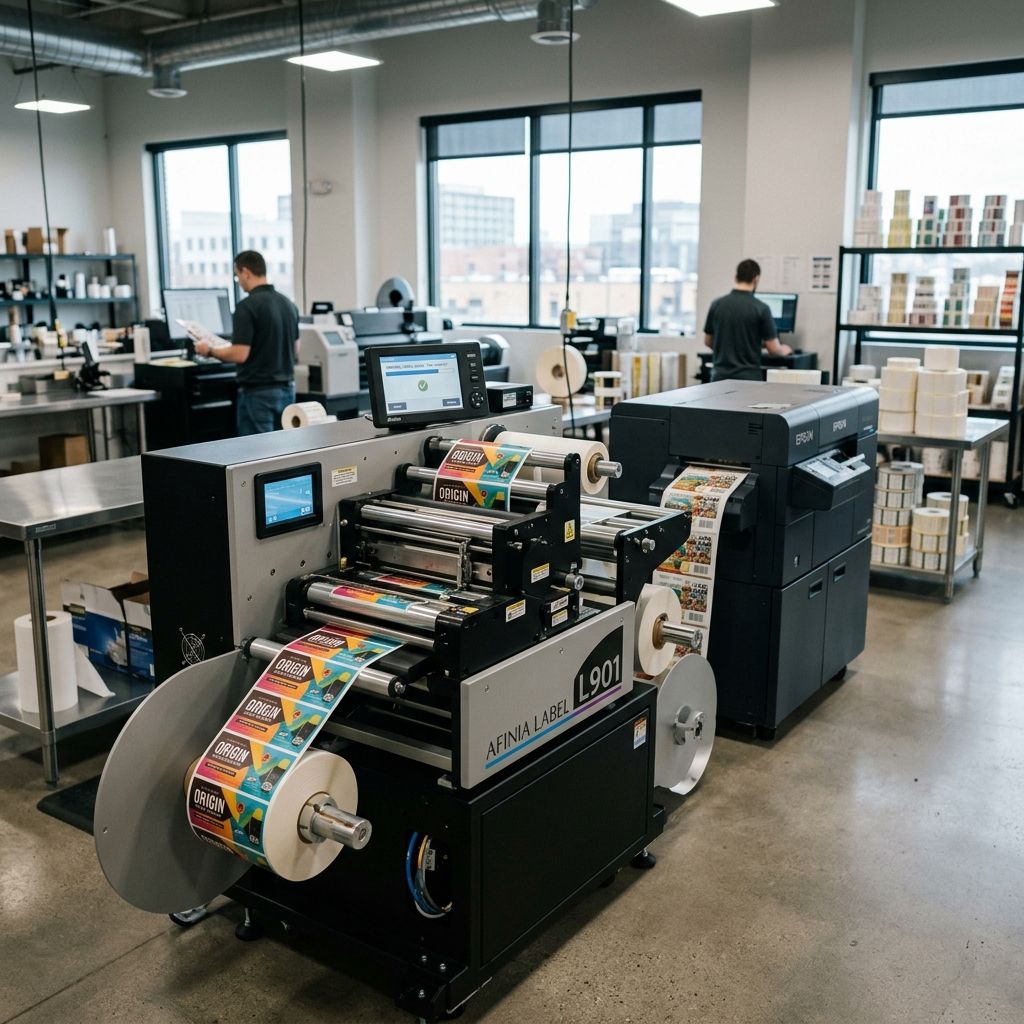
Zebra ZT610/ZT620: Material Science for Industrial Label Printers What Actually Works on the Shop Floor
Forget the glossy brochure specs. After a decade of pushing these printers through three-shift production runs in auto parts, chemical drums, and logistics warehouses, the material stack matters more than the driver firmware. Let's talk about what ribbon, face stock, and adhesive chemistry survive the real world and what fails in the first two weeks.
Executive Material Science Notes
Core architecture: The ZT610/620 is a thermal transfer / direct thermal printer with a 203/300/600 dpi printhead, swing-arm mechanism, and adjustable peel-off module. The material science challenge is managing the tribology between ribbon, media, and heated ceramic printhead while maintaining adhesion at 40 60°C platen temperatures.
Key parameter linkage: Ribbon melting point → printhead temperature → dot sharpness. Paper label surface energy → adhesive wetting. Polyimide thermal expansion → registration drift. All interconnected.
Use our Flow Rate Calculator (yes, it's for 3D printing, but the thermal transfer analogy holds adjust for ribbon melt flow) to estimate ribbon consumption per label.
Thermal Transfer vs. Direct Thermal The Real Trade-Off
Direct thermal is fine for shipping labels that die in a week. But if you're printing asset tags that need to survive solvent wipe-downs or 80°C engine bays, thermal transfer with a resin ribbon is non-negotiable. The ZT620's 600 dpi option lets you print crisp QR codes at 4mm but only if your ribbon doesn't feather. I've seen wax-resin ribbons fail at the third rewind because the coating oxidises. The printer's firmware can't fix that.
Ribbon Materials: The Chemistry That Hits the Printhead
Three families dominate industrial work:
- Wax (e.g., Zebra 5095, 5000): Low cost, low durability. Soft enough to transfer at 15 20 mm/s. Good for corrugated box labels. The wax smudges above 50°C.
- Wax/Resin (e.g., Zebra 5175, 8000T): A compromise. The wax provides the carrier, the resin (usually a coumarone-indene or rosin ester) boosts heat and scratch resistance. I've tested a batch from a Chinese OEM that delaminated from the backcoat after six months in a heated warehouse.
- Resin (e.g., Zebra 5095R, Brady R4400): Full synthetic polyurethane, polyester, or acrylic. High melting point (100 130°C), resists chemicals, UV, and abrasion. The trade-off: higher printhead wear if not matched with a hard backcoat. ZT610/620's ceramic head can take it, but I've had to replace heads after 150km of resin printing at 6 ips.
Label Facestocks: The Substrate That Carries the Print
The ZT610/620 feeds top-of-roll or bottom-of-roll, but the real limit is the liner. A paper label with a 2-mil BOPP liner might jam on the peel bar if humidity swells it. For industrial use, the common facestocks are:
- Coated paper (C1S/C2S): Cheap, good for short-term indoor. Tears easily.
- Polyester (PET): 1 3 mil thick, dimensionally stable, resists water and mild solvents. Must use resin ribbon wax won't bond.
- Polyimide (PI / Kapton): For high-temp (250°C+). Expensive. Requires high-energy ribbon (resin) and high printhead temperature 30 35° on the ZT620. The thermal expansion mismatch between PI and the adhesive can cause curl. I've had to pre-heat the platen to keep registration.
Adhesive Chemistries The Hidden Failure Point
The ZT610/620's liner rewind and peeler module place high stress on the adhesive joint. Common failures:
- Acrylic emulsion (water-based): Low initial tack, but high ultimate bond. Fails below 0°C.
- Rubber-based hot melt: High tack, high shear. But bleeds through thin paper labels over time.
- HT (High Temperature) adhesives crosslinked silicone or acrylic: Used for electronics reflow. Must be applied with a resin ribbon and a topcoat otherwise the adhesive outgasses and the print reads voids.
I once had a customer switch from a rubber hot-melt to a silicone HT adhesive without changing the ribbon the resin ribbon's backcoat reacted and peeled off the printhead after 500 labels.
Compatibility Table: Ribbon + Facestock + Adhesive Field Performance
- Wax / Coated Paper / Rubber HM Stockroom labels 12-month life indoor No issues
- Wax-Resin / Polyester / Acrylic Chemical drum labels 2 years outdoor Edge lift after 18mo
- Resin / Polyimide / HT Silicone PCB reflow labels 260°C resistance Printhead wear = 2x
- Resin / Polyester / Rubber HM Medical device IPA wipe resistance Good
- Wax / Polyimide / HT Silicone NOT RECOMMENDED Wax melts before adhesive cures Delamination on reflow
Physics of Failure: Why Printheads Die and Labels Smear
The ZT610/620 printhead is a ceramic substrate with a protective glass layer, then a resistive element (usually TaN or TaAl). The abrasive wear on the glaze comes from the ribbon's backcoat particles and the paper's surface roughness. Rule of thumb I use:
Abrasive wear rate W = k * (P * V) / H
where W = wear depth (mm), k = wear coefficient (depends on ribbon backcoat), P = printhead pressure (N), V = printing speed (m/min), H = head hardness (MPa). For wax ribbons, k ~ 3e-6; for resin ribbons, k ~ 8e-6. At 6 ips (9 m/min) and 5N pressure, a resin ribbon wears the head 2.5x faster. That matches my log a ZT610 head lasted 180 km with wax, 72 km with resin.
Thermal soak also causes dot distortion. After 100 continuous labels at 30°C ambient, the printhead temperature can rise 15°C, causing the ribbon to over-transfer and produce feathering. The ZT620's fan helps, but I've added a small desk fan pointed at the head for long runs.
Maintenance Workflow (Every 10,000 Labels)
- Power off, disconnect ribbon supply. Use lint-free wipe wetted with 99% IPA avoid acetone on the head glaze.
- Clean the platen roller: paper dust and adhesive buildup cause slip. Use a roller cleaning pen or IPA. Replace platen if you see flat spots.
- Check the tear bar: burrs from thermal expansion can shred liners. File smooth with 1000-grit sandpaper.
- Lubricate the peel roller bearings (white lithium grease). The ZT620's swing arm can bind if not greased every 20k cycles.
- Run a test print at 4 ips, then at 8 ips. Look for voids at high speed indicates printhead element failure or ribbon tension too low.
Troubleshooting Matrix
| Symptom | Likely Root Cause | Field Fix |
|---|---|---|
| White voids in solid black | Printhead element burnt or ribbon wrinkle | Element check: print pattern at 203 dpi. If vertical line missing, replace head. Ribbon: reduce tension or change roll. |
| Ghosting (faint duplicate image) | Ribbon static charge or high rewind tension | Install antistatic brush; reduce rewind torque in printer settings. |
| Adhesive residue on peel bar | Adhesive too aggressive for liner | Switch to siliconized liner; or apply silicone spray on peel bar (light, no overspray). |
| Labels not peeling at feed | Peel sensor misaligned or vacuum weak | Re-index sensor after cleaning dust from sensor lens. Check vacuum pump on ZT620. |
Frequently Asked Questions
Can I use a wax ribbon on polyimide (Kapton) labels for a batch run?
Technically yes, but don't expect any chemical or heat resistance. Wax melts at 70°C, so the print will smear the moment the label hits a reflow oven. Use a resin ribbon with a hard backcoat your printhead will last longer.
What ribbon type gives the best adhesion on recycled paper face stocks?
Recycled paper has higher surface roughness and residual short fibers. A wax-resin blend (50/50) fills the fibers better than pure wax. I've had good results with Zebra 5175 on 60% post-consumer waste stock.
How often should I replace the platen roller on a ZT610?
Every 50,000 labels if using wax; every 30,000 with resin (more abrasive). Measure the roller diameter new is 1.5 inches (38.1 mm). If it's below 37 mm, the rubber is compressed and will cause slip. I replace at 36.5 mm.
Why do my labels curl after printing in high humidity?
Moisture absorption in paper and gum adhesive. The face stock expands, but the liner (BOPP) doesn't, causing curl. Switch to a polyester facestock or store media in a climate-controlled area (20°C, 50% RH). The ZT620's internal heater can help, but it's marginal.
Tech Alert: Ribbon Wrinkles at High Speed The Real Fix
If you see diagonal wrinkles in the ribbon after the printhead, it's not the printer it's the ribbon core's inside diameter tolerance. Aftermarket ribbons often have cores that are 0.3 mm under spec, causing the ribbon to wobble on the spindle. Measure the core ID: should be 25.4 mm (1 inch). If it's loose, wrap the spindle with Kapton tape to build up thickness. That fixed a $3,000 service call in my shop.