Industrial Reliability: Optimizing the Bambu Lab X1-Carbon
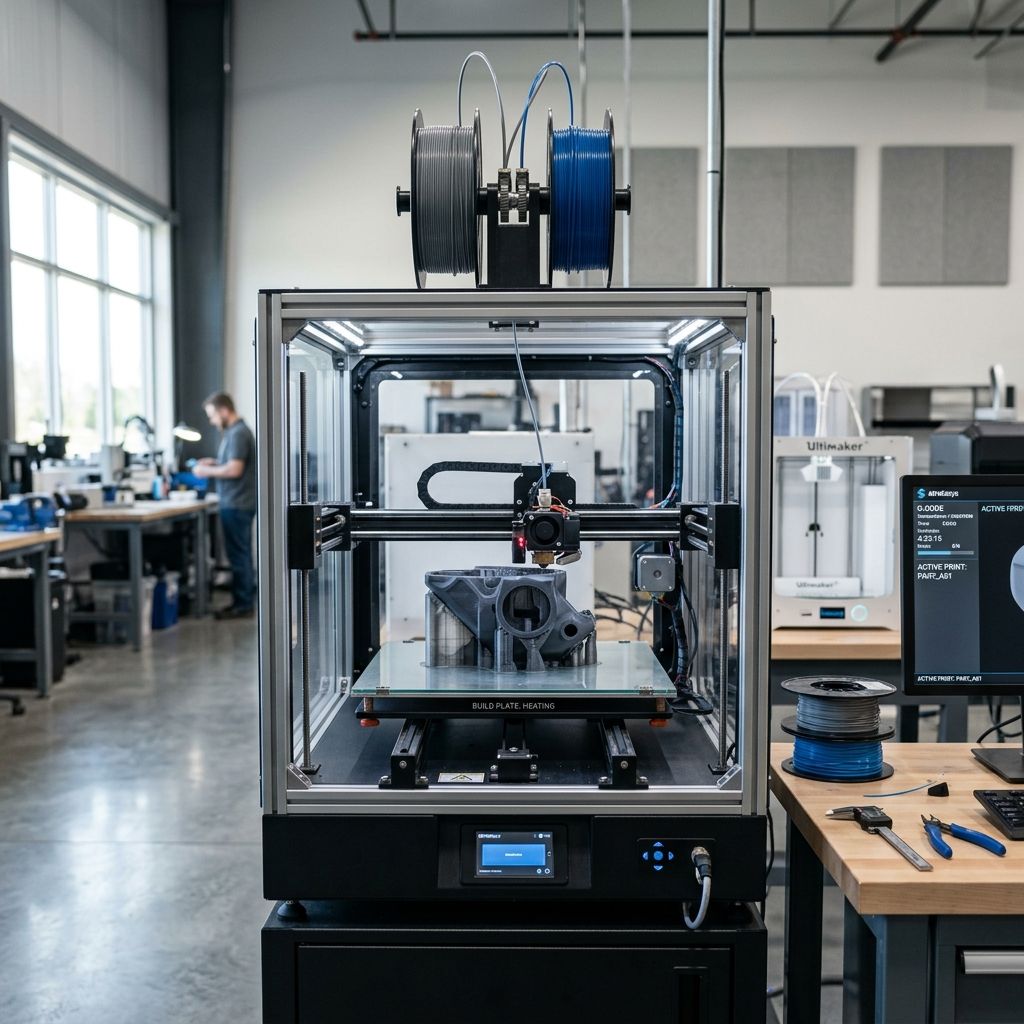
Industrial Reliability: Optimizing the Bambu Lab X1-Carbon
Problem Definition: While the Bambu Lab X1-Carbon is celebrated for its "out-of-the-box" readiness, transitioning the platform into a high-uptime industrial environment requires more than standard consumer maintenance. The Reddit community often highlights "Dry your filament" or "Clean your bed" as top-tier advice—which is true—but for the industrial engineer, the challenge lies in Mean Time Between Failures (MTBF), dimensional repeatability across multi-unit fleets, and thermal management of engineering-grade polymers like PA-CF or PPS.
Strategic Summary: This advisory focuses on the three pillars of industrial FDM stability: Kinematic Rigidity, Advanced Thermal Equilibrium, and Precision Extrusion Calibration. By implementing these professional-grade workflows, you move beyond "successful prints" to "statistically significant manufacturing."
As a Senior Industrial Support Engineer, I have observed that the biggest hurdle in adopting high-speed CoreXY systems like the Bambu Lab X1 series is the psychological shift from "tinkering" to "process control." The Reddit community's emphasis on shared knowledge is the cornerstone of this industry. However, to truly leverage the X1-Carbon for professional output, we must translate "tips" into "Standard Operating Procedures" (SOPs).
1. Kinematic Integrity and Resonance Management
The X1-Carbon operates at accelerations up to 20,000mm/s². At these speeds, any mechanical play is magnified into surface artifacts or dimensional inaccuracies. While the printer performs an automatic resonance compensation (input shaping), this is a software bandage for mechanical state. To maintain industrial tolerances, one must ensure the hardware is physically optimized before the software takes over.
- Belt Tension Equalization: Don't just rely on the spring tensioners. Periodically move the toolhead to the rear-center, loosen the tensioning screws, and manually verify that both belts have a similar acoustic pitch (approx. 60-70Hz over a 150mm span) to ensure the CoreXY geometry remains square.
- Carbon Rod Maintenance: Unlike traditional linear rails, the X1’s carbon rods must never be greased. Use 99% Isopropyl Alcohol on a lint-free cloth to remove micro-particulates of carbon and filament dust. Greasing these rods creates a grinding paste that will prematurely ovalize the bushings.
- Pulley Alignment: Inspect the idler pulleys for "black dust" accumulation, which indicates belt rubbing. Re-aligning the belt path can reduce the motor load and decrease VFA (Vertical Fine Artifacts) in high-visibility parts.
CRITICAL WARNING: Never use WD-40 or petroleum-based lubricants on the internal components of the X1-Carbon. These can degrade the plastic enclosures and attract abrasive particulates. Use only high-purity PTFE-based grease for the lead screws and keep it away from the belts.
2. Thermal Equilibrium for Engineering Polymers
The Reddit community correctly identifies that "warping" is the enemy of large prints. Industrially, we view this as a failure of thermal equilibrium. When printing with Carbon Fiber reinforced Nylon (PA-CF) or Polycarbonate (PC), the delta between the nozzle temperature (280°C+) and the chamber temperature is the primary driver of internal stress.
To optimize for industrial reliability, you must manage the "Chamber Heat Soak." For critical parts, preheat the bed to 100°C and run the chamber fan at 10% for 30 minutes before starting the print. This stabilizes the aluminum frame and the carbon rods, preventing "z-drift" that occurs when the machine expands during the first hour of a long print. Furthermore, for high-temp materials, ensure the top glass is sealed or insulated; even a small draft can cause a 5°C localized drop, leading to delamination in technical filaments.
3. Precision Extrusion and the LIDAR Fallacy
The Bambu Lab LIDAR is a revolutionary tool for consumer ease, but for industrial repeatability, Manual Flow Calibration (K-Factor) is superior. The LIDAR can be fooled by the texture of the build plate or the reflectivity of certain filaments (especially silk or high-gloss materials).
- Pressure Advance (Flow Dynamics): Perform a manual "Line Method" or "Pattern Method" calibration for every new batch of filament. Save these values in your slicer profile rather than relying on the "Auto-calibrate" feature at the start of every print. This ensures consistency across a 10-printer fleet.
- Volumetric Flow Limits: The X1 can melt plastic faster than it can reliably bond it. For industrial parts requiring maximum interlayer strength, cap your volumetric flow at 75% of the "max" suggested by the slicer. This ensures the polymer chain has sufficient time to entangle at the molecular level.
- Nozzle Life Cycles: If you are running abrasive materials (CF/GF), treat the hardened steel nozzle as a consumable with a 500-hour lifespan. Beyond this, the internal geometry of the orifice degrades, leading to inconsistent back-pressure and "unexplained" stringing.
4. The AMS and Moisture Management SOP
The Reddit giveaway post mentions the AMS (Automatic Material System), which is often viewed as a convenience tool for multi-color printing. In an industrial setting, the AMS is a Material Management System. The best advice from the community—"Dry your filament"—is only half the battle. You must maintain that dryness during the 48-hour print cycle.
Replace the stock desiccant in the AMS with high-capacity activated Alumina or Silica gel beads in 3D-printed containers that fit the front gaps. Monitor the internal humidity via the sensor; if it rises above 15% RH, your engineering filaments are already degrading. For hygroscopic materials like PVA (support) or PA6, the AMS should be treated as a temporary staging area, not a long-term storage solution. Always return spools to vacuum-sealed bags with fresh desiccant if the machine will be idle for more than 24 hours.
Conclusion for the Industrial User: Success with the Bambu Lab X1-Carbon in a professional capacity is built on the foundation of the community's collective wisdom, refined by rigorous engineering standards. By focusing on mechanical symmetry, thermal stability, and manual calibration overrides, you transform a high-speed consumer printer into a reliable production asset capable of delivering high-performance end-use parts.