How to Use a Multi-Grit Sandpaper Pack (120-5000)

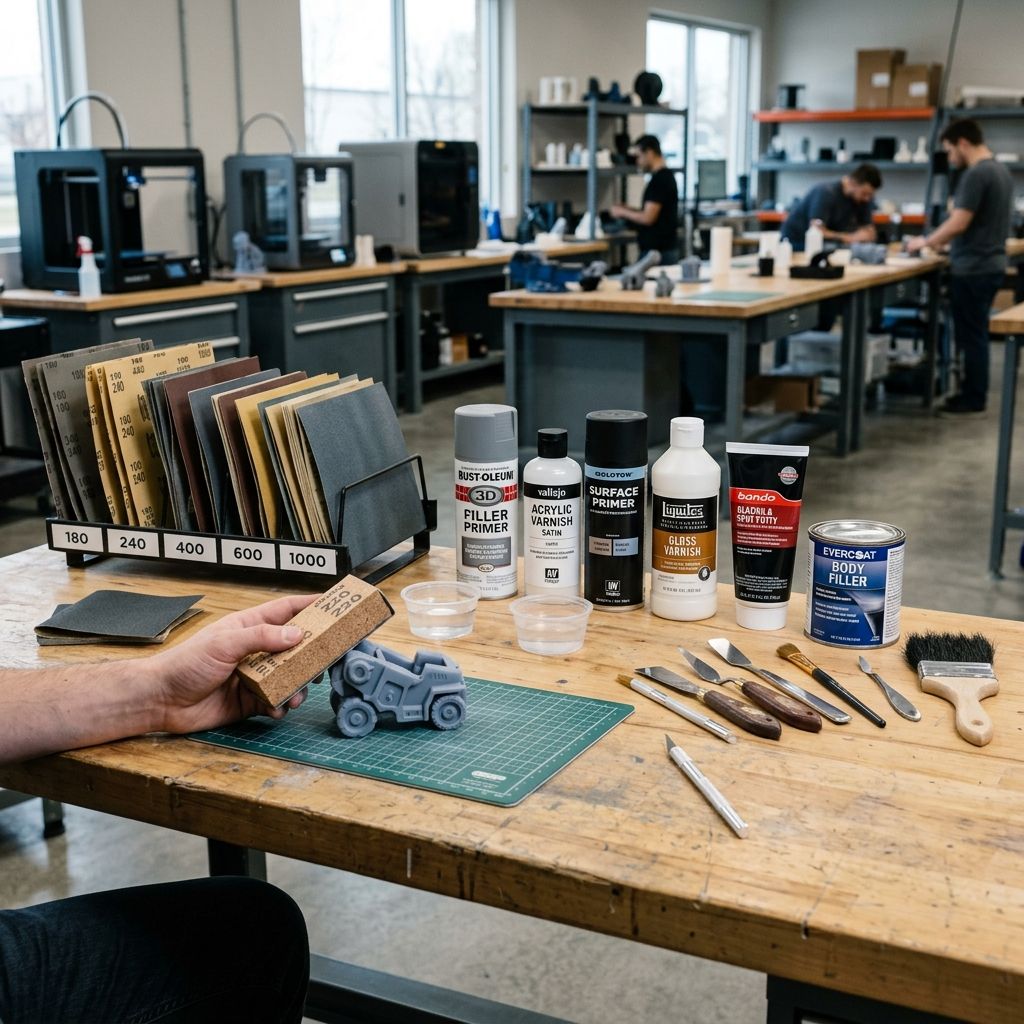
The Grit Stack: Why You Need Each Grade and How to Use It Without Wasting Time
120, 240, 400, 600, 800, 1200, 2000, 3000, 5000 nine grits in a single pack. If you're using only the coarse end or jumping straight to 5000 without a plan, you're burning time and paper. I've spent two decades on shop floors smoothing everything from injection-molded ABS to carbon-fiber layups, and this cheap multi-pack is either a finishing toolbox or a shelf ornament depending on how you stack the grits. Let's talk real abrasion physics, common mistakes, and the exact workflow that turns a rough surface into a mirror.
Field Highlights Sandpaper Multi-Pack (120 5000 Grit)
- Grit range coverage: 120 for heavy removal, 240 400 for smoothing, 600 1200 for fine finishing, 2000 5000 for polishing.
- Abrasive materials: Silicon carbide (most common in multi-packs), sometimes aluminum oxide on coarse grits. Silicon carbide fractures sharper, good for hard materials; aluminum oxide lasts longer on soft stuff.
- Backing: Usually paper (A-weight for fine grits, C-weight for coarse). Cloth-backed versions exist but are rare in consumer packs.
- Real-world wear: Coarse grits load fast on plastics and soft metals. Fine grits tear if you apply too much pressure. Expect 2 3 square feet per part on a medium-sized hand-sanding job.
- Storage sensitivity: Humidity causes the adhesive to degrade. Keep sealed in a dry box shop temperature swings are fine, but direct moisture kills the bond.
Use our Print Speed Calculator to optimize surface finish by adjusting layer height then use this sandpaper for the real work.
Grit Selection Logic: Not a Linear Scale
Most people think sanding is a straight line: start coarse, go finer, done. That's only half true. The real trick is that each grit must completely remove the scratches from the previous grit. The deeper the scratch from the coarse grit, the more time you need with the next grit. A rule I've used for years: double the grit number for the next step if you're impatient; triple it if you want a perfect finish in fewer passes. Going from 120 to 240 is a 2× jump. From 240 to 400 is ~1.7×. That's fine for wood and soft plastics. For hardened steel or glass-filled nylon, you want a smaller jump 120 → 180 → 240 → 320 → 400, etc. The multi-pack gives you 120, 240, 400, 600, 800, 1200, 2000, 3000, 5000 that's a step sequence of roughly 2×, 1.7×, 1.5×, 1.3×, 1.5×, 1.7×, 1.5×, 1.7×. Works fine for most materials. But if you try to skip from 120 to 400, you'll be sanding for an hour with the 400 trying to erase deep gouges. Trust me, I've watched apprentices do it. Don't.
Abrasive Breakdown: Silicon Carbide vs. Aluminum Oxide
Open the pack and look at the color. If it's dark gray to black, it's silicon carbide. If it's brown or reddish, it's aluminum oxide. Most multi-packs use silicon carbide because it's cheaper and cuts cooler on hard surfaces. But here's the catch: silicon carbide fractures more easily, so it wears faster on soft materials. For sanding PLA, PETG, or polycarbonate, aluminum oxide would last longer, but you rarely get it in a wide-grit pack. So plan on replacing sheets frequently for plastics. For metal finishing or paint prep, silicon carbide is fine it exposes fresh sharp edges as it breaks. I've also seen packs with "zirconia alumina" on coarse grits that's rare but worth keeping an eye out. It's aggressive and self-sharpening, good for high-pressure applications.
Physics of Failure: Why Sandpaper Stops Cutting
Three failure modes: loading, glazing, and shedding.
- Loading the swarf (dust) fills the gaps between abrasive grains. The paper becomes smooth, no cut. Common on plastics, especially if you don't use a lubricant (water or mineral spirits). Rule of thumb: If you see a shiny layer on the paper, it's loaded. Tap it, brush it, or rinse it.
- Glazing the abrasive grains themselves become dull, usually from excessive heat or pressure. The paper looks the same but doesn't scratch. Happens on hardened metals and glass. Only fix is a fresh sheet.
- Shedding the bond between grain and backing fails. You see bare spots. Caused by heat, moisture, or cheap adhesive. If you see grain coming off on your workpiece, stop that grit is now acting as a lapping compound and will scratch deeper.
A practical workshop calculation: Material removal rate (mm/min) ∝ (grit size × pressure × speed) / (material hardness). Grit size is the average particle diameter in microns. For 120 grit, that's about 125 µm. For 2000 grit, it's 10 µm. So 120 grit removes roughly 12× more material per pass at the same pressure and speed. That's why you burn through fine grits if you press hard you're not removing more, you're just heating the paper and tearing it. Keep light, even pressure on fine grades.
Maintenance Workflow: The Five-Stage Sanding Walk
This is the sequence I teach on day one of any finishing course. Works for 3D prints, wood, metal, and composites. Adapt the starting grit based on your surface roughness. For FDM prints with 0.2 mm layer lines, start at 120. For finer layers (0.08 mm), start at 240.
- Coarse shaping (120 240). Sand in one direction only (e.g., along the layer lines) to remove obvious defects. Don't oversand or you'll create low spots.
- Medium smoothing (400 600). Change direction 90° from the previous grit. This reveals scratches left behind. The goal is to eliminate all deeper scratches.
- Fine finishing (800 1200). Dust becomes very fine. Use a light touch. At this stage, you're not removing material, you're refining the scratch pattern to a haze.
- Pre-polish (2000 3000). Wet sanding is almost mandatory here water carries away dust and cools the paper. The surface will start to look satin.
- Polish (5000). This is essentially micro-abrasion. You can use a polishing compound afterward, but 5000 grit alone can give a mirror finish on acrylics and polycarbonate. On PLA, it can create a slight gloss. Don't expect metal-like shine on soft plastics without a buffing wheel.
Always clean the workpiece between grit changes. I use a damp cloth then a tack cloth. A single 120 grit particle left on the surface will ruin your 5000-grit finish.
Troubleshooting Matrix
- Scenario 1: Paper tears after a few strokes on 120 grit. Likely cause: backing too light for the pressure. Solution: Use a sanding block to distribute load, or switch to a heavier duty sheet (A-weight is too thin for coarse work).
- Scenario 2: Fine grit (1200+) leaves deep scratches. The paper is contaminated with coarse grit particles from previous use. Solution: Never reuse fine sheets on different materials without thorough cleaning. Better yet, dedicate a sheet per grit and discard after first use.
- Scenario 3: Surface looks hazy after 5000 grit. The scratches are not all aligned you need to use progressively finer compounds or change direction each step. Also, check if the material is melting rather than abrading (common with PLA). Wet sanding reduces heat.
- Scenario 4: Loaded paper no cut on 240 grit. Rinse the paper in water and let dry. If that doesn't restore cut, it's loaded with resin from the plastic. Use a rubber cleaning stick or a stiff brush. In extreme cases, discard.
Technical Alternatives: Cloth Backing, Wet/Dry, and Micro-mesh
This multi-pack uses paper backing. Paper is fine for hand sanding and light machine use, but for orbital sanders or extended wet sanding, you want cloth-backed (J-weight or heavier). Cloth lasts 3 4× longer when wet. Also, some packs label "wet/dry" those use a waterproof resin bond. My test: hold a sheet under running water for 10 seconds. If the paper softens, it's not truly wet/dry. True wet/dry papers (like 3M Trizact or Norton) can be soaked for hours. I've seen cheap packs delaminate after one wet session. If you plan to wet sand frequently, buy dedicated wet/dry paper separately.
Another alternative: micro-mesh foam pads. They're essentially open-cell foam impregnated with abrasive. They don't load as fast and conform to curves. But they're pricier and wear out faster than paper. For flat surfaces, I stick with conventional paper.
Frequently Asked Questions
Can I skip grits to save time?
Only if you don't care about the final finish. Skipping one grit adds at least 50% more sanding time at the next grit trying to remove the deeper scratches. Test it yourself: sand a piece with 120, then directly use 800. You'll be there all day. Always follow the 2× rule or use a progressive sequence.
Why does my sandpaper load up immediately on PLA?
PLA has a low melting point. The friction heat softens the surface, and the molten plastic smears onto the abrasive. Solution: use a light touch at higher grits (400+), sand slower, and consider wet sanding with water to keep the paper cool. For heavy removal (120 240), use aluminum oxide if available it dissipates heat better than silicon carbide.
Is wet sanding better than dry?
For fine grits (1000+), wet sanding is significantly better it reduces heat, helps flush debris, and prevents loading. For coarse grits, dry is fine and you can see the cuts better. But if you're working with wood, be careful: wet sanding raises grain, requiring additional drying and re-sanding.
How many uses can I get from one sheet?
Depends on grit and material. Coarse grit on soft plastic: maybe 10 15 square inches before it loads. Fine grit on metal: 2 3 square feet if you're gentle. Once the paper stops cutting, replace it. Don't force it you'll just smear the workpiece.
Material-Specific Tips
Storage and Handling Protocol
Keep the pack in a sealed ziplock bag with a silica gel pack. My shop sees 80% humidity in summer paper backing can warp and the adhesive can fail in six months. If you live in a dry climate, fine. But I've pulled open packs that were stored in a damp garage and the 5000 grit sheets felt like cardboard. Also, don't fold the sheets the same way every time the crease weakens the backing. Roll them loosely or store flat.
When sanding, use a sanding block for flat surfaces your fingers will leave divots. For contours, wrap the paper around a foam pad or dowel. For inside corners, fold the paper into a sharp crease, but expect that fold to tear after a few passes that's normal.
Safety Checklist
Fine abrasive dust (especially from plastics and metals) is a respiratory hazard. Always wear a mask rated P100 or N100 when sanding dry. Even if the dust seems harmless, prolonged exposure can cause silicosis or lung damage from plastic particles. I also wear safety glasses I've had a fleck of glass-filled nylon bounce off a surface and hit my eye. That's a bad day.
For wet sanding, the water can get into the paper backing and cause it to disintegrate if left wet. Dry the papers immediately after use. Don't leave wet sandpaper in a pile it will bond together irreversibly.
Critical Torque Spec Dust Extraction Warning
Never dry sand without at least a shop vacuum with a HEPA filter, especially with fine grits (800+). The airborne particulates are small enough to bypass cheap masks and settle deep in your lungs. Set up an exhaust fan if you can. I've seen seasoned guys blow their noses after a day of sanding and produce gray mucus that's accumulated dust. Don't be that guy. Use a wet sanding method when possible, or at minimum, wear a respirator. Your lungs don't regenerate like sandpaper.