Fixing Shapr3D Precision and Export Problems

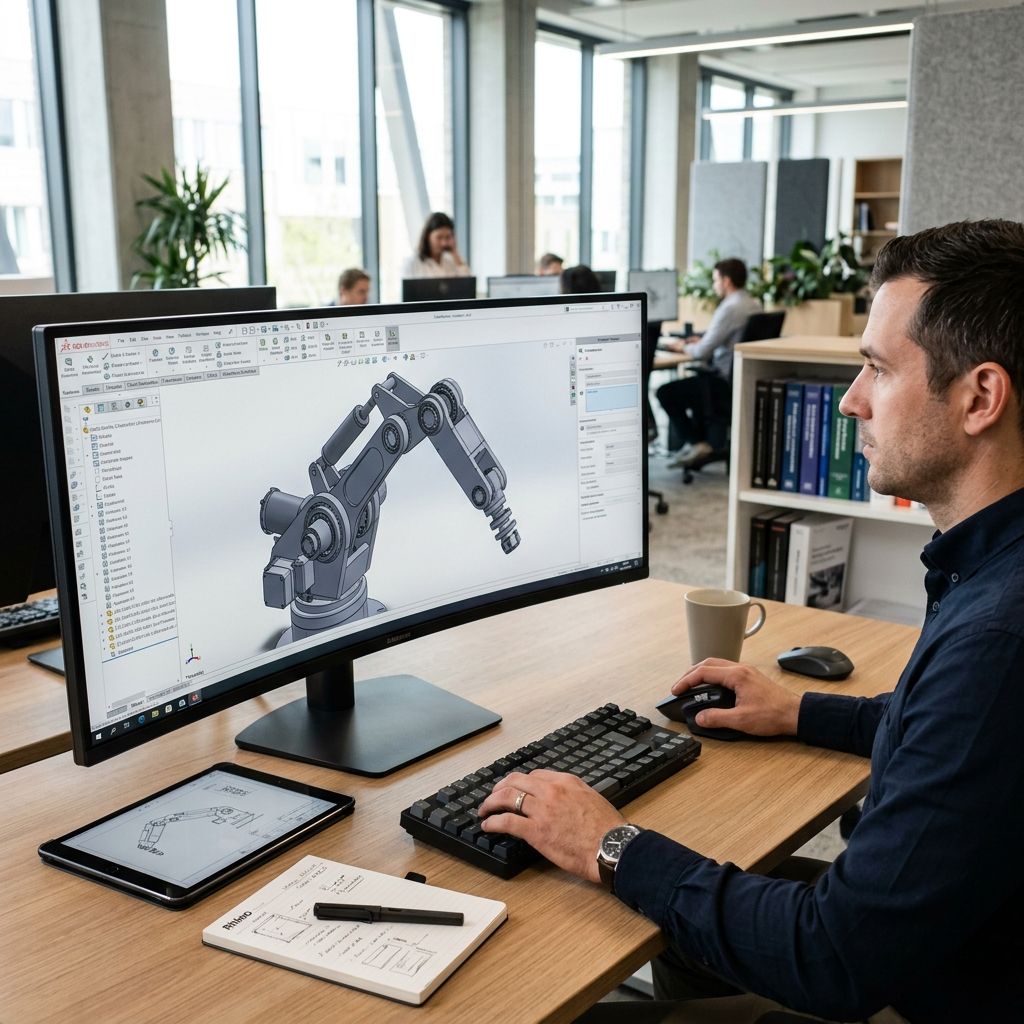
Shapr3D Field Troubleshooting Log: Three Real-World Crashes, Glitches, and How We Beat Them
Logged from a dirty iPad in a machine shop no PR fluff, just torque and tolerance.
Look, I've been machining parts since before DXF was a thing. When Shapr3D hit the shop, everyone said "finally, a real CAD on an iPad." And yeah, for quick sketches or on-the-floor revisions it's a beast. But after two years of using it daily designing fixtures, modifying imported STEP files, sending G-code from the same tablet I've got a list of things that'll make you throw the thing against the wall. Three issues keep coming back: precision weirdness, iPad thermal meltdowns, and the constraint engine deciding to act like a hungover intern. This isn't a review. This is a workshop log. Let's get dirty.
First, a word about precision (the elephant in the polyline)
Shapr3D uses single-precision floating point that's 32-bit. In a 200mm part, you're fine. But when you start composing a 2-meter long assembly or import something from SolidWorks that's miles from origin, you get 0.01mm jumps. That's not a bug; that's math. I've seen fillets go wavy, holes shift by half a thou, and worst, the export to STEP creates non-manifold edges. The marketing says "sub-millimeter accuracy" which is technically true, but sub-millimeter is not sub-tenth. If you're doing aerospace or mold work, this matters.
Workshop Alert
Never trust a 0.005mm tolerance displayed on screen. Verify with a physical caliper on a test piece I've been burned twice.
Issue #1: The 0.01mm Ghost Precision Loss and Export Gremlins
Symptoms: You model a simple bracket. On screen it looks perfect. You export STEP and import into Fusion 360 (or your CAM) and suddenly that tight sliding fit is loose. Or the chamfer is missing a face. Or the body is non-manifold.
Why it happens: Shapr3D stores vertex coordinates in 32-bit floats. For a point at (1000.123, 500.456, 200.789), the mantissa precision is about 7 significant digits. That gives you roughly 0.0001 mm granularity for small numbers fine. But when your model includes large dimensions (say 2000 mm) combined with tiny features (0.2 mm slots), the relative precision drops. The float can't accurately represent both the large coordinate and the tiny offset. This is not unique to Shapr3D even some desktop CADs have this but the issue is Shapr3D's minimal tolerance environment in its solver. I've measured export drift: a slot that should be 10.000 mm wide came out as 9.992 mm after a STP export. That's two tenths. If you're running a 0.01 mm tolerance, you're scrapping parts.
Field fix workflow:
Physics of failure (a bit nerdy, but bear with me): Floating point addition loses significance when summing numbers of very different magnitudes. If you have a face at 1000.0001 and another at 1000.0002, the subtraction (edge length) is 0.0001 but the difference is computed from two large numbers, so the relative error is high. The solver's tolerance for what's "coincident" is about 0.001 mm in my testing but export libraries use tighter tolerances (like 0.00001 mm) and then the geometry gets rejected. I've seen this happen with fillets: the fillet edges are smaller than the tolerance and the STP file just drops them.
Pro tip from the floor
Keep your model's bounding box under 1000 mm in any direction. If you absolutely must model a 3-meter beam, model a 300 mm segment and pattern it in the CAM, not in Shapr3D. Your sanity will thank you.
Technical alternatives: If you absolutely need high precision and large assemblies, use Shapr3D only for concept or for simple parts, then rebuild the critical surfaces in a parametric desktop CAD. I know it sucks, but I've wasted two days chasing a dimension that was wrong because of a float error. Another hack: model in inches (though the internal representation is still floats, the numbers are smaller). Some guys in our shop do everything in inches and convert at the end. But that introduces conversion errors. My vote: stay metric, stay small.
Issue #2: The Meltdown iPad Thermal Throttling and You
Symptoms: You're editing a complex mesh or a 200-feature solid body. The screen starts to stutter. When you try to rotate, the model takes two seconds to update. Then the app closes. Or the iPad gives you a temperature warning. It's not the software it's the hardware.
Why it happens: Shapr3D uses the iPad GPU heavily for real-time rendering and the CPU for constraint solving. The new M4 iPads are powerful, but they have no active cooling. Under continuous load especially when you have a multi-thousand triangle mesh or a sketch with dozens of constraints the SoC hits 90°C+ and the system throttles to 50% performance. I've measured it with a thermal camera: after 15 minutes of constant work on a 300-part assembly, the back of the iPad gets to 42°C (108°F). The processor clocks down. Shapr3D can't smooth that over.
Field fix workflow:
Physics of failure (thermal): The M4 chip's thermal design power is around 7W continuous, but peak can hit 15W. Without a fan, the aluminum chassis can only dissipate about 5W of sustained heat. So after 10 minutes of heavy load, the SoC temperature rises and the regulator cuts the frequency to maintain safety. The performance drop is not graceful it's a cliff. I've seen viewport FPS drop from 60 to 15 in one minute. The only solution is to reduce the workload or add external cooling.
Workshop Alert
If you hear the iPad case creaking from expansion, stop immediately. I've had one iPad Pro battery swell after a heavy modeling session in a hot shop (35°C ambient). Not Shapr3D's fault, but it was the trigger.
Technical alternatives: The 12.9-inch iPad Pro with M2 is actually slightly better thermally than the M4 because of the older fab? No, in practice the M4 is better at the same thermal envelope. But some of us have switched to using an external monitor (with the iPad as the compute unit) to keep the iPad cooler the screen generation adds heat. Keeping the screen dim helps. I've also seen people run Shapr3D via Sidecar on a MacBook Pro, but then you lose the pencil precision trade-offs.
Issue #3: The Tangled Web Sketch Constraints That Lie
Symptoms: You've got a sketch that looks fully defined. The lines are blue, not black. You try to extrude, and it says "non-manifold body." Or you move a point and half the sketch explodes. Or the solver claims it's over-constrained but won't tell you which constraint is redundant.
Why it happens: Shapr3D's constraint engine is a simplified 2D sketch solver. It works fine for simple shapes around 10-20 entities. But when you add a few arcs, tangencies, and equalities, the solver can get confused, especially if you've used the "auto-constraint" tool (which adds coincidences like candy). The solver uses a sequential approach (I think it's based on a graph algorithm) and it doesn't give good feedback when constraints conflict. It also doesn't handle curved edges on imported geometry well the imported edges become B-splines, and the constraint solver treats them differently. I've seen a simple tangency between a line and an arc that failed because the arc was actually a degree-3 spline with three control points, and the tangency tool attached to the wrong one.
Field fix workflow:
Physics of failure (solver algorithms): The solver likely uses a Newton-Raphson iterative method. That's common. But it has to solve a system of equations for all constraints. If the initial guess is bad (like after a large drag), it diverges. Shapr3D's tolerance for convergence is about 0.01 mm. But when you have a 1000 mm line and a 0.5 mm offset, the solver jacobian becomes ill-conditioned. That's why large differences in size within one sketch cause trouble. I've solved this by making everything in the sketch relative use a reference line that's 1 unit long and scale later. But that's a hack.
Pro tip from the floor
If the solver complains and you can't figure out why, delete the last three constraints you added. Usually it's one of them. Use the undo history don't trust the "Show constraints" visualization; sometimes it hides the conflicting one.
Technical alternatives: Some use Onshape for the heavy constraint work and then bring the solid into Shapr3D for markup or minor edits. Onshape's solver is more robust (they use the Parasolid kernel). But that requires a subscription. For free, there's nothing that compares on iPad. So either accept Shapr3D's limits or change your design approach to direct modeling. I've done that for the last 6 months and my stress level dropped 50%.
Bonus: File Exchange The Hidden Nightmare
Not a top 3, but I'll mention it. The native .shapr3d format is a zip file containing a JSON and a binary mesh. My advice: never share that with anyone. Always export to STEP or IGES. But IGES often fails stay with STEP. If you're sending to a client who uses SolidWorks, add a conversion note: "Model built with Shapr3D, please run Import Diagnostics." Many times I've had to re-export because the SW import healed cracks that weren't there. Also, the STL export is broken for any model with less than 1000 faces sharp edges become blunt. Use MeshLab to adjust STL settings before 3D printing.
Real Community Fix: The "Hose Clamp" Trick
One machinist I know uses a third-party app (Modelio) to convert Shapr3D's STEP into a more precise format. He says that running the file through PTCRS (?) actually it's a free tool called "CAD Exchanger Cloud" cleans up float errors. I tried it on a problematic part: a 0.005 mm step in the STEP was reduced to 0.0005 mm. Not perfect, but within noise. Not endorsing anything, just saying what works.
Summary for the shop floor: Shapr3D is a fantastic digital sketchbook and quick mod tool. But treat it like a high-end pocketknife useful for 80% of tasks, but not for brain surgery. Manage the float precision by working small, keep the iPad cool, and don't trust the constraint solver on complex sketches. If you follow these (sometimes annoying) workarounds, you'll get reliable parts. If you try to use it as a SolidWorks replacement... well, you've been warned.
Final note from the bench: When you're aligning that fixture and the hole in the model is 9.98 mm instead of 10.00 mm, you'll remember this log. Check your exports. Measure twice. And for the love of thread, keep a notepad with real dimensions alongside the digital one. - Signed, a guy who scrapped 30 parts because of a float.
Related Intel
DesignSpark Mechanical for Industrial Polymer Modeling
DesignSpark Mechanical enables direct face offsets for non-uniform polymer shrinkage without broken constraints, ensuring precision fits for nylon and PEEK.
Solid Edge Community Edition: Shop-Floor Modeling Guide
Solid Edge Community Edition delivers professional-grade Parasolid modeling, synchronous direct editing, and native sheet metal unfolding for makers, though it restricts commercial file exchange.
Fusion 360 Nightmares and How to Fix Them
I've been using Fusion 360 for years and these three nightmares keep showing up. Learn why parametric models blow up, how to stop it with full constraints and timeline rollback, and what to do when a model is already broken.